The FY2025 risk filings of 13 large oil and gas companies share six risk themes. Each is related to physical assets, and maintenance decides the exposure.
By Martin Holm Nielsen, co-founder and CEO, Arkyn
Arkyn analyzed the fiscal year 2025 risk disclosures of 13 of the largest oil and gas companies, from ExxonMobil and Chevron to Shell and BP. Six risk themes appear in every single filing:
Executives rarely mention maintenance by name, but each of these risks lands as an execution problem on physical assets. How well a company maintains its equipment decides how exposed it is to the risks its own leadership discloses.
“Every material risk an oil and gas executive discloses to investors eventually lands as an execution problem on a physical asset. Maintenance is a form of risk control.”
— Arkyn, FY2025 Risk Disclosure Analysis
Risk-factor disclosures are the sections of an annual report that companies are legally required to publish: Item 1A in a US 10-K, Item 3.D in a 20-F. Lawyers vet every sentence and executives sign the result, which makes them an honest record of what leadership believes could hurt the business.
Across the 13 filings analyzed (ExxonMobil, Chevron, ConocoPhillips, Halliburton, Petrobras, BP, TotalEnergies, Equinor, Eni, SLB, Occidental, Marathon Petroleum, and Shell), six themes appear in every single one: price and margin volatility, regulation and compliance, climate and the energy transition, operational hazards and safety, cybersecurity, and equipment failure or operational disruption.
Here’s a sample of what was found under the price volatility theme in the report:
“The level of exploration, development, and production activity is directly affected by trends in oil and natural gas prices, which historically have been volatile and are likely to continue to be volatile.” — Halliburton, FY2025 Form 10-K
Volatile margins put every operational budget under pressure. When leadership cannot control the price environment, the lever that remains is getting more from the assets and people the company already has.
Equipment failure or operational disruption is named as a material risk by all 13 companies, and it is the risk that translates directly into money.
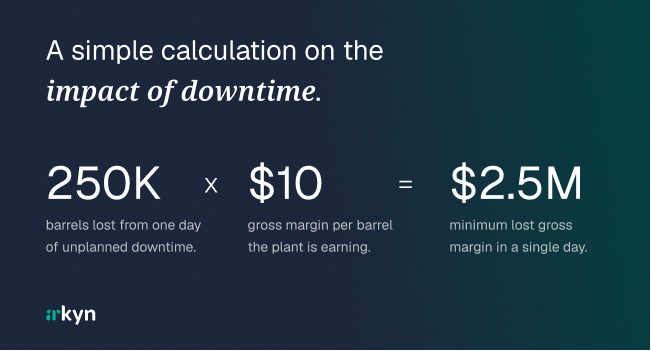
Consider an illustrative refinery losing 250,000 barrels of throughput to a single day of unplanned downtime. At a gross refining margin of $10 per barrel, that is roughly $2.5 million of lost gross margin in one day, before restart costs, overtime, and contractual penalties.
The need for unplanned maintenance from failures shrinks as maintenance matures. Improving maintenance maturity, from mostly reacting to failures to using preventive and predictive approaches, means catching developing problems while they are still small, instead of letting the asset choose the moment it fails.
Planned maintenance carries disclosed risk too. Refiners flag turnarounds as material events because schedule slips and cost overruns are large enough to move quarterly results. McKinsey has estimated that better management of shutdowns and turnarounds can deliver schedule and cost improvements of up to 30 percent (McKinsey, The upside of downtime).
Failures and planned turnarounds are two sides of the same exposure. Both put throughput at risk, and both come down to how well maintenance work is planned, executed, and recorded.
Only seven of the risk filings name talent, skills, or workforce capability as a distinct risk: Halliburton, SLB, BP, Equinor, Petrobras, Shell, and TotalEnergies.
For a sector whose frontline workforce is aging and retiring, nearly half the group not treating skills as a risk worth naming is a striking gap between the filings and the field.
Here is an example of a distinct mention on the issue from Petrobras:
“Difficulties in attracting, developing and retaining people with the necessary skills and qualifications can negatively impact the implementation of our strategy.” — Petrobras, FY2025 Form 20-F
When an experienced instrument technician retires, the labor hours can be replaced. The decades of pattern recognition and site-specific knowledge cannot, unless they were captured in procedures, checklists, and job plans while that person was still on the payroll.
Where companies do disclose the workforce risk, the symptoms they describe are slower work completion, higher rework, and more variable execution.
Two moves follow directly from the analysis.
First, treat the maintenance budget as risk mitigation and prioritize accordingly. Map the maintenance backlog against the risks the company itself discloses: safety, environmental exposure, production impact, and compliance. Work framed in the language of the annual report competes for capital on different terms than work framed as a cost.
Second, fix the data foundation before adding intelligence on top. Gartner puts the cost of poor data quality at a minimum of $12.9 million per year for the average organization (Gartner, Data Quality), and Deloitte notes that without trustworthy, well-governed master data, generative AI is prone to hallucination and incorrect recommendations (Deloitte). Companies that are serious about AI-driven asset management are building on the execution data their frontline captures today. If technicians report from memory at the end of a shift, the record the algorithms learn from is fiction.
They are the vetted, board-approved statement of what threatens the business. Operations and maintenance leaders who frame their priorities in that language connect their work to risks the company has already committed to managing, which changes how budget requests are heard.
Frontline execution data is the record of what actually happens to assets, captured by technicians and operators as they work: notifications, time bookings, failure codes, measurements, photos, and completion notes. It feeds reliability analysis, compliance evidence, and the AI-driven asset management now entering the sector, and its quality is decided at the frontline, at the moment the work is done.
Based on Arkyn’s analysis of 13 large oil and gas companies’ fiscal year 2025 disclosures, six risks are universal: price and margin volatility, regulation and compliance, climate and the energy transition, operational hazards and safety, cybersecurity, and equipment failure or operational disruption. All of these risks are closely connected to maintenance and reliability operations.
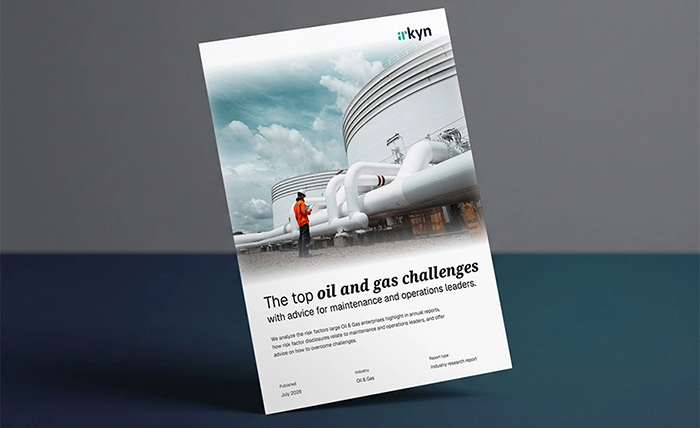
The risks oil and gas executives disclose to investors are, in operational terms, largely reliability and execution risks. Companies that treat maintenance as risk control protect the uptime, cash flow, and license to operate their filings promise to defend. The full analysis, including filing excerpts for each theme, is available at arkyn.io/blog/oil-and-gas-risk-report-2026.
About the author:
Martin Holm Nielsen is co-founder and CEO of Arkyn (arkyn.io), the SAP EAM productivity suite used by maintenance and reliability teams at asset-heavy enterprises. He works directly with maintenance and operations leaders running on SAP, from rollout through adoption, across deployments that reach thousands of technicians.
Read more from the author:
How SAP Maintenance and Reliability Teams can Make Their Business Value Visible | Reliabilityweb, published June 18, 2026.
Maintenance is a value driver, not a cost line | Arkyn, published May 21, 2026

Forging the Next 250 Years: Powering the Next Era of American Manufacturing
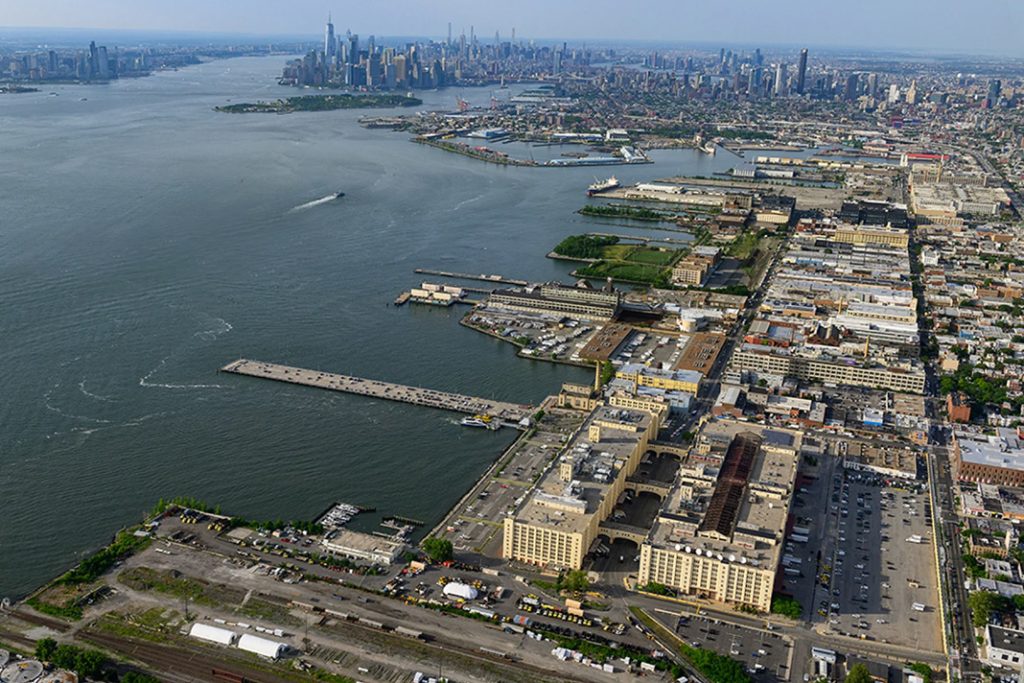
Brooklyn Army Terminal (BAT) began as a World War II-era military supply base. Today it is New York City’s largest publicly owned industrial campus, with 59 waterfront acres, more than 4 million square feet and over 100 businesses. In this episode of Industry Insights, Bridget Chansakul, Vice President of Leasing & Portfolio Management at NYCEDC, explains what space is available and what’s planned for the 250,000+ square feet of new industrial space in Building A. She also covers how the ferry, parking and on-site childcare help tenants hire and keep workers, along with workforce partnerships, City incentives for manufacturers and where BAT is headed next.
Get In Touch
Google news and SEO compliant, Industry Today’s state-of-the-art digital media platform offers bespoke media campaigns that target key decision makers and buyers to achieve your marketing and promotional goals.

Contribute
Showcase your brand and promote your business to our highly targeted audience. We offer detailed Google Analytics with measurable ROI to assure success. Submit your content for review by our Editorial team who will contact you to discuss the project further.
About Us
Reach Your Targeted Audience and Grow Your Business. Learn more About Industry Today.
Contact Us

© 2026 Industry today. All Rights reserved.