Why mid-market manufacturers pay when carrier economics change.
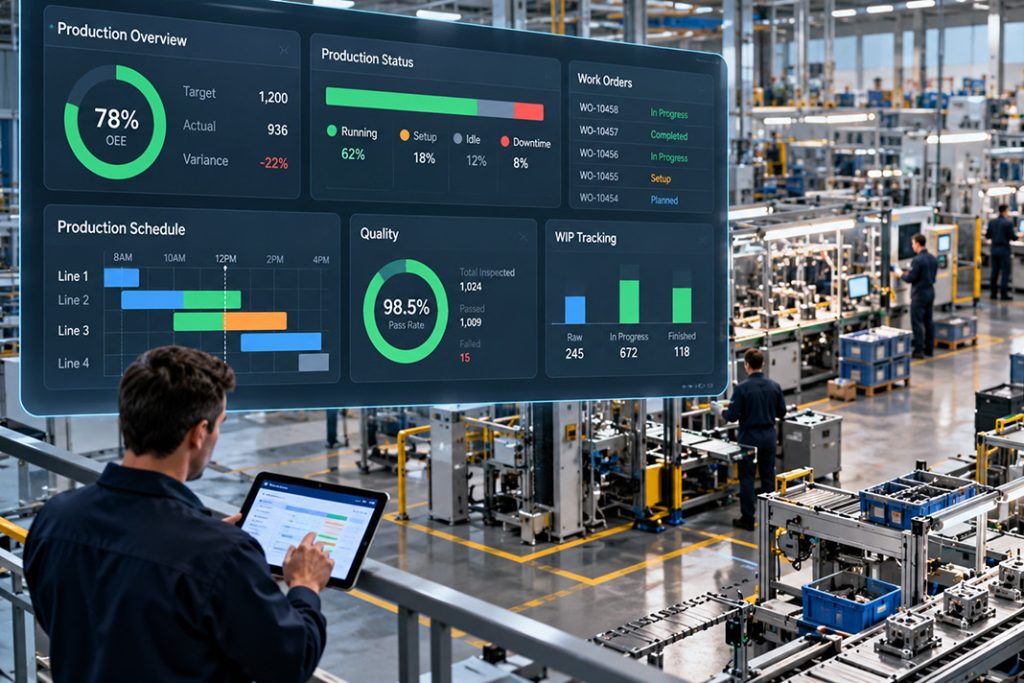
Mid-market manufacturers and distributors are often the first businesses to feel the operational impact when carrier economics shift. Rising transportation costs, changing service levels and reduced delivery predictability can quickly affect inventory planning, customer commitments and profit margins. Companies with real-time supply chain visibility are better positioned to identify these changes early and respond before they become larger operational problems.

The US Postal Service’s recently reported $2 billion quarterly loss is being treated primarily as a government funding and postal operations story. For manufacturers and distributors, it is also a warning sign about how financially fragile parts of the logistics ecosystem have become and how quickly those pressures can spill into the broader supply chain.
The story also underscores a structural reality of modern delivery networks. These networks have become heavily dependent on the shipping volume of a small number of dominant companies, particularly in residential and rural delivery markets where route economics are already difficult to sustain profitably. That concentration creates risk for every business operating inside the same network.
Large enterprises typically have the leverage, carrier diversification and logistics scale to manage transportation volatility more effectively. Mid-sized manufacturers usually operate with far less flexibility, especially businesses that expanded direct-to-consumer fulfillment over the last several years and built operational assumptions around stable parcel pricing and dependable residential delivery coverage.
The companies most exposed are often industrial suppliers, replacement parts manufacturers, specialty distributors and regional brands serving customers outside major metro areas. For these businesses, transportation disruption quickly becomes an operational issue rather than simply a shipping expense issue. A delayed replacement part shipment can affect production schedules, postpone field repairs or create inventory shortages that ripple through customer commitments and service performance.
The challenge is that these pressures rarely appear all at once. Transportation disruption tends to emerge gradually through rising freight costs, less predictable delivery windows and increasing strain across inventory planning and fulfillment operations. By the time leadership teams connect the dots, margins are often already under pressure.
What makes these disruptions particularly challenging is the lag between a logistics change and its operational impact. A carrier rate adjustment or service-level shift may seem minor in isolation, but the effects often surface weeks later through higher landed costs, inventory imbalances or customer service issues. Without real-time visibility, businesses can find themselves absorbing margin erosion before they fully understand what’s changed.
“Manufacturers that can see landed cost changes early, model transportation impacts quickly and adjust fulfillment or inventory decisions in real time will be far better positioned to protect margins and maintain customer confidence while logistics networks continue operating under growing financial strain.”
— Dan Abramson, SVP Americas, Syspro
Manufacturers and distributors cannot control carrier economics or postal policy, but they can control how quickly they identify operational impact and respond. Businesses need the ability to connect freight costs to inventory decisions, customer commitments and margins in real time rather than weeks later during financial review cycles.
Carrier networks are built on volume economics, and when dominant shippers adjust how freight moves through those networks, the cost pressure rarely stays isolated. For mid-market manufacturers and distributors, those changes often arrive faster than freight budgets, contracts or planning assumptions can adapt. The first signs are usually subtle: revised rate cards, less predictable delivery windows or mounting customer complaints tied to fulfillment delays.
That is why supply chain visibility and planning agility are becoming operational requirements rather than technology advantages. Manufacturers that can see landed cost changes early, model transportation impacts quickly and adjust fulfillment or inventory decisions in real time will be far better positioned to protect margins and maintain customer confidence while logistics networks continue operating under growing financial strain.
Mid-market manufacturers typically have less flexibility than large enterprises to manage transportation volatility. Businesses that expanded direct-to-consumer fulfillment and rely on stable parcel pricing and dependable residential delivery coverage can be especially exposed to changing carrier economics.
Transportation disruption tends to emerge through rising freight costs, less predictable delivery windows and increasing strain across inventory planning and fulfillment operations. By the time leadership teams connect the dots, margins are often already under pressure.
Manufacturers and distributors cannot control carrier economics or postal policy, but they can control how quickly they identify operational impact and respond. Connecting freight costs to inventory decisions, customer commitments and margins in real time helps businesses adjust more quickly as conditions change.
Supply chain visibility and planning agility are becoming operational requirements rather than technology advantages. Manufacturers that can see landed cost changes early, model transportation impacts quickly and adjust fulfillment or inventory decisions in real time will be far better positioned to protect margins and maintain customer confidence while logistics networks continue operating under growing financial strain.

About the Author:
Dan Abramson serves as the Senior Vice President for the Americas at Syspro since March 2025 and has been a Board Member at the National Association of Manufacturers (NAM) since January 2021. Prior to these roles, Dan held the position of Senior Vice President and Head of Sales at FourKites, Inc. from August 2023 to March 2025, and served as Sr. Director and General Manager at SAS from December 2014 to August 2023, focusing on Consumer Packaged Goods, Manufacturing, and Transportation. Earlier career experiences include working as an Account Executive at SAP and as Sales and Operations Manager at EIS, where Dan managed Electro Wire’s largest customer, generating $10 million in annual revenue, and successfully captured new market share through effective marketing and social media strategies. Dan holds a degree from Indiana University Bloomington.

Forging the Next 250 Years: Powering the Next Era of American Manufacturing
As manufacturers offer more customization than ever before, managing product complexity has become a critical challenge. Tune in with Dan Joe Barry, Vice President of Product Marketing at Configit, who explores how companies are tackling the growing number of product configurations across engineering, sales, manufacturing, and service. He explains how Configuration Lifecycle Management (CLM) helps organizations maintain a single source of truth for configuration data. The result: fewer errors, faster quoting, and the ability to deliver customized products at scale.
Get In Touch
Google news and SEO compliant, Industry Today’s state-of-the-art digital media platform offers bespoke media campaigns that target key decision makers and buyers to achieve your marketing and promotional goals.

Contribute
Showcase your brand and promote your business to our highly targeted audience. We offer detailed Google Analytics with measurable ROI to assure success. Submit your content for review by our Editorial team who will contact you to discuss the project further.
About Us
Reach Your Targeted Audience and Grow Your Business. Learn more About Industry Today.
Contact Us

© 2026 Industry today. All Rights reserved.