Success has less to do with the equipment and more to do with who owns it, who champions it, and how well the organization plans for both.
By Seth Rourke, VP Robotics Marketing & Product Growth, Tennant
Every successful enterprise technology investment shares similar traits: a clear internal champion, a well-defined ownership structure, and a change management plan that gets executed rather than just documented.
It’s no different for cleaning robotics. The underlying technology and engineering have matured to a point where the equipment itself carries little risk to deployment success. What determines whether a deployment earns its place in the operation or gets abandoned for reasons nobody can quite articulate is almost entirely organizational.
Understanding those organizational dynamics is one of the more reliable things a facility manager can do to set a deployment up for success.
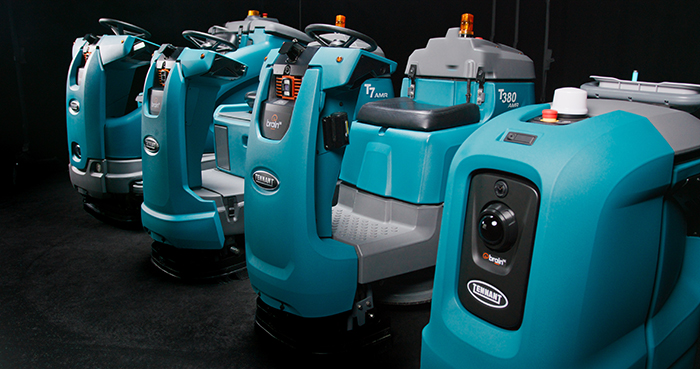
For pilots that underperform or stall, rarely is the primary reason a technical one. More often, what tends to go wrong is organizational. The pattern typically surfaces in one of three ways—all remedied by the right dose of preparation.
A clear-eyed understanding of where autonomous equipment creates the most value — and where human judgment remains essential — is a key factor in what separates deployments that deliver from those that disappoint.
The most common misconception about cleaning robots is that it is fundamentally about labor replacement. Across most operations, that framing misses the point — chronic understaffing means there is rarely a surplus workforce to replace. The more accurate and strategically useful framing is that robotics expands what a cleaning operation can accomplish without proportionally expanding headcount.
The division of responsibility that works in practice is straightforward. Autonomous equipment excels at tasks defined by volume, repetition, and physical demand — large floor areas that need consistent coverage, scheduled routes that run whether or not staff are available, and the kind of sustained physical work that drives injuries, absenteeism, and fatigue over time.
High-touch surfaces, vertical cleaning, reactive response to spills, and anything requiring immediate attention or human judgment belong on the other side of that line.
The operational impact is most visible in how teams prioritize their time. Consider a facility operations team arriving at a site at the start of a shift. Traditionally, floor care is the first task. It’s time-consuming, it has to be done before the building fills with people, and it crowds out everything else.
With autonomous equipment handling that work on a pre-set schedule, the team arrives to floors that are already clean or actively being cleaned and immediately can turn to the tasks that require human presence and judgment. The high-value, time-sensitive work that often gets deferred moves up the priority list.
The pattern holds across sectors. In warehouses and large distribution centers, where square footage is vast and labor is stretched, the goal is pairing maximum machine coverage with targeted human support—designing workflows around what each does best rather than asking people to do what machines can handle.
In schools and universities, where custodial teams manage everything from gymnasiums to cafeterias on tight budgets, robotics is absorbing the repetitive floor care load, freeing staff for the higher-touch work like restrooms and classrooms.
At the organizational level, this reallocation of labor represents a genuine operational improvement — one that compounds over time as teams build confidence with the technology.
For senior leaders, the vendor selection process deserves the same rigor as any other significant capital investment decision — because the organization behind the equipment can have as much bearing on outcomes as the equipment itself.
The consultation that happens before a deployment — scoping cleaning requirements against operational conditions, pressure-testing assumptions about schedules and protocols, identifying the right equipment mix for the environment, establishing how performance data will be interpreted and used — is where a significant portion of a deployment’s value is either captured or lost. A partner with robust deployment experience knows that what a facility thinks it needs and what it actually needs are often two different things.
The difference between a vendor relationship and a partner relationship becomes most consequential after the sale. The right partner brings a willingness to adapt to the facility’s schedule, its protocols, its unique operational requirements, and the institutional infrastructure to support a deployment that evolves over time.
That support must extend well beyond installation. As deployments scale, the demands on a partner grow with them — responsive service, capable technical support, and a dedicated customer success team help reinforce best practices and monitor adoption after launch. Without this post-deployment support infrastructure, even a well-planned rollout can lose momentum once the complexity of day-to-day operations sets in.
For organizations that have already invested seriously in operational technology, this is familiar territory: a reputable partner with deployment experience is not a nice-to-have, it is a prerequisite for getting the most out of the technology.
The strongest cleaning robotics deployments share a common foundation: they are treated as organizational initiatives, not equipment purchases. That difference means establishing clear ownership before the first machine arrives, thinking seriously about what a better cleaning program would look like, and choosing a partner with the depth to support the deployment as it grows.
The technology is ready. The return is there. What determines whether an organization captures it is the quality of the decisions made before, during, and after deployment — and the strength of the partner supporting them through it all.

About the Author:
Seth Rourke is VP Robotics Marketing & Product Growth at Tennant Company, where he leads product strategy and development for the company’s commercial cleaning portfolio. He brings more than 25 years of marketing and product leadership experience across premium consumer and commercial brands, including roles at Honeywell, Sleep Number and Integrity Windows and Doors. He holds a BA in psychology from the University of Northern Iowa and an MBA from Colorado State University.

Forging the Next 250 Years: Powering the Next Era of American Manufacturing
As manufacturers offer more customization than ever before, managing product complexity has become a critical challenge. Tune in with Dan Joe Barry, Vice President of Product Marketing at Configit, who explores how companies are tackling the growing number of product configurations across engineering, sales, manufacturing, and service. He explains how Configuration Lifecycle Management (CLM) helps organizations maintain a single source of truth for configuration data. The result: fewer errors, faster quoting, and the ability to deliver customized products at scale.
Get In Touch
Google news and SEO compliant, Industry Today’s state-of-the-art digital media platform offers bespoke media campaigns that target key decision makers and buyers to achieve your marketing and promotional goals.

Contribute
Showcase your brand and promote your business to our highly targeted audience. We offer detailed Google Analytics with measurable ROI to assure success. Submit your content for review by our Editorial team who will contact you to discuss the project further.
About Us
Reach Your Targeted Audience and Grow Your Business. Learn more About Industry Today.
Contact Us

© 2026 Industry today. All Rights reserved.