AI demand is squeezing makers of ‘boring’ semiconductors. Ironically, AI will power their path forward toward the autonomous enterprise.
By Dominik Erlebach

Given the attention high-end GPUs have been getting, you might think they dominate the semiconductor market. In fact, while Nvidia’s and competitors’ high-value AI chips may account for roughly half of the industry’s revenues this year, they will comprise just 0.2% of the roughly one trillion chips the planet’s foundries will produce in 2026. Moody’s estimates that AI data center sales account for 10% to 15% of the global chip market revenues.
Demand for specialized AI chips in data centers does appear boundless. And even though most chips don’t land in data centers, the chips destined for them are impacting semiconductor firms everywhere.
The makers of AI GPUs; high-end networking chips; and HBM, DDR5, and NAND memory are all impacting the supply side of semiconductor businesses by vacuuming up scarce resources from raw materials to foundry lines. Add high capital and operating costs, packaging and logistics issues, talent shortages, and geopolitical uncertainty to bread-and-butter chipmakers’ supply-side hurdles. On the demand side, challenges include regulatory barriers, geopolitical instability, and seesawing sales due to fast-evolving market signals.
The companies behind the hundreds of billions of chips that don’t find their way into data centers must adapt their supply chains. That requires more collaborative demand planning and supply planning, more diversified strategic sourcing, and more capable scenario planning and optimization. It’s perhaps fitting that AI – the industry’s disruptor – will, particularly in the form of agentic AI, also serve as the key force for adaptation as it powers increasingly autonomous and integrated analysis and decision-making across the enterprise.
Let’s break all that down.
Supply chain planning starts with establishing prospective demand and then building toward meeting that demand. The pace of change in the semiconductor market has put increasing pressure on demand-planning accuracy.
Consider the market that semiconductor makers face. A typical wafer start for bread-and-butter chips might be for 1,000 wafers, each divisible into 1,000 chips. This represents a multimillion-dollar commitment, one that involves reserving foundry capacity for which the chipmaker is on the hook. Further, margins are thin even assuming everything goes right.
But the chipmaker’s customers can double- or triple-book orders, and typically they can cancel without penalty, bringing about a “bullwhip effect” of overproduction and cratering prices. That’s not to mention the impact of policy changes such as the cancellation of U.S. electric vehicle subsidies, which pulled the rug out from under the power-chip market last year – or the challenges posed by AI data center demand.
Semiconductor makers need advanced demand analytics and decision support tools capable of taking in the broadest possible spectrum of market information. AI-powered systems have made major leaps in this area, and at just the right time for the semiconductor industry.
Collaborative demand planning lets a semiconductor firm’s customers share specifications, forecasts, and other documentation that feed into advanced planning systems.
Collaborative supply planning is about embracing the idea of a semiconductor firm working not just as part of a supply chain, but rather as a node in an industry ecosystem. Europe’s Semiconductor-X and SC4EU consortia are great example of this. They aim to establish secure, sovereign data exchanges, boost the resiliency and agility of semiconductor supply, and fortify the semiconductor ecosystem against highly disruptive bullwhip constellations.
An individual semiconductor firm’s supply planning function might use AI-powered algorithms help planners create supply plans that satisfy demand, optimize production, and let it collaborate with its suppliers in real time. The deeper interoperability of collaborative supply planning can help a firm sharpen its own operations though AI-derived insights distilled from the broader business-network collaboration.
Semiconductor supply chains are nearshoring and reshoring, as TSMC’s and AMD’s investments in Arizona and Infineon’s and the European Semiconductor Manufacturing Consortium’s (ESMC) investments in Dresden, Germany highlight. AI supplier vetting and monitoring tools automate third-party risk assessments, financial health checks, and geopolitical risk assessment. They also score suppliers on factors ranging from price and delivery performance to sustainability and service-level criteria.
AI enables scenario modeling that better prioritizes demands, analyzes constraints, and generates material- and capacity- constrained plans. Generative AI’s ability to comb through diverse data sets and distill results behind the scenes has propelled a leap in scenario optimization capabilities on the back end, and gen AI natural-language user interfaces and front-end AI assistants have put sophisticated, intuitive modeling capabilities in the hands of nontechnical planning staff. Semiconductor companies are benefitting.
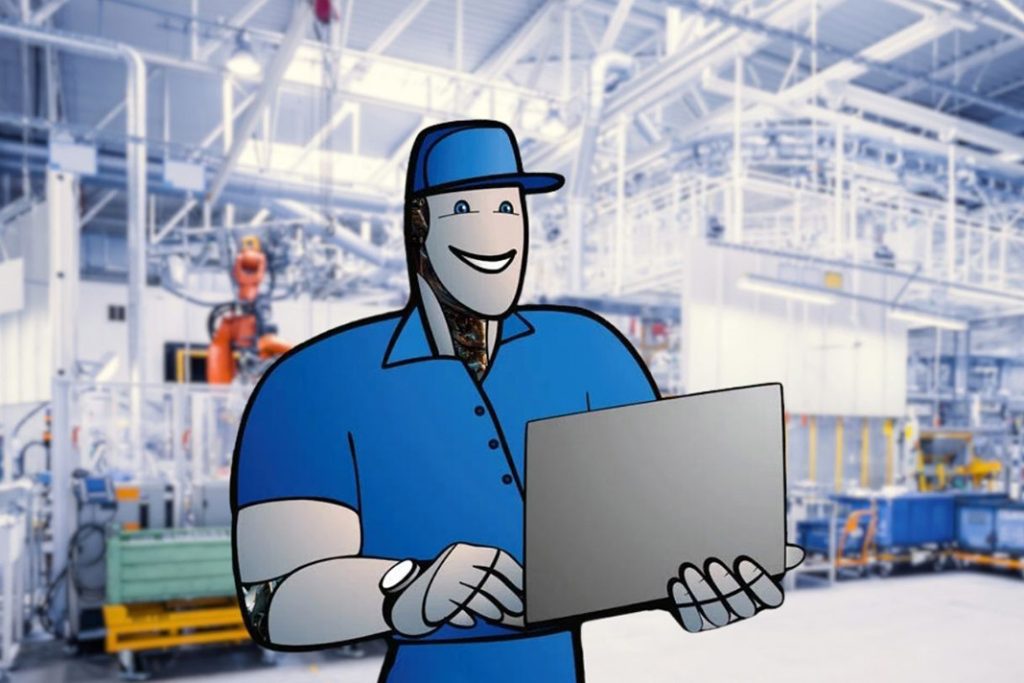
AI that executes tasks, rather than simply providing advice or answers, is poised to drastically improve the speed and accuracy of operations throughout the value chain. While human expertise will always play a role, agentic AI has moved the notion of an autonomous supply chain from fantasy to reality in a matter of months.
One vastly-simplified scenario: Product-engineering and feasibility agents interact with project management and resource-planner agents. Those then work with procurement agents that then hand off to production-planning and regulator-compliance agents. Outbound agents takes it from there.
That’s not all happening just yet. But enterprise ERP vendors, their partners, and their customers are building AI agents for use across the enterprise at a torrid pace. They’re working with semiconductor firms to develop industry-tailored agents and sequences of AI agents, and specialized software partners are also collaborating. This is all happening more quickly than most realize: SAP alone already has more than 300 AI agents built into various business applications, and SAP customers have rolled out 55,000 more of them and counting.
Data is, of course, the common denominator among all of the above. Semantically connected data is the key enabler of both internal AI and the effectiveness of the collaborative demand and supply planning the semiconductor industry needs to manage ever-evolving competitive dynamics and supply-related challenges. Bigger picture, the more integrated a semiconductor firm’s data landscape, the better positioned it will be as webs of agents collaborate in pursuit of the idealized end state of the autonomous enterprise.
Historically, harmonized data would have meant unifying physical databases (not possible) or data warehouses (the typical approach). Today, enterprise data analytics platforms, also called data fabric platforms, enable a virtual unified data model on top of existing systems. Importantly, these platforms can also manage unstructured environmental, political, tariff-related, market-research, and other data that AI can then exploit. AI is driving the rapid uptake of data-fabric platforms across many industries, the semiconductor business of course among them.
The massive, ongoing buildout of AI data centers has changed the competitive landscape in the semiconductor business. Fortunately for the many firms making vital chips for countless other uses, the AI those data centers enable will help them better serve their customers, efficiently, nimbly, and profitably.
About the Author:
Dominik Erlebach, an industry expert for high tech and discrete manufacturing industries at SAP, has specialized in supply chain enterprise architecture development and implementation for 20 years. He works with semiconductor and discrete-industry leaders to align SAP’s strategy and roadmap with the industry’s needs.

Forging the Next 250 Years: Powering the Next Era of American Manufacturing
As manufacturers offer more customization than ever before, managing product complexity has become a critical challenge. Tune in with Dan Joe Barry, Vice President of Product Marketing at Configit, who explores how companies are tackling the growing number of product configurations across engineering, sales, manufacturing, and service. He explains how Configuration Lifecycle Management (CLM) helps organizations maintain a single source of truth for configuration data. The result: fewer errors, faster quoting, and the ability to deliver customized products at scale.
Get In Touch
Google news and SEO compliant, Industry Today’s state-of-the-art digital media platform offers bespoke media campaigns that target key decision makers and buyers to achieve your marketing and promotional goals.

Contribute
Showcase your brand and promote your business to our highly targeted audience. We offer detailed Google Analytics with measurable ROI to assure success. Submit your content for review by our Editorial team who will contact you to discuss the project further.
About Us
Reach Your Targeted Audience and Grow Your Business. Learn more About Industry Today.
Contact Us

© 2026 Industry today. All Rights reserved.