AI-driven cyberattacks are exposing industrial supply chain vulnerabilities faster than traditional risk assessments can identify and address them.
By Ryan Ikeler, President, MOXFIVE
AI turns vulnerabilities into attacks in minutes. One compromised supplier can disrupt an ecosystem leaving static risk assessments behind.
“A vendor can be fully compliant and still be exposed. What matters is testing against what attackers are doing right now, not what a questionnaire assumed months ago.”
— MOXFIVE Analyst
Artificial intelligence (AI) has fundamentally altered the velocity of cyber-attacks against industrial environments, turning what used to be a threat actor’s “long-game payoff” strategy into a high-speed sprint.
Modern industrial organizations rely on deeply integrated Enterprise Resource Planning (ERP) systems, vendor management portals, and logistics platforms. When an AI-fueled compromise occurs at a third-party vendor, these integrations can be exploited for lateral movement at blinding speeds. Attackers can more easily evaluate and capitalize on a single compromised vendor credential, API key, or federated login in complex ways that are difficult to detect. This places assembly lines, inventory management, and downstream delivery schedules at risk long before legacy monitoring systems register an anomaly.

A vendor can pass every security audit and point-in-time questionnaire and still be a point of risk. Checking a box for MFA or endpoint detection doesn’t matter to an attacker if that control is misconfigured, partially deployed, or bypassed through a legacy protocol fallback. AI has only widened that gap.
In one documented case, a state-sponsored group used an AI system to run reconnaissance, find vulnerabilities, and move laterally across nearly 30 organizations largely on its own, with a person glancing at the controls only a few times along the way. Verizon’s 2026 Data Breach Investigations Report calls this kind of AI-assisted operation a “watershed moment,” and finds that AI is already lowering the barrier for less sophisticated actors to exploit vulnerabilities at scale. The window between “still compliant on paper” and “actively exploitable” has effectively collapsed.
The risk isn’t theoretical. Kojima Industries, a large plastic and electronics parts supplier, was hit by ransomware after attackers infiltrated a third-party partner network connected to Kojima, then moved laterally into Kojima’s own systems using that trusted connection. Because roughly 400 of Toyota’s tier-one suppliers are connected directly into Toyota’s kanban just-in-time production control system, the compromise at Kojima immediately spilled into Toyota’s own operations. Toyota was forced to suspend all 28 production lines at all 14 of its Japanese plants, along with plants run by affiliates Hino and Daihatsu, missing production of an estimated 13,000 vehicles in a single day.
The scale of this disruption is exactly what static assessments are blind to; they measure controls on paper, not what happens once one gets bypassed, and certainly not how fast that bypass can now happen.
The instinct to fix this by running the same assessments more often, quarterly questionnaires, monthly vendor risk scores, turns into a form of security theater that gives a false sense of security without changing real exposure. Speeding up a flawed process doesn’t change what it measures, and running it faster can’t outpace a threat that’s now moving faster than the assessment cycle itself. Conventional compliance checks stay disconnected from real-time attacker behavior, which means organizations relying on them are operating on historical fiction, carrying a false sense of security while AI-accelerated threats work through operational dependencies no one is watching.
Vendor questionnaires and agreements are great for setting an initial baseline for assessing risk, but must be eventually tested to validate their actual exposure against real-world Tactics, Techniques, and Procedures (TTPs). Operational resilience requires asking evidence-based questions: Are the identified controls actually configured as they are represented? How do threat actors currently exploit third-party integrations in our specific vertical? What would be the true level of access and impact if the vendor was compromised?
Continuous validation shifts the posture from passive compliance to active defense, verifying that security controls are not just present on paper, but effectively blocking live threat vectors across interconnected supplier paths. This helps organizations further fortify against AI-driven attempts that probe for these same gaps.
Technologies like Continuous Threat Exposure Management (CTEM), AI-driven telemetry analysis, and automated containment are critical tactical supports for an evidence-led defense, but they are not silver bullets. Effective implementation also requires a balance of human expertise to reduce unnecessary operational impact that could come with automated isolation of business-critical services. Field-tested human expertise remains non-negotiable to interpret business context and ensure containment stops the adversary without inflicting self-directed harm.
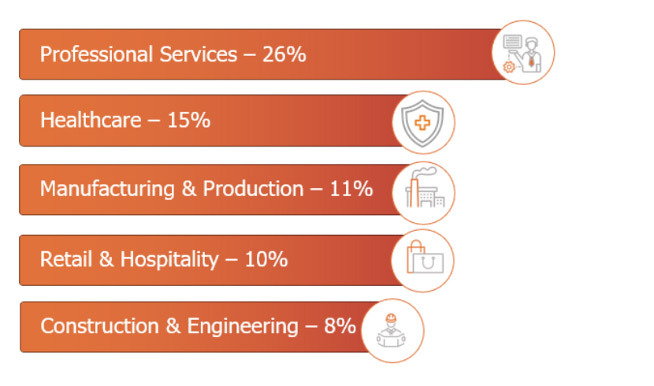
Industrial supply chains contain high levels of interdependency and operational trust, making them ideal targets for maximum impact. By compromising a single supplier or logistics vendor, threat actors can bypass primary enterprise defenses and gain access to high-value manufacturing targets. AI allows attackers to automate the discovery of these interconnected relationships and execute attacks at scale.
The economics make these targets especially attractive: every hour of downtime at a just-in-time manufacturer cascades into penalties, missed shipments, and pressure from every partner downstream, which gives ransomware operators unusual leverage to extract payment quickly. Moreover, nation-state actors are drawn to the same targets because a supply chain compromise demonstrates the ability to disrupt global commerce at scale, cheaply and repeatably, which carries its own strategic value.
The most effective mitigation isn’t a longer control checklist, it’s validating exposure against attacker behavior currently showing up in real incidents, then using that evidence to prioritize where zero-trust access controls, continuous threat-surface monitoring, and automated detection need to go. Automation can flag the anomaly and even revoke access in seconds, but deciding what happens next, whether to isolate a system, notify a partner, or escalate further, still depends on a human who understands the business context well enough to contain the threat.
Automotive, defense, aerospace, pharmaceuticals, and heavy machinery manufacturing face elevated risk due to their extended supplier networks and just-in-time inventory models. In these sectors, even a short operational delay at a secondary or tertiary supplier can halt multi-billion-dollar assembly operations downstream.
Organizations cannot assess their way out of AI-accelerated risk. They must continuously validate their exposure using structured evidence drawn from real-world intrusions, with automation and expert responders translating that evidence into rapid containment. By combining evidence-based continuous validation, defensive automation, and deep operational expertise, industrial leaders can better protect their ecosystems and maintain business continuity in an AI-accelerated threat landscape.

About the Author:
Ryan Ikeler is the President of MOXFIVE, advancing business resilience and technical recovery for organizations navigating cyber incidents. Ryan Ikeler has spent his career aligning the best-in-class technology products and services with high-performing IR teams. He joined MOXFIVE from modePUSH, a leading DFIR and recovery firm, where he was the CEO and co-founder. Prior, he served as CEO of Entara, a managed security services provider (MSSP), where he built an incident recovery practice for large-scale security events. His career has also included leadership roles at Illumio and Orca Security.

Forging the Next 250 Years: Powering the Next Era of American Manufacturing
As manufacturers offer more customization than ever before, managing product complexity has become a critical challenge. Tune in with Dan Joe Barry, Vice President of Product Marketing at Configit, who explores how companies are tackling the growing number of product configurations across engineering, sales, manufacturing, and service. He explains how Configuration Lifecycle Management (CLM) helps organizations maintain a single source of truth for configuration data. The result: fewer errors, faster quoting, and the ability to deliver customized products at scale.
Get In Touch
Google news and SEO compliant, Industry Today’s state-of-the-art digital media platform offers bespoke media campaigns that target key decision makers and buyers to achieve your marketing and promotional goals.

Contribute
Showcase your brand and promote your business to our highly targeted audience. We offer detailed Google Analytics with measurable ROI to assure success. Submit your content for review by our Editorial team who will contact you to discuss the project further.
About Us
Reach Your Targeted Audience and Grow Your Business. Learn more About Industry Today.
Contact Us

© 2026 Industry today. All Rights reserved.