Meeting the minimum requirements matters. But newer safety standards may offer workers better protection against the hazards they face today.
By Cam Mackey, President and CEO, International Safety Equipment Association (ISEA)
Your PPE checks the compliance box. That’s good—but it doesn’t always mean workers are getting the most current protection available.
Here’s the disconnect: OSHA regulations may reference editions of safety standards published years—or even decades—ago. Meanwhile, those standards continue to evolve as experts learn more about workplace hazards, testing and PPE performance.
That means a product can be OSHA compliant while newer options offer protection designed around what we know today.
Compliance matters. But it should be the starting point—not the finish line.
OSHA regulations and consensus standards work differently—and they don’t always move at the same speed.
OSHA establishes enforceable workplace requirements. Consensus standards are developed through collaboration among manufacturers, safety professionals, testing organizations and government representatives to reflect current knowledge and industry practices.
Those standards are reviewed and updated regularly as hazards evolve, new testing methods are devised, and product innovations drive comfort, fit, and protection.
The challenge is that regulations don’t automatically update when standards change.
A manufacturer may begin certifying equipment to a standard’s most recent edition immediately after its publication, but OSHA’s regulatory update process can take much longer.
The result is a gap between what’s legally acceptable and what represents current best practice.
“Meeting the rules matters, but we can’t let compliance become autopilot. Standards evolve because hazards, technology and what we know about protecting workers evolve. Safety leaders should understand what performance standard their PPE meets—and whether more current protection is available.”
— Cam Mackey, President and CEO, ISEA
This isn’t just a paperwork problem. It can affect what products get ordered, what workers wear and how well that PPE matches the job’s hazards.
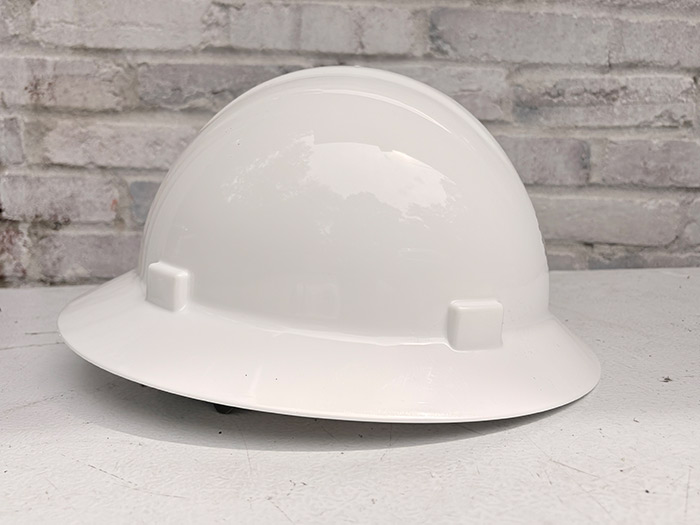
Head protection has changed considerably since some of the standard editions currently referenced by OSHA were published—and it’s continuing to evolve.
The latest edition of ANSI/ISEA Z89.1-2026, the American National Standard for Industrial Head Protection, addresses the use of chin straps, helmet retention and roll-off, and increased protection from impacts around the head.
Think about a worker who slips, falls or is struck from the side. The issue isn’t only whether that worker has head protection. It’s whether the head protection will stay in place—and whether it’s designed for the way an injury could actually happen.
OSHA references editions of ANSI/ISEA Z87.1 from 1989, 2003 and 2010, but the current ANSI/ISEA Z87.1-2025 standard includes updated markings and classifications.
We may be among the few people who think PPE markings are exciting. But they’re certainly vital when it comes to choosing the right protection.
These updated markings help workers and supervisors quickly identify whether eyewear is designed for hazards such as impact, chemical splash or dust. If those markings aren’t clear—or no one knows what they mean—it’s much harder to be sure workers are wearing the right protection for the job.
OSHA guidance still references the 1998 edition of ANSI/ISEA Z308.1, the American National Standard for First Aid Kits. Since then, our understanding of workplace first aid—and the supplies employers may need in an emergency—has continued to evolve.
The latest standard reflects what we know today about preparing for real-world emergencies across traditional workplaces, remote jobsites and mobile work environments. A first aid kit shouldn’t be treated like a box that gets mounted on the wall and forgotten. Its contents should reflect the workplace, its hazards and how quickly professional emergency help can arrive.
Compliance provides an important baseline. It establishes the minimum requirements employers must meet.
But safety leaders are responsible for making decisions that protect workers in the environments where they actually perform their jobs.
Four questions to ask about your PPE and safety equipment:
If your specifications only say “OSHA-compliant” or “ANSI-compliant,” it may be time for an update. Including the specific standard and edition gives procurement teams, suppliers and safety leaders the same target.
ISEA and other safety organizations have petitioned OSHA to update its references to current versions of existing consensus standards.
The goal isn’t to create new requirements or increase regulatory burdens. The goal is to align federal references with standards already used throughout the safety industry.
Updating these references would provide employers with clearer guidance and help ensure workers benefit from advancements already available in certified products.
You don’t need to replace every piece of PPE tomorrow. Start by taking these three steps.
Yes. OSHA may reference an older edition of a standard, so PPE can be OSHA compliant even when a newer edition of a standard is available. The newer edition may include updated testing, markings or protection informed by what the industry has learned since then.
Because hazards, technology and our understanding of worker protection keep changing. Standards are updated to reflect new research, better testing methods, product advancements and lessons learned in the real world. ISEA and its members are passionate about advancing worker protection and continually looking for ways to improve safety equipment and address emerging and common workplace hazards.
Start with one simple question: “Which edition of the standard does this product meet?” Then ask what’s changed in the latest edition and whether a newer product would be a better fit for your workers, tasks and hazards.
No. Even the most advanced PPE won’t provide the protection it’s designed to deliver if it’s the wrong choice for the hazard, doesn’t fit, isn’t maintained or isn’t worn correctly. Proper selection, fit, training and care still matter.
Compliance matters. It gives employers an essential foundation for protecting workers.
But safety doesn’t stand still, and neither should a PPE program. Standards change because our knowledge, technology and workplaces change.
The next time someone says, “It’s compliant,” ask one more question:
Is it the best protection available for the work our people are doing today?
Better protection may already be out there. Sometimes, finding it starts with checking the date on the standard.
About the Author:
Cam Mackey is President and CEO of the International Safety Equipment Association (ISEA), the organization behind many ANSI/ISEA safety standards used to evaluate workplace safety equipment. ISEA represents the f PPE and safety equipment industry, which proudly protects over 127 million workers in the U.S..
Read more from the author:
Improving Protection Through Clarity: What the Updated ANSI/ISEA Z87.1-2025 Standard Means for Eye & Face Safety | Industrial Hygiene in the Workplace, May 18, 2026
Does Your PPE Conform To The Latest Standard? | For Construction Pros, August 7, 2026
Forging the Next 250 Years: Powering the Next Era of American Manufacturing
In this episode of Industry Insights, Ricky Watts, General Manager, Industrial and Robotics Division at Intel Corporation, explains why the Industry 4.0 groundwork manufacturers have been laying for years is now the foundation for AI at scale. He describes how IT and OT systems are finally coming together, and how agentic AI can pull data from the plant floor, the supply chain and the C-suite to find out why a production line is underperforming. Watts also covers why chips have become strategic infrastructure, the rise of physical AI and robotics in harsh industrial settings, and the skills tomorrow’s workforce will need. He finishes with a layered approach to cybersecurity in software-defined plants.
Get In Touch
Google news and SEO compliant, Industry Today’s state-of-the-art digital media platform offers bespoke media campaigns that target key decision makers and buyers to achieve your marketing and promotional goals.

Contribute
Showcase your brand and promote your business to our highly targeted audience. We offer detailed Google Analytics with measurable ROI to assure success. Submit your content for review by our Editorial team who will contact you to discuss the project further.
About Us
Reach Your Targeted Audience and Grow Your Business. Learn more About Industry Today.
Contact Us

© 2026 Industry today. All Rights reserved.