Discover how an end-to-end digital thread helps manufacturers deliver customization, connect operations, and build resilience to disruption.
By Rudiger Stern, managing director, Accenture GmbH; Damantha Boteju, chief product and technology officer, Configit
Manufacturers are under growing pressure to deliver highly customized products while simultaneously improving efficiency, reducing downtime and strengthening supply chain resilience. Customer expectations for highly personalized, on-demand products are increasing product and supply chain complexity. But many organizations are still operating with fragmented systems that separate engineering, sourcing, production and service functions, making it difficult to respond quickly when disruptions occur.
New market entrants with fewer legacy constraints are accelerating product development cycles, forcing established manufacturers to rethink traditional processes. Resilience is becoming a competitive differentiator as manufacturers navigate rapid change and ongoing disruption. Rather than treating customization and resilience as competing priorities, manufacturers can achieve both through better data continuity, cross-functional collaboration and lifecycle visibility.
Siloed engineering, sourcing, manufacturing and service functions create operational bottlenecks. Disconnected product data limits visibility, slows decision-making, and increases compliance and quality risks. Static documents and manual processes cannot keep pace with today’s dynamic manufacturing environments.
Manufacturers need continuous, trustworthy product information to support both customization and operational resilience. Missing end-to-end traceability across as-designed, as-built and as-maintained configurations turns disruptions into broad, costly containment instead of precise action.

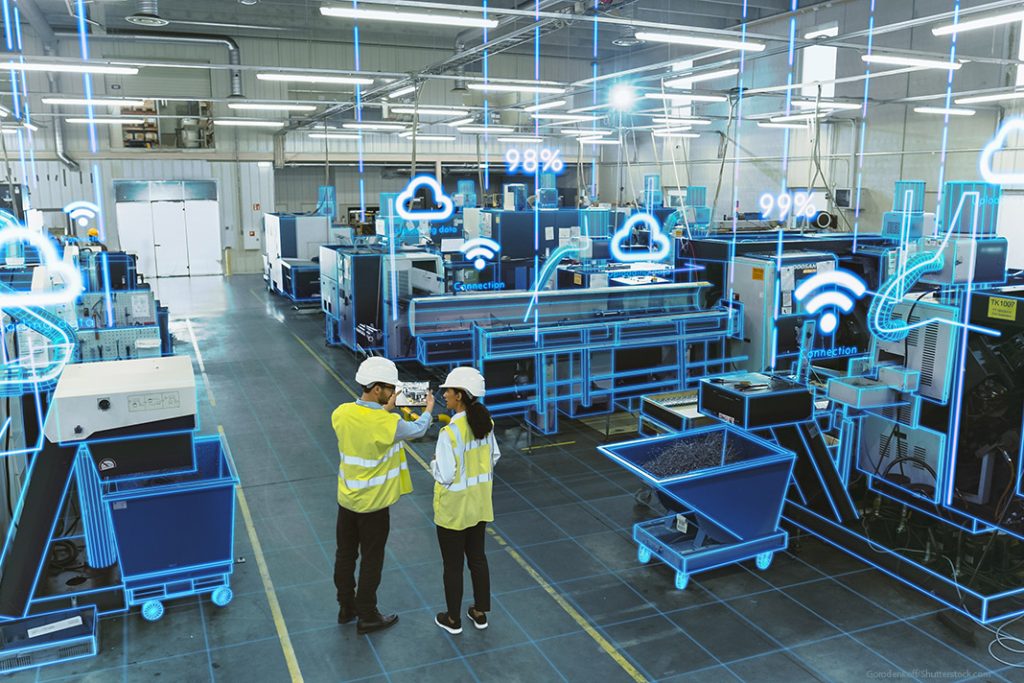
An end-to-end digital thread connects information from design through manufacturing, delivery and service. Digital twins rely on consistent, connected data throughout each stage of the product lifecycle.
Configuration Lifecycle Management (CLM) helps maintain configuration integrity as products evolve across functions. Successful digital thread initiatives require collaboration among engineering, manufacturing, IT and digital leadership.
Manufacturers no longer need to treat customization and resilience as competing priorities. Data continuity enables faster decision-making, greater adaptability and improved cross-functional collaboration. End-to-end visibility strengthens manufacturers’ ability to respond to supply chain disruptions and changing customer demands. Organizations that invest in lifecycle-wide data governance and digital thread strategies will be better positioned for long-term competitiveness.
Sustainability and circularity enablement are important benefits. End-to-end configuration data provides the reliable as-built and as-maintained basis for repair, refurbishment, recycling and regulatory reporting (CSRD, Digital Product Passport, CBAM). This turns compliance into circular value, especially for the future.
With connected data, manufacturers can simulate production changes before making costly physical investments. Digital twins enable virtual validation of factory layouts, equipment, tooling and production workflows. Simulation reduces implementation risk while improving speed, accuracy, and confidence in operational decisions.
AI is emerging as a valuable accelerator for planning and optimization, but its effectiveness depends on connected, high-quality lifecycle data.
Two real-world examples illustrate these points well.
End-to-end traceability for wind turbines: A wind turbine manufacturer struggled with incomplete as-built and as-maintained visibility. This resulted in a high share of unplanned service climbs just to verify installed components – adding cost, safety risk and downtime. The solution was an end-to-end traceability backbone linking a digital twin to physical products across the full lifecycle, enabling right-first-time service planning and predictable maintenance.
Cross-brand modular system rollout: A truck OEM group with multiple brands operated fragmented product data, duplicate toolchains and no shared configuration truth across the enterprise. Parallel transformation streams (product, IT, people) ran in silos, limiting the value of the group’s modular target architecture. What fixed these issues was one shared modular system with a single product backbone, a common toolchain and one product development process.
CLM and the digital thread are a strategic, cross-functional capability – not just an IT or engineering tool. They shift configuration management from an engineering discipline to a cross-functional governance backbone, strengthening resilience, service, circularity and regulatory readiness.
The next shift in CLM is a governance transformation rather than a technology upgrade. Manufacturers need clear decision rights, cross-functional ownership and business-aware trade-offs that balance revenue, margin, risk, compliance and customer commitments. The engineering function cannot be solely responsible for configuration decisions; these decisions need to be part of enterprise governance.
This is the shift that lays the foundation for AI. Manufacturers rely more and more on AI for help with design, operations, supply chain decisions and service. To succeed, they must have configuration data that is trustworthy, deterministic and connected. Without such data, AI just scales inconsistency.
This foundation offers the added benefit of strengthening resilience. When disruptions like regulatory change, a cybersecurity incident or a supplier failure happen, the transparency that now exists within configuration empowers companies to identify exactly which products, suppliers, customers and service obligations are affected, enabling precise action in hours – not weeks.
Rather than being an engineering artifact, configuration is now enterprise infrastructure for decision-making. Manufacturers who understand this shift will have the advantage of being able to implement AI with confidence, respond to disruption faster and compete more effectively in the increasingly complex manufacturing environment.
About the authors:

Rüdiger Stern is managing director of Industry X at Accenture DACH. He brings extensive experience from previous roles at AssetMinder, the Society of Cost Engineers, FACTON, and Accenture. He studied at Hochschule für Technik und Wirtschaft Berlin from 1994 to 1998 and holds a Diploma degree in Physics (Dipl.-Ing.) with a focus on product development, test, and validation.

Damantha Boteju is chief product and technology officer of Configit, the global leader in Configuration Lifecycle Management (CLM) solutions and a supplier of business-critical software for the configuration of complex products. He joined Configit in March 2023, bringing over 25 years of expertise in software development with a focus on enterprise-class products. As CPTO, he leads the product and technology strategy, driving innovation and delivering solutions that meet the complex needs of Configit’s global customers.

Forging the Next 250 Years: Powering the Next Era of American Manufacturing
Brooklyn Army Terminal (BAT) began as a World War II-era military supply base. Today it is New York City’s largest publicly owned industrial campus, with 59 waterfront acres, more than 4 million square feet and over 100 businesses. In this episode of Industry Insights, Bridget Chansakul, Vice President of Leasing & Portfolio Management at NYCEDC, explains what space is available and what’s planned for the 250,000+ square feet of new industrial space in Building A. She also covers how the ferry, parking and on-site childcare help tenants hire and keep workers, along with workforce partnerships, City incentives for manufacturers and where BAT is headed next.
Get In Touch
Google news and SEO compliant, Industry Today’s state-of-the-art digital media platform offers bespoke media campaigns that target key decision makers and buyers to achieve your marketing and promotional goals.

Contribute
Showcase your brand and promote your business to our highly targeted audience. We offer detailed Google Analytics with measurable ROI to assure success. Submit your content for review by our Editorial team who will contact you to discuss the project further.
About Us
Reach Your Targeted Audience and Grow Your Business. Learn more About Industry Today.
Contact Us

© 2026 Industry today. All Rights reserved.