Efficient material handling is essential for keeping industrial operations productive, organized, and safe.
Whether a facility moves steel components, machinery, production parts, or heavy materials, the right lifting equipment can reduce physical effort and make everyday tasks more manageable. From cranes and hoists to magnetic lifting solutions, businesses can choose equipment based on their specific workload, workspace, and lifting requirements.
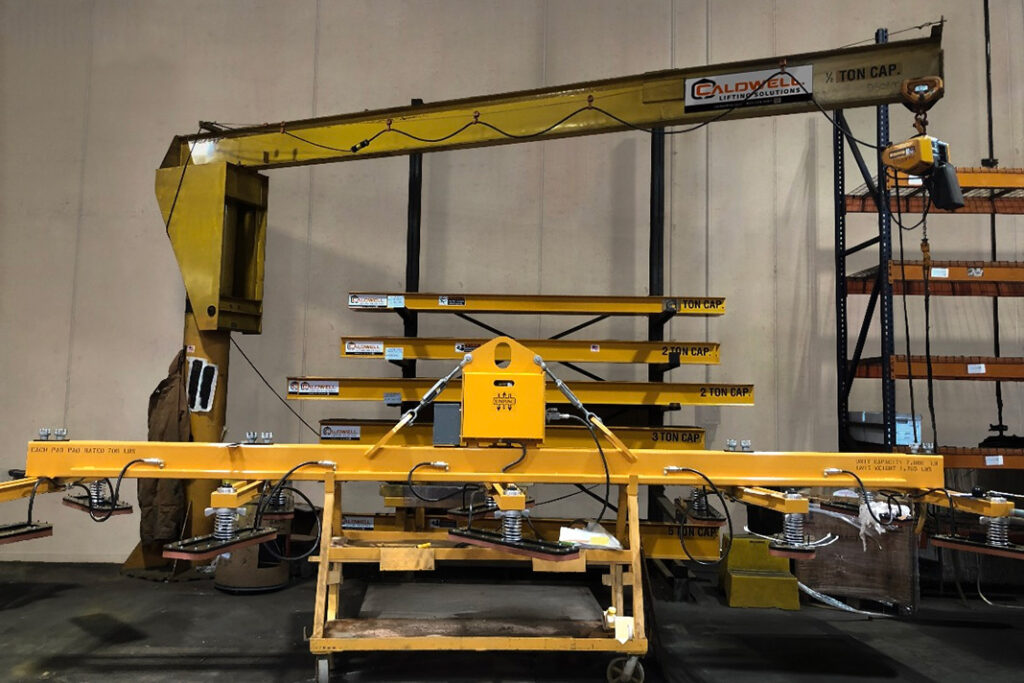
Many manufacturing and production facilities need a lifting solution that can support repetitive tasks without taking up unnecessary space. A workstation bridge crane can be a practical option for assembly areas, machine shops, maintenance stations, and production cells where materials need to be lifted and positioned frequently.
When comparing a workstation bridge crane, businesses should look beyond basic load capacity. The crane’s reach, span, mounting configuration, available headroom, and frequency of use can all influence its suitability. A properly selected workstation bridge crane can make it easier for operators to move components around a designated work area while reducing unnecessary handling.
This type of equipment is particularly useful when lifting requirements are concentrated around specific workstations rather than throughout an entire facility. A workstation bridge crane can provide controlled and efficient material movement while helping operators handle loads more safely and conveniently within their designated work areas.
Steel and other ferrous materials can be challenging to move using conventional methods. An industrial lifting magnet can provide a convenient solution for handling compatible metal loads such as steel plates, blocks, and fabricated components.
Magnetic lifting equipment can help simplify loading and positioning by reducing the need for multiple mechanical attachments. However, the magnet must be appropriate for the material and application. Load weight, surface condition, material thickness, temperature, and lifting capacity should all be considered before selecting a magnetic lifting solution.
Proper operating procedures are equally important. Operators should understand the equipment’s rated capacity and follow the manufacturer’s instructions whenever magnetic lifting equipment is used.
For operations involving frequent lifting, powered equipment can help improve efficiency and reduce manual effort. An electric chain hoist is commonly used with overhead cranes and other lifting systems where controlled vertical movement is required.
Businesses searching for an electric chain hoist for sale should consider the complete application rather than focusing only on price. Factors such as lifting capacity, lift height, lifting speed, duty cycle, power requirements, controls, and installation conditions can affect the overall suitability of a hoist.
A properly matched electric hoist can provide consistent lifting performance for production, maintenance, warehousing, and other industrial applications. It is also worth considering the availability of replacement parts and ongoing service support when evaluating equipment.
Powered lifting equipment is not necessary for every application. For occasional lifting tasks, maintenance work, or locations where electrical power is limited, a manual hand chain hoist can be a simple and cost-effective option.
Manual chain hoists are operated by pulling a hand chain to raise or lower the load. Their relatively straightforward design makes them useful in workshops, maintenance areas, construction applications, and other environments where controlled lifting is required without a powered system.
As with any lifting equipment, the hoist should always be used within its rated capacity. Operators should also inspect the equipment regularly and follow appropriate safety procedures.
There is no single lifting solution that works for every industrial facility. A production area may benefit from a workstation crane, while a steel fabrication operation may need magnetic lifting equipment. Another facility may require electric hoists for repetitive lifting or manual chain hoists for occasional maintenance work.
Before purchasing equipment, businesses should evaluate the weight and dimensions of the loads, how frequently they are moved, the required lifting height, available workspace, power availability, and the type of movement involved. Understanding these requirements makes it easier to select equipment that fits the application instead of choosing based solely on specifications or price.
It is also important to consider operator training, inspection requirements, maintenance, and access to replacement components. These factors can have a significant impact on the long-term value and reliability of lifting equipment.
The right lifting solution can make material handling more efficient while helping businesses create a more organized and productive workplace. Whether the requirement involves workstation cranes, magnetic lifting equipment, electric hoists, or manual lifting solutions, careful equipment selection is essential.
Crane Depot offers a range of cranes, hoists, lifting equipment, and material-handling solutions for different industrial applications. By evaluating the specific requirements of each lifting task and selecting equipment accordingly, businesses can build a material-handling system that supports efficiency, reliability, and safer day-to-day operations.

Forging the Next 250 Years: Powering the Next Era of American Manufacturing
As manufacturers offer more customization than ever before, managing product complexity has become a critical challenge. Tune in with Dan Joe Barry, Vice President of Product Marketing at Configit, who explores how companies are tackling the growing number of product configurations across engineering, sales, manufacturing, and service. He explains how Configuration Lifecycle Management (CLM) helps organizations maintain a single source of truth for configuration data. The result: fewer errors, faster quoting, and the ability to deliver customized products at scale.
Get In Touch
Google news and SEO compliant, Industry Today’s state-of-the-art digital media platform offers bespoke media campaigns that target key decision makers and buyers to achieve your marketing and promotional goals.

Contribute
Showcase your brand and promote your business to our highly targeted audience. We offer detailed Google Analytics with measurable ROI to assure success. Submit your content for review by our Editorial team who will contact you to discuss the project further.
About Us
Reach Your Targeted Audience and Grow Your Business. Learn more About Industry Today.
Contact Us

© 2026 Industry today. All Rights reserved.