MFG Day connects manufacturers with the next generation of workers while showcasing the careers, skills and technology shaping the industry.
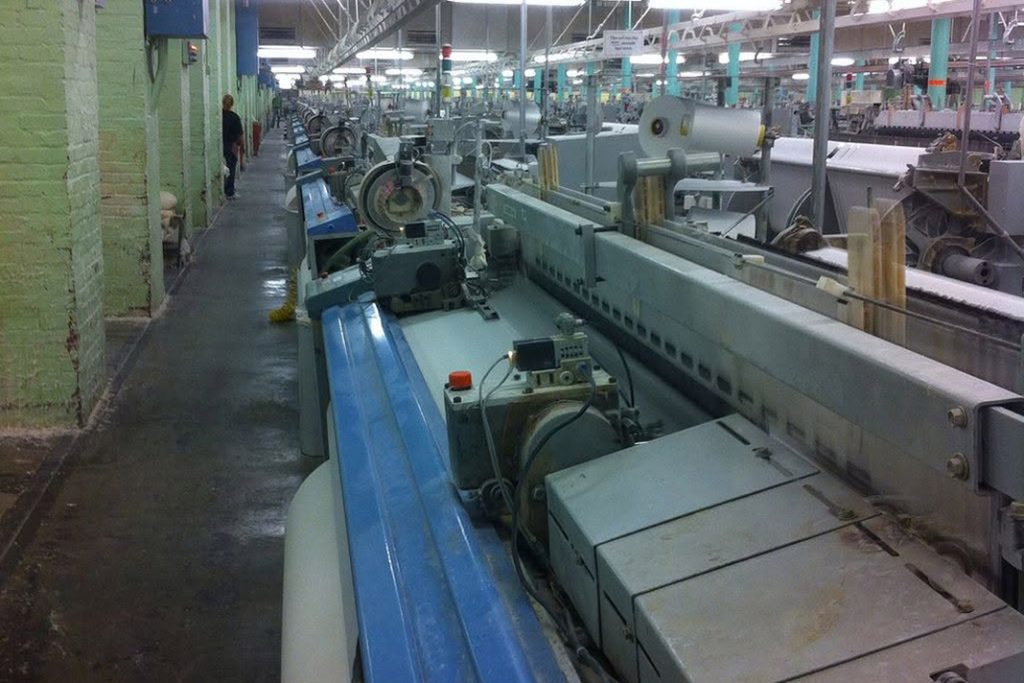
On Friday, October 2, several thousand plants, technical colleges and training centers across North America will unlock doors that stay closed the other 364 days of the year. Manufacturing Day — MFG Day — is part open house, part recruiting pitch, and increasingly part survival strategy.
The Manufacturing Institute launched the event in 2011 to counter a stubborn perception problem: that factory work meant dim, dirty and dead-end. Fifteen years on, the tours have a harder edge to them. The sector is not trying to change its image so much as fill its shifts.
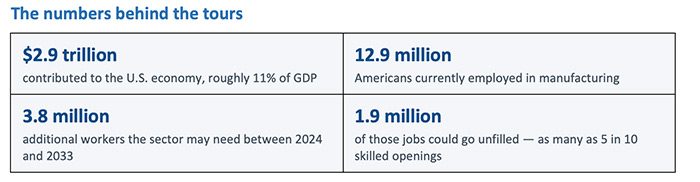
The 3.8 million figure is the one that gets quoted at conferences. The 1.9 million is the one that should worry operations leaders, because it is not a forecast of demand — it is a forecast of failure. Deloitte and The Manufacturing Institute put it plainly: as many as half of the skilled positions manufacturers expect to open over the decade may simply never be filled at current rates of hiring and training.
That same research found 65% of manufacturers naming attracting and retaining talent as their primary business challenge — ahead of costs, ahead of supply chain, ahead of demand. More than nine in ten said they have formed at least one workforce partnership, typically with a community college, technical school or regional workforce board.
Skeptics inside operations tend to see MFG Day as a public-relations exercise that costs a shift of productivity. The counterargument is arithmetic. A single hire from a local program that a plant helped build is worth more than a recruiter’s quarterly spend, and the relationships that produce those hires take years to establish. The tour is the front end of a pipeline, not the whole of it.
The practical version looks less like a ribbon-cutting and more like a standing arrangement: a named contact at the nearest technical college, a paid internship that converts, a supervisor who teaches one module a semester, and an apprenticeship with a wage progression a nineteen-year-old can actually plan around. Plants that treat October as the beginning of that work rather than the whole of it are the ones that report hires from it.
Workforce pressure shows up in operating data before it shows up in a hiring report. Vacancy duration, voluntary turnover, overtime hours, absenteeism and recordable safety incidents all move ahead of production metrics, and they tend to move together — rising overtime alongside rising absenteeism is a staffing problem announcing itself a quarter early.
Many states now extend the observance across all of October as Manufacturing Month, which gives plants that cannot spare a Friday in early October a wider window. Either way, the measure of a good MFG Day is not attendance on the day. It is whether anyone who walked the floor on Friday is on the payroll a year later.

Forging the Next 250 Years: Powering the Next Era of American Manufacturing
As manufacturers offer more customization than ever before, managing product complexity has become a critical challenge. Tune in with Dan Joe Barry, Vice President of Product Marketing at Configit, who explores how companies are tackling the growing number of product configurations across engineering, sales, manufacturing, and service. He explains how Configuration Lifecycle Management (CLM) helps organizations maintain a single source of truth for configuration data. The result: fewer errors, faster quoting, and the ability to deliver customized products at scale.
Get In Touch
Google news and SEO compliant, Industry Today’s state-of-the-art digital media platform offers bespoke media campaigns that target key decision makers and buyers to achieve your marketing and promotional goals.

Contribute
Showcase your brand and promote your business to our highly targeted audience. We offer detailed Google Analytics with measurable ROI to assure success. Submit your content for review by our Editorial team who will contact you to discuss the project further.
About Us
Reach Your Targeted Audience and Grow Your Business. Learn more About Industry Today.
Contact Us

© 2026 Industry today. All Rights reserved.