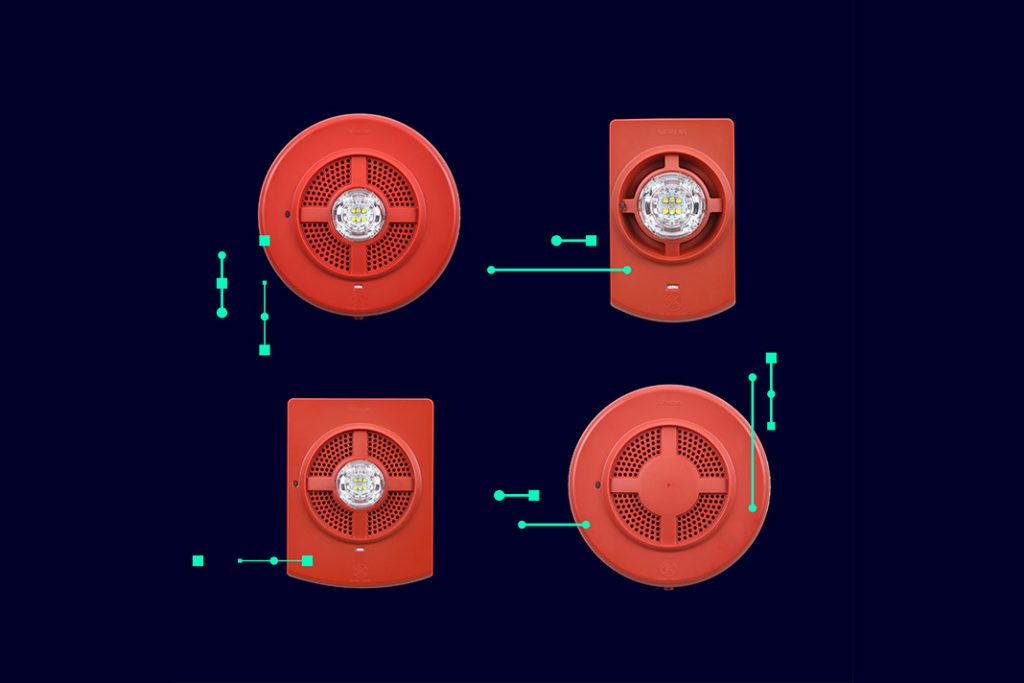
Key steps businesses need to take.
Cybersecurity rules are no longer something you can leave in the “we’ll get to it later” pile. NIS2 raises the bar for many organizations connected to EU markets, and the consequences are not just theoretical. Fines, investigations, customer concern, and painful incident clean-up can all follow if your business is unprepared.
There’s also a clear business reason to take this seriously: “71 % of EU companies think cybersecurity is a high priority.”
That tells you something important. Security is now part of how companies earn trust. This guide breaks NIS2 readiness into practical steps you can actually use.
Before you assign owners or open a spreadsheet, it helps to understand what NIS2 changes. This is not just another policy update from Brussels. It creates clearer duties around risk management, reporting, governance, and supplier oversight.
For regulated organizations, NIS2 compliance means proving that cyber risk is being managed in a structured way. That includes protecting systems, preparing for incidents, reporting serious events, and keeping suppliers under proper review.
In plain English, NIS2 moves cybersecurity out of the server room and into leadership meetings. Boards, executives, operations teams, and vendors all have a role.
If you need a practical place to begin, an established nis2 compliance checklist can help you organize readiness work, especially if your environment includes OT, industrial systems, or critical infrastructure.
NIS2 covers far more ground than the original NIS Directive. Sectors such as energy, transport, health, water, digital services, manufacturing, public administration, and managed service providers may all fall within scope.
And here’s the bit some companies miss: NIS2 for businesses can matter even if you are not physically based in the EU. If you serve EU customers, support covered organizations, or sit inside their supply chain, you may still face contractual pressure to meet NIS2-style expectations.
Once you know whether NIS2 touches your organization, the next step is turning that knowledge into action. A focused nis2 compliance checklist keeps the work manageable. Not fluffy. Not endless. Just clear enough to show progress.
A useful NIS2 checklist begins with the basics: systems, data, facilities, vendors, users, and critical business services. Include the awkward stuff too. Old machines. Forgotten databases. Shadow spreadsheets. That dusty system everyone is afraid to reboot.
Then map threats to those assets. What happens if a system fails? Who is affected? How long can the business tolerate downtime? This makes your security spending easier to justify because decisions are tied to actual business risk.
Once the risk picture is clear, match each gap with a control. That might mean stronger access management, safer backups, encryption, better logging, continuous monitoring, patch processes, or regular security testing.
A simple working table may look like this:
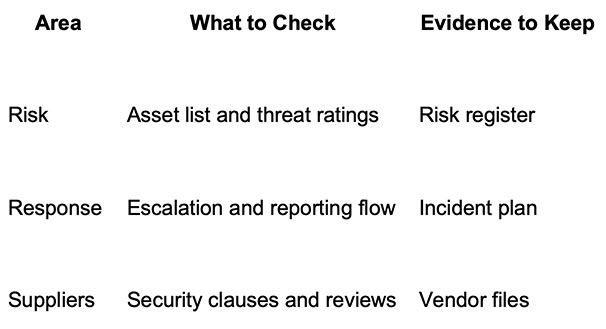
Controls are useful, but they are only half the story. Your team also needs to know what to do when something goes wrong.
Good controls lower the chance of an incident. They do not eliminate it. NIS2 expects organizations to detect, report, contain, and recover from cyber events with discipline.
Your incident response plan should answer simple questions under stressful conditions. Who decides? Who investigates? Who contacts authorities? Who speaks to customers? Who wakes up the executive team at 2 a.m.?
The NIS2 requirements include notification duties, so vague ownership can become a real problem. If everyone assumes someone else is reporting, nobody may do it on time.
Run tabletop exercises. They often reveal uncomfortable but useful gaps: missing phone numbers, unclear sign-off, outdated contact lists, or leaders who have never opened the response plan before.
Continuity planning should cover backups, recovery priorities, alternate working methods, key suppliers, and manual workarounds. It sounds basic, yes. But during an outage, simple instructions can feel like gold.
Employee readiness matters too. Train people to recognize phishing, report suspicious activity, handle sensitive data carefully, and use passwords or authentication tools properly. Keep attendance records. Auditors tend to like proof more than good intentions.
Even well-trained employees cannot protect you from every third-party risk. Vendors, service providers, contractors, and subcontractors can all create exposure. NIS2 expects businesses to understand those connections.
Ask suppliers about access controls, logging, patching, subcontractors, incident notification terms, and security testing before contracts are signed. For current vendors, rank them by business impact and data access.
This is not just red tape. It is risk management with a paper trail.
“Compliance remains the main driver of cybersecurity investment (70%), yet its benefits extend beyond regulation. These investments have strengthened risk management (41%), detection (35%), and response (26%).”
Someone needs to own the program. That may be a compliance lead, security manager, or small cross-functional team. Give them decision rights, not just a title.
They should track tasks, collect evidence, brief leadership, update policies, and chase overdue actions. Glamorous? Not always. Necessary? Absolutely.
Board involvement also needs to be real. Senior leaders should see open risks, major decisions, and progress against known issues. A once-a-year slide deck will not cut it.
Governance gives the work structure. A roadmap gives it momentum. Without timing, everything becomes “important,” which usually means nothing gets finished.
Start with scope. Confirm whether your organization, services, or customers bring you under NIS2 expectations. Then build asset lists, score risks, identify incident contacts, and rank suppliers.
The phrase NIS2 directive steps should not mean a giant binder nobody reads. It should mean owners, due dates, evidence, review points, and enough clarity that the plan survives staff changes.
After the first pass, mature the program. Add testing, audit preparation, policy updates, better reporting, and automation where it genuinely helps.
Dashboards can be useful when they show practical information: open risks, overdue actions, missing evidence, and upcoming reviews. If a dashboard only looks pretty in a meeting, it is decoration.
Some NIS2 duties are easy to overlook because they do not feel urgent until something breaks. Then they become very urgent indeed.
Pseudonymization, anonymization, and secure software development practices deserve attention. Internal tools are still software. They need review, testing, change control, and ownership.
Cloud service providers and managed service providers should be especially careful. Their access can affect multiple customers at once, so weak controls can spread damage quickly.
Not every security event is the same. Your team should define how it separates minor issues from significant incidents. That decision process should be documented.
Why does this matter? Because if authorities later ask why something was or was not reported, a written record is far stronger than someone trying to remember what happened during a stressful week.
NIS2 should not live in a lonely folder on one person’s laptop. It works best when connected to your existing governance, risk, and compliance routines.
If your organization already uses ISO 27001, GDPR, IEC 62443, or similar frameworks, map NIS2 obligations to the controls you already have. There is often overlap, and duplicate work wastes time.
This also makes audits easier. One well-labeled evidence file can support several requirements if ownership and scope are clear.
Keep policies, risk decisions, training logs, vendor reviews, incident tests, and leadership approvals in one controlled location. Messy documentation creates doubt, even when real work has been done.
Automated reminders can help with reviews and renewals. People are busy. Calendars forget nothing.
Once NIS2 becomes part of daily risk management, you can keep improving how your team detects issues and proves readiness. Small, steady improvements usually beat frantic last-minute projects.
AI-based anomaly detection may help identify unusual behavior, especially in complex networks. Managed security providers can also support monitoring and response, but check their own controls carefully.
Useful resources include incident templates, risk worksheets, supplier questionnaires, audit trackers, and project boards. Keep them short. If a template is painful to use, people will avoid it.
The biggest mistakes include underestimating indirect suppliers, failing to document actions, ignoring employee behavior, and treating compliance as a one-time push.
Threats change. Systems change. Contracts change. Your program has to change too. Review it on a set schedule, and update your checklist whenever something significant happens.
NIS2 asks businesses to understand risk, protect important systems, prepare for incidents, train employees, manage suppliers, and prove accountability. That may sound like a lot, because it is.
But it becomes far less intimidating when you break it into clear steps. Start with scope and risk. Build controls. Keep evidence as work gets done. Use templates where they help, but do not let paperwork replace real security.
A practical nis2 compliance checklist turns pressure into progress. And progress is exactly what regulators, customers, partners, and your own leadership team need to see.
The 5 C’s are change, compliance, cost, continuity, and coverage. They help leaders think beyond tools and consider planning, legal duties, budget, uptime, and whether controls protect the right areas.
A SOC 2 Type 2 checklist helps service organizations prove controls worked over time. It usually covers security, availability, confidentiality, processing integrity, privacy, access rules, monitoring, vendor controls, and evidence collected during the audit period.
Businesses should update their nis2 compliance checklist at least once a year and immediately after major system changes, new suppliers, incidents, audits, or updated guidance. NIS2 compliance works best as a living process, not a document saved and forgotten.

Forging the Next 250 Years: Powering the Next Era of American Manufacturing
As manufacturers offer more customization than ever before, managing product complexity has become a critical challenge. Tune in with Dan Joe Barry, Vice President of Product Marketing at Configit, who explores how companies are tackling the growing number of product configurations across engineering, sales, manufacturing, and service. He explains how Configuration Lifecycle Management (CLM) helps organizations maintain a single source of truth for configuration data. The result: fewer errors, faster quoting, and the ability to deliver customized products at scale.
Get In Touch
Google news and SEO compliant, Industry Today’s state-of-the-art digital media platform offers bespoke media campaigns that target key decision makers and buyers to achieve your marketing and promotional goals.

Contribute
Showcase your brand and promote your business to our highly targeted audience. We offer detailed Google Analytics with measurable ROI to assure success. Submit your content for review by our Editorial team who will contact you to discuss the project further.
About Us
Reach Your Targeted Audience and Grow Your Business. Learn more About Industry Today.
Contact Us

© 2026 Industry today. All Rights reserved.