By Peter Cecora, Executive Managing Director, JLL
Walk around Tampa Bay today and it can be easy to think of the city as a fast-growing Sun Belt destination defined by new apartments, office towers, restaurants and mixed-use developments.
But long before those buildings began reshaping the skyline, Tampa was a city built around moving things.
Its location on Tampa Bay and the Hillsborough River gave the region a natural advantage as a commercial hub. The arrival of Henry Plant’s railroad in the late 1800s opened the region to new markets, while the discovery of phosphate nearby fueled mining and shipping and helped drive a major period of economic growth. Tampa’s port, transportation infrastructure and industrial businesses became foundational to the city’s economy.
That history is worth remembering as we look at Tampa Bay’s next chapter.
Today, industrial real estate may not always get the same attention as the latest office tower or multifamily development, but it remains one of the most important pieces of the region’s growth story. The warehouses, distribution centers, manufacturing facilities and logistics operations spread throughout the Tampa Bay area are what help businesses get products to consumers, support local employers, create jobs, and keep the broader economy moving.
In many ways, Tampa’s industrial market is going back to its roots only with a much more modern economy behind it.
After several years of exceptionally strong rent growth, record leasing activity and significant new construction, Tampa’s industrial market is beginning to normalize. Tenants have more options than they did during the immediate post-pandemic period, leasing decisions are taking longer, and landlords are working harder to get transactions across the finish line.
That adjustment is healthy.
Tampa’s vacancy rate currently stands at 8.1%, 130 basis points above the national average. But despite the elevated vacancy rate, the market continues to show solid underlying fundamentals, with approximately 1.9 million square feet of positive net absorption year-to-date.
Rent growth has also begun to normalize following the outsized gains of 17% to 30% seen in 2022 and 2023, rising 6.9% through mid-2026. The shift points to a market moving toward greater equilibrium after several years of extraordinary growth
In other words, demand has not disappeared. The market is simply operating at a more sustainable pace.
What has changed is the balance of power.
A few years ago, an available industrial building might have generated several competing prospects almost immediately. Today, there may be one or two serious users evaluating the space.
That is an important distinction. This is a market in which tenants have more time to evaluate their options and landlords have to work harder to win their business.
The reason that distinction matters is that the fundamentals driving Tampa Bay’s industrial demand have not gone away.
Florida continues to attract businesses, workers and capital from across the country. Recent IRS migration data shows Florida gained approximately $20.6 billion in adjusted gross income from inbound taxpayers, with significant wealth coming from states including California, New York, Illinois, Massachusetts and New Jersey.
Companies are following that population and economic growth.
The region continues to attract and expand businesses in logistics, manufacturing, healthcare, life sciences, financial services, technology and professional services. Philip Morris International, for example, recently established a business solutions center in the highly sought after Westshore submarket, while other companies continue to expand their presence across the region.
Every one of those businesses needs real estate.
And while not every company needs a warehouse, virtually every growing economy depends on industrial infrastructure somewhere in the supply chain.
That is why industrial real estate is so closely connected to the performance of other property sectors. New businesses create jobs. New jobs attract residents. Residents create demand for housing, restaurants, retail and services. And all of those businesses need places to operate and goods to move.
Industrial is not necessarily the most visible part of that cycle, but it is often one of the first pieces.

That brings us to one of the biggest challenges facing Tampa Bay: finding the right places to put the next generation of industrial space.
The region has grown substantially, and well-located industrial land is becoming harder to find, particularly in areas with immediate access to major highways, population centers, labor and transportation infrastructure.
That is one reason we are seeing developers become more creative.
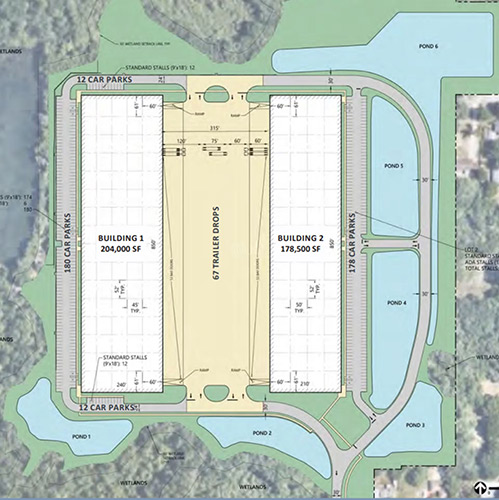
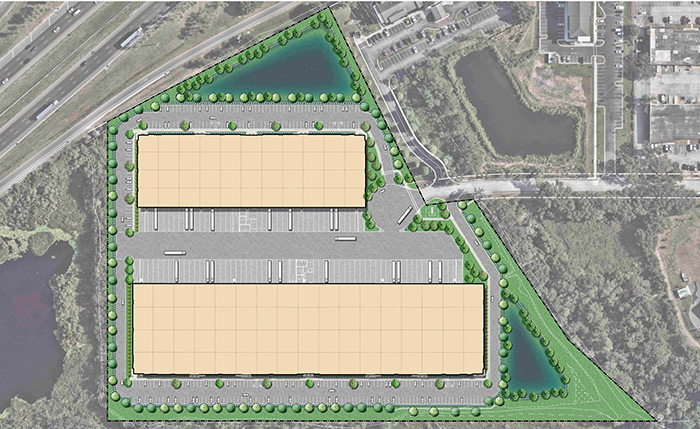
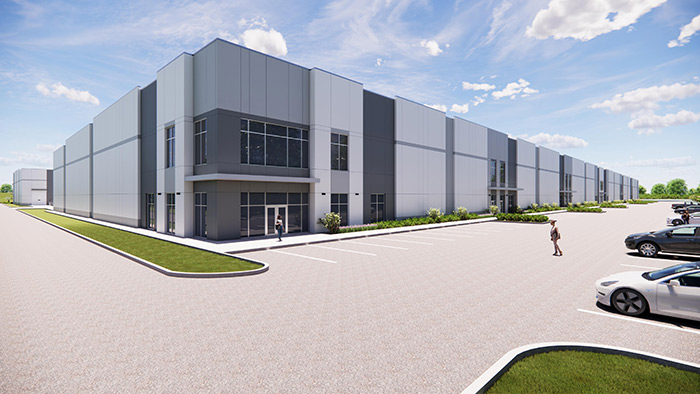
There are still opportunities for new development in strategic locations. JLL’s work on 4Ward Logistics Center in East Tampa is one example. GTIS Partners is developing the 382,500-square-foot Class A industrial project on a 116-acre site near the intersection of I-4 and I-75. The project is designed to serve logistics, e-commerce, manufacturing and distribution users that depend on access to Tampa Bay’s major transportation corridors.
Projects like 4Ward demonstrate that there is still a need for new, high-quality industrial space in Tampa Bay, particularly when it is located where businesses can efficiently reach customers, workers and transportation networks.
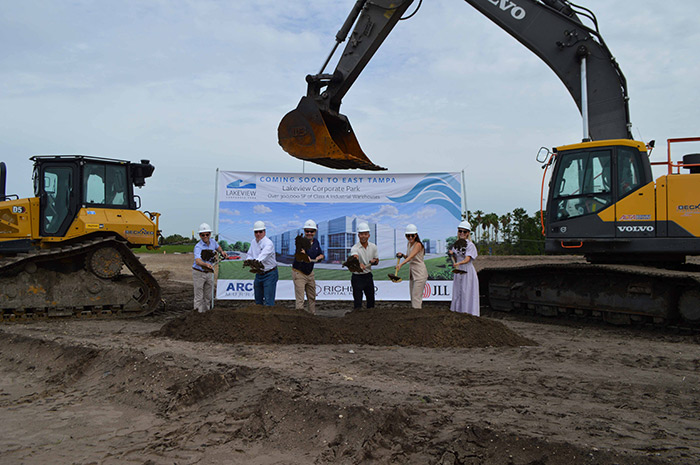
At the same time, Lakeview Corporate Park in East Tampa shows another side of the market. Richland Capital Holdings recently broke ground on the 310,000-square-foot Class A industrial project, which is being developed on the site of a former multi-story office campus. JLL is leading leasing for the project, which is expected to deliver in the first quarter of 2027.
Together, these projects reflect an increasingly important trend: Tampa’s industrial future will require both new development and creative redevelopment of properties that no longer meet the needs of today’s users.
Instead of simply finding undeveloped land and building outward, developers are looking for ways to reposition properties that have become obsolete or underutilized.
That can mean converting office properties, redeveloping underutilized sites or finding opportunities in established industrial corridors that already have access to infrastructure and labor.
It also makes sense from a broader planning perspective. If Tampa Bay is going to continue growing, we need to think carefully about where that growth happens.
Keeping employment centers and logistics facilities close to the people and businesses they serve can help reduce unnecessary travel, make supply chains more efficient and maximize infrastructure that is already in place.
In that sense, the future of Tampa industrial isn’t about one type of development. It’s about creating the right space, in the right location, for the businesses that will drive the region’s next chapter of growth.
Another interesting shift is happening on the tenant side.
While large distribution requirements remain an important part of the market, activity has been particularly consistent among users looking for less than 50,000 square feet.
That is encouraging because these smaller businesses are often deeply connected to the local economy including contractors, food and beverage companies, manufacturers, distributors and service businesses that may be growing alongside the communities they serve.
We are also seeing more companies consider owning rather than leasing their industrial space.
Industrial rents have risen roughly 50% over the past five years, and higher occupancy costs are forcing businesses to think differently about real estate.
Approximately 20% of Tampa’s industrial sales over the past year involved owner-users, roughly double the share seen over the previous five years.
That tells us something important about the market: industrial real estate is not simply an investment vehicle. For many businesses, it is a strategic asset.
Tampa has changed dramatically since phosphate, cigars, railroads and shipping helped establish the foundation of its economy. Today, the region is home to a much more diverse mix of industries, businesses and residents.
But the underlying idea remains remarkably similar.
Tampa grew because it could connect businesses to markets, products to consumers and people to opportunity.
Industrial real estate continues to serve that same purpose.
The difference is that today’s industrial buildings are more sophisticated, more efficient and designed around the needs of a much more complex economy. Modern logistics facilities can support e-commerce, advanced manufacturing, regional distribution, food and beverage operations and a wide range of other businesses that did not exist when Tampa’s original industrial economy was taking shape.
The market will continue to go through cycles. Vacancy will move up and down. Rents will accelerate and moderate. Tenants will have more leverage at some points, while landlords will have more at others.
But the long-term story is bigger than any one market statistic.
Tampa Bay is still growing. People are still moving here. Businesses are still expanding here. And those businesses still need places to make, store, distribute and move the products and services that support a growing population.
That makes industrial real estate more than another segment of the commercial property market. It is part of the infrastructure of growth.
As Tampa looks toward its next generation, perhaps the most important lesson from its past is also the simplest: the things that made Tampa an economic center in the first place still matter.
The city is not moving away from its industrial roots. It is building on them.

About the Author:
Peter Cecora is an Executive Managing Director at JLL and one of Tampa Bay’s leading industrial real estate professionals. He specializes in industrial leasing, investment strategy and market analysis, advising owners, occupiers and developers across Florida.

Forging the Next 250 Years: Powering the Next Era of American Manufacturing
As manufacturers offer more customization than ever before, managing product complexity has become a critical challenge. Tune in with Dan Joe Barry, Vice President of Product Marketing at Configit, who explores how companies are tackling the growing number of product configurations across engineering, sales, manufacturing, and service. He explains how Configuration Lifecycle Management (CLM) helps organizations maintain a single source of truth for configuration data. The result: fewer errors, faster quoting, and the ability to deliver customized products at scale.
Get In Touch
Google news and SEO compliant, Industry Today’s state-of-the-art digital media platform offers bespoke media campaigns that target key decision makers and buyers to achieve your marketing and promotional goals.

Contribute
Showcase your brand and promote your business to our highly targeted audience. We offer detailed Google Analytics with measurable ROI to assure success. Submit your content for review by our Editorial team who will contact you to discuss the project further.
About Us
Reach Your Targeted Audience and Grow Your Business. Learn more About Industry Today.
Contact Us

© 2026 Industry today. All Rights reserved.