From oilfields to heavy machinery, moving equipment across four continents taught me hard lessons about logistics, people, and resilience.
By Christian Jefinof Linares
In the oil industry, the conversation almost always begins with crude and oil tankers; every business starts there. But over more than two decades in this industry, I have learned that many projects are won or lost before the first drop is produced. They are decided at the moment the right machinery arrives, or fails to arrive, at the right place.
I trained as a chemical engineer at the Massachusetts Institute of Technology (MIT). After graduating, I founded my first company: oil supplies and the purchase, rental and sale of heavy machinery, with our own machinery and hydraulics repair workshops. There I learned the business from the ground up and understood something I have never forgotten: machinery logistics is not a support function. It is the heart of the operation.
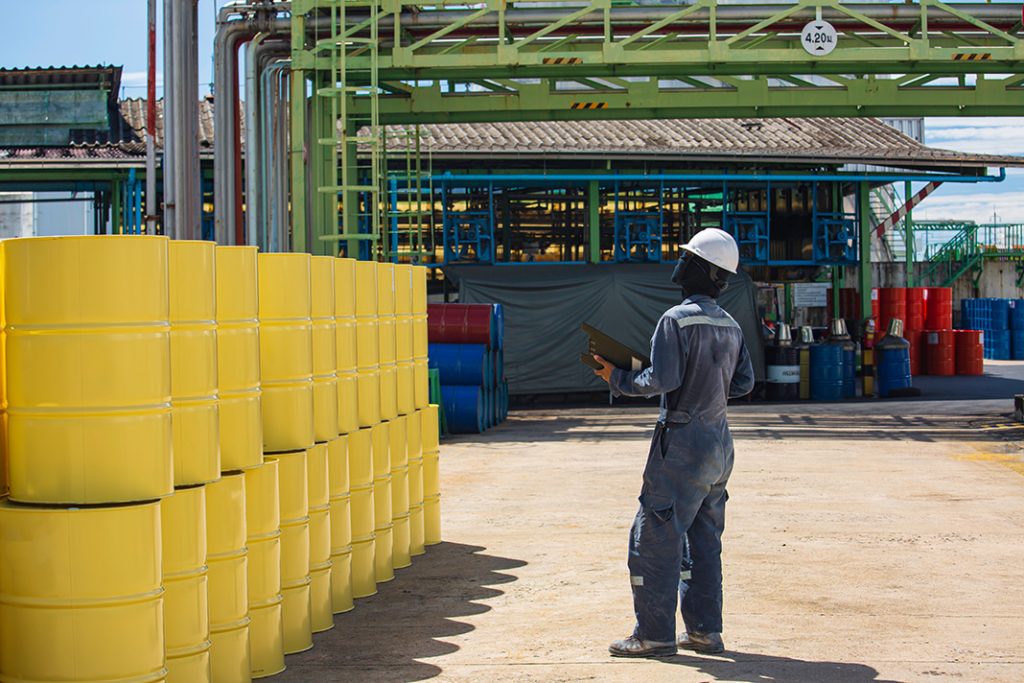
In my family, there has always been a saying: “An idle ship earns no freight.” In our industry, the same is true of a machine. A drilling rig held up at a port, an oil supply or a hydraulic spare part that does not arrive, or an excavator broken down in a remote area costs money every single day. Behind every lost day there is a client waiting and a word given.
That is why, very early on, I decided to work only with first-class machinery. It costs more to buy, but far less over its working life. And I apply the same rigor to a one-dollar deal as to a one-million-dollar deal: first I analyze the work, and then I do it.
Today, at Unaoil Group America, we organize the movement of our machinery around four hubs: Frankfurt, Hong Kong, Panama and the United States.
Frankfurt is our base in Europe. On the outskirts of the city, we have a large logistics center where storage, maintenance and dispatch to the markets where we operate are coordinated. For years, our European base was in London, a city I greatly appreciate, where I have many friends and to which I return every year. The move to Frankfurt was a logistics decision: to be at the heart of the German machinery industry, with connections to all of Europe and to the major export ports.
Hong Kong is our gateway to suppliers in Asia. It was one of the first places I traveled to buy supplies with my first company, and within a few days I understood its potential.
Panama is the hinge between two oceans and the natural gateway to South America and the Caribbean. The United States, with our main headquarters in Houston, is where everything is coordinated.
Nearly three quarters of our operation moves through Frankfurt and Hong Kong. Keeping machinery where the suppliers, technicians and routes are reduces both time and risk.
Venezuela and Brazil were our first doors into South America, and we have continued to this day. In Venezuela, we worked for more than twelve years with PDVSA and PDVSA Marina in Maracaibo, Punto Fijo and Anzoátegui; it was our most important market in South America, larger than several countries combined. In 2016 we had to leave due to the situation in the country, but it is a country I hold in great affection, and we intend to return very soon. I arrived in Brazil with my first company just a few months after graduating, continued there as CEO of Unaoil Group, and today, with Unaoil Group America, we carry that path forward with the exploration and production of light crude in Brazil’s Equatorial Margin.
In Colombia, we have been contractors to Ecopetrol since 2019 in the exploration and production of 49° API light crude in Barrancabermeja and Yopal, and of gas in Yopal for liquefied gas, with imported machinery rarely seen in the country. In Argentina, we have been contractors to YPF since 2019: crude extraction and diesel supply in Comodoro Rivadavia, and natural gas exploration and production in Tierra del Fuego. There we also extract coal, which we grind and export to the Asian market.
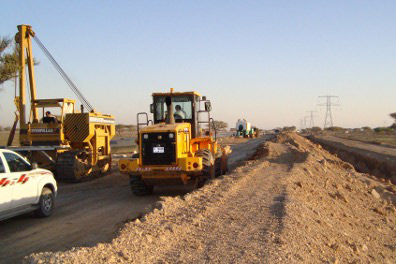
In Peru, since 2021, we have been exploring and producing natural gas in Camisea with machinery imported from Germany, and we built 36 kilometers of natural gas pipeline alongside a highway in Moquegua. In Mexico, we produce 31.1° API medium crude in Ciudad del Carmen, Campeche. In Guyana, since 2017, we have been working in the exploration and production of two crudes, medium and heavy, as well as natural gas, work that demands high-technology machinery. In Chile, at the end of 2021, we shipped a consignment of mining machinery from Hong Kong to Antofagasta for a private mining company.
In Africa, I had the vision starting in 2013, a little over a year after becoming CEO of Unaoil Group. Ethiopia and Angola came almost side by side, and later we added Tunisia, with the exploration and production of light crude and natural gas. In Ethiopia and Angola, we brought gas pipelines to very remote villages, and in Tunisia we built 64 kilometers of gas pipeline alongside a highway. There I learned that, on difficult terrain, the right, well-maintained machinery makes the difference between getting there and not getting there.
Every project faced the same underlying challenge: making sure a machine bought on one continent arrived on time, in perfect condition and ready to work on another, often in places that are hard to reach.
There is something you will not find in any logistics manual. For years, I have been part of a network of fewer than ten businessmen, friends from different countries, who buy from the same sources and lend or rent machinery to one another according to the needs of each project. Sometimes at no cost.
Because we buy from the same suppliers, the equipment and spare parts are compatible, and the technicians know the machines. When a project urgently needs equipment, we do not start from scratch: we call someone we trust who already has it nearby. But the true value of this network is not technical: it is our word. In an industry where an idle machine costs so much, a partner’s word is worth as much as a contract.
Machinery is increasingly technological, projects are in ever more remote locations and deadlines are shorter. I have been doing business with businessmen in Asia for more than twenty years. In Hong Kong, my base in Asia, and in Singapore, I built relationships calmly and with time, and that is how I look today at Japan and South Korea: two powerhouses in technology and machinery, where I intend to arrive the way I arrive everywhere, not as a tourist, but to become a local.
Because there is something that does not change: oil, gas and infrastructure are still built with machines, with people and with one’s word. Whoever knows how to move all three on time will have an advantage no one can copy overnight.
Learn more about our operations at unaoilgroupamerica.com.
About the Author:
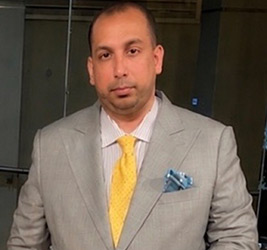
Christian Jefinof Linares is President and Founder of Unaoil Group America, an oil, energy and infrastructure group headquartered in Houston. A chemical engineer from the Massachusetts Institute of Technology (MIT), he was CEO of Unaoil Group (2012–2019). christianjefinof.com
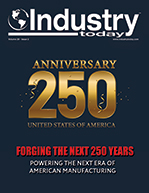
Forging the Next 250 Years: Powering the Next Era of American Manufacturing
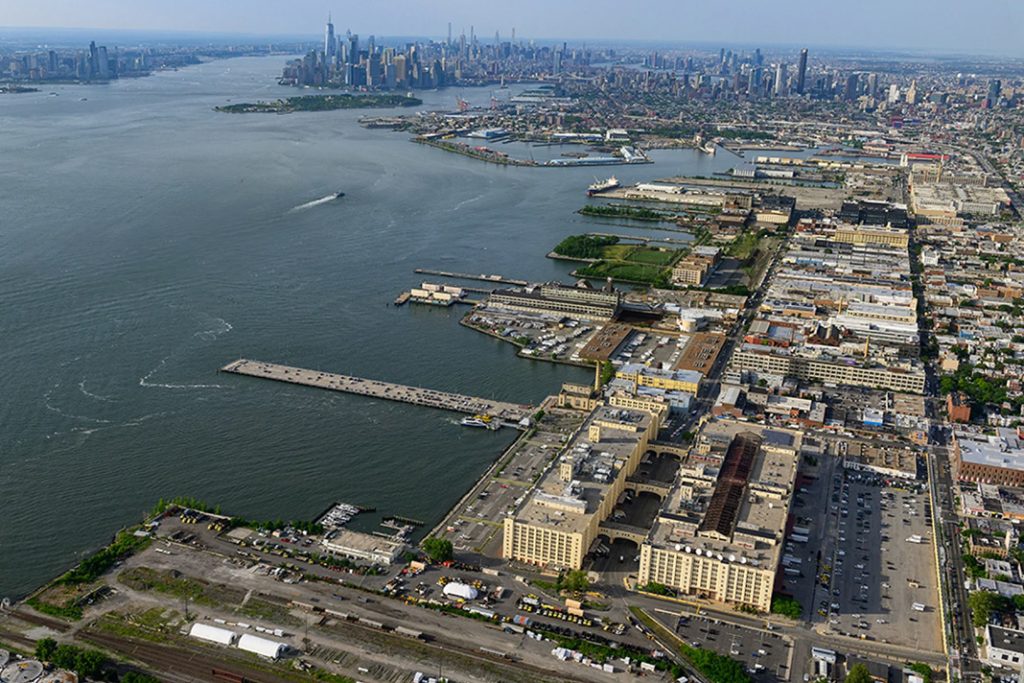
Brooklyn Army Terminal (BAT) began as a World War II-era military supply base. Today it is New York City’s largest publicly owned industrial campus, with 59 waterfront acres, more than 4 million square feet and over 100 businesses. In this episode of Industry Insights, Bridget Chansakul, Vice President of Leasing & Portfolio Management at NYCEDC, explains what space is available and what’s planned for the 250,000+ square feet of new industrial space in Building A. She also covers how the ferry, parking and on-site childcare help tenants hire and keep workers, along with workforce partnerships, City incentives for manufacturers and where BAT is headed next.
Get In Touch
Google news and SEO compliant, Industry Today’s state-of-the-art digital media platform offers bespoke media campaigns that target key decision makers and buyers to achieve your marketing and promotional goals.

Contribute
Showcase your brand and promote your business to our highly targeted audience. We offer detailed Google Analytics with measurable ROI to assure success. Submit your content for review by our Editorial team who will contact you to discuss the project further.
About Us
Reach Your Targeted Audience and Grow Your Business. Learn more About Industry Today.
Contact Us

© 2026 Industry today. All Rights reserved.