How are infrastructure constraints changing buying decisions?
By John Stamos, Principal, Alexander Group; Tim Meuschke, Principal, Alexander Group
The growth of AI and cloud computing is putting unprecedented pressure on the infrastructure required to support new data center capacity. Much of the industry’s attention has focused on demand, investment, and construction activity.
According to the Electric Power Research Institute (EPRI), data centers are projected to consume between 9% and 17% of U.S. electricity by 2030, up from roughly 4% to 5% today.
As developers, utilities, and suppliers work to support that growth, infrastructure availability is playing a larger role in project planning.
However, infrastructure constraints are creating a second challenge that receives less attention: they are changing how buying decisions are made and who influences them.
Long lead times for transformers, switchgear, generators, and other critical equipment are pushing infrastructure discussions much earlier in the project lifecycle. As project decisions move upstream, organizations serving the data center market are reexamining how they engage customers, allocate resources, and structure commercial teams.
The result is a market where commercial success depends not only on what customers are buying, but also on how projects are planned, specified and delivered.
For many years, major infrastructure projects followed a familiar sequence. Owners identified requirements, engineers completed designs, specifications were finalized, equipment was sourced and construction began.
Today, organizations can no longer wait for every design decision to be finalized before addressing infrastructure requirements. Manufacturing capacity, equipment availability and delivery schedules are increasingly evaluated alongside project planning. In many markets, the challenge extends beyond equipment availability. Data center developers may face multi-year timelines to secure access to power from regional grids, leading some projects to incorporate off-grid or behind-the-meter (BTM) generation strategies to accelerate development.
As a result, infrastructure constraints and power consumption considerations are increasingly shaping project scope, stakeholder involvement and investment decisions, including for less operationally critical products and solutions.
This shift has important commercial implications. Opportunities that once emerged during procurement are now developing during planning and design, creating new expectations for how suppliers engage customers and support projects.
For sales organizations, success often depends on coordinating across technical, operational, and commercial stakeholders throughout a project’s lifecycle rather than focusing primarily on procurement activities.
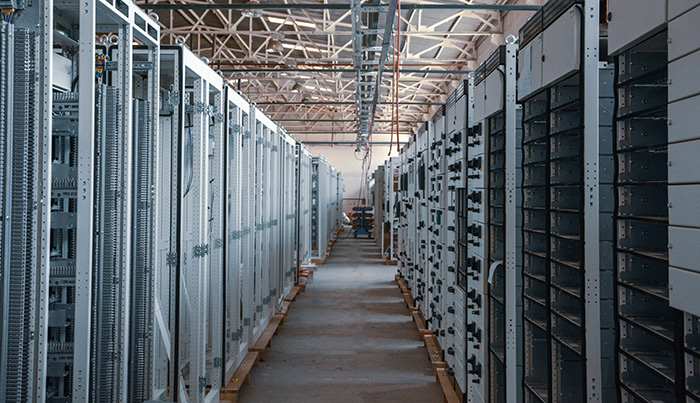
Data center projects involve a broad ecosystem of stakeholders, with some specializing uniquely in the data center space. This broad ecosystem includes owners, investors, utilities, engineering firms, contractors, EPC firms, and system integrators.
Engineering firms often help establish technical requirements, utilities influence infrastructure readiness, and contractors and integrators contribute implementation expertise. As a result, purchasing decisions are rarely confined to a procurement team.
For commercial organizations, effective engagement increasingly requires visibility into the broader project ecosystem and a clear understanding of where influence exists throughout the project lifecycle.
These changes are prompting suppliers to reevaluate how their commercial organizations engage customers.
In many companies, sales efforts have traditionally centered on procurement contacts and purchasing events. As planning and specification activities take on greater importance, organizations are reassessing whether those approaches still align with how projects advance.
As a result, many companies are taking a closer look at account coverage models, stakeholder engagement strategies, and how customer and project intelligence is shared across teams.
Roles and responsibilities also come into sharper focus when opportunities span multiple stakeholders, project phases, and technical disciplines.
Compensation is part of the conversation as well. Many incentive plans were built around formal buying events and closed deals, even though project influence is often established much earlier. In addition, data center projects can be significantly larger than traditional opportunities, creating challenges for organizations whose sales compensation plans were not designed for opportunities of that scale.
As organizations revisit account coverage and stakeholder engagement strategies, compensation may also require review.
The shift in project decision-making raises several questions for commercial leaders:
Many assumptions that shaped commercial engagement in the past are now being tested by changing project timelines and decision-making processes.
Data center projects still require the same stakeholders, equipment, and planning processes. What has changed is when many of the most important decisions are made.
As infrastructure constraints push those decisions earlier, organizations must ensure their commercial strategies align with how projects are planned, specified and delivered.
For many suppliers, competitive advantage will depend not only on technology capabilities but also on engaging the right stakeholders at the right stages of the project lifecycle.
Long lead times for key components such as transformers, switchgear, and other electrical infrastructure can influence project planning before designs are finalized. In addition, grid access and energy strategy considerations are increasingly shaping project decisions as organizations seek to accelerate deployment timelines. As a result, discussions that once took place during procurement may now occur during planning and design.
While procurement teams remain important, engineering firms, utilities, contractors, system integrators, investors, and project owners can all influence requirements and supplier selection at different stages of a project.
As project decisions move closer to the planning phase, organizations are placing greater emphasis on stakeholder coverage, internal coordination, cross-functional collaboration, and earlier customer engagement.
About the Authors:

John Stamos is a principal in the Chicago office. John has experience working with companies with in a variety of industries including manufacturing, high-tech and consumer packaged goods. During his tenure at Alexander Group, John has extensive experience leading large scale sales transformation engagements, enterprise program build-outs, global compensation redesign efforts, as well as targeted solutions across the Revenue Growth Model™.
Prior to joining the Alexander Group, John was a product marketing manager for Cognex Corporation where he conducted market analysis for international serialization initiatives in the pharmaceutical industry and oversaw the development of its configuration software. Prior to this role, John had territory account responsibility at Cognex, selling automation solutions to assist in the quality control and traceability in various industries. John has nine years of direct sales and distribution management experience.
John holds an MBA from the University of Chicago, Booth School of Business, and a B.S. in Mechanical Engineering & French from the University of Wisconsin-Madison. He is also a certified sales compensation professional (CSCP) with WorldatWork.

Tim Meuschke is a principal in the New York office. Tim is a leader in the Media and Manufacturing practices, focusing on large scale transformation and integration engagements as well as point solutions across the firm’s Revenue Growth Model™.
Prior to joining the Alexander Group, Tim was a management consultant at a consulting firm where he focused on growth strategy and supply chain management. Tim has also worked in sales as a vertical account manager, selling factory automation solutions to various industries to increase production efficiency. Tim holds an MBA from the Kellogg School of Management at Northwestern University, and a B.S. in Industrial Engineering at Purdue University. He is also a certified sales compensation professional (CSCP) with WorldatWork.

Forging the Next 250 Years: Powering the Next Era of American Manufacturing
Brooklyn Army Terminal (BAT) began as a World War II-era military supply base. Today it is New York City’s largest publicly owned industrial campus, with 59 waterfront acres, more than 4 million square feet and over 100 businesses. In this episode of Industry Insights, Bridget Chansakul, Vice President of Leasing & Portfolio Management at NYCEDC, explains what space is available and what’s planned for the 250,000+ square feet of new industrial space in Building A. She also covers how the ferry, parking and on-site childcare help tenants hire and keep workers, along with workforce partnerships, City incentives for manufacturers and where BAT is headed next.
Get In Touch
Google news and SEO compliant, Industry Today’s state-of-the-art digital media platform offers bespoke media campaigns that target key decision makers and buyers to achieve your marketing and promotional goals.

Contribute
Showcase your brand and promote your business to our highly targeted audience. We offer detailed Google Analytics with measurable ROI to assure success. Submit your content for review by our Editorial team who will contact you to discuss the project further.
About Us
Reach Your Targeted Audience and Grow Your Business. Learn more About Industry Today.
Contact Us

© 2026 Industry today. All Rights reserved.