What the past 100 years can reveal about the future.
By Angela Wordell, Executive Vice President and Chief Operations and Supply Chain Officer at Graco
Those who have spent their careers in this industry have seen firsthand just how drastically it has evolved. Processes that once relied almost entirely on manual labor have shifted to automated workflows. Technology has advanced, electrification efforts have become widespread and customer expectations have risen. However, one truth remains consistent: manufacturing success depends on the fundamentals as much now as always.
History is more than just a record of progress; it is a practical guide. It provides insight into how the industry responds to disruption, the essential principles that have endured throughout ongoing change and the lessons that can help manufacturers prepare for the future. Looking back across a century of change reveals three lessons that continue to define the industry today.
Rather than cataloging every technological shift, these moments highlight how manufacturing has consistently adapted by reinforcing its core fundamentals.
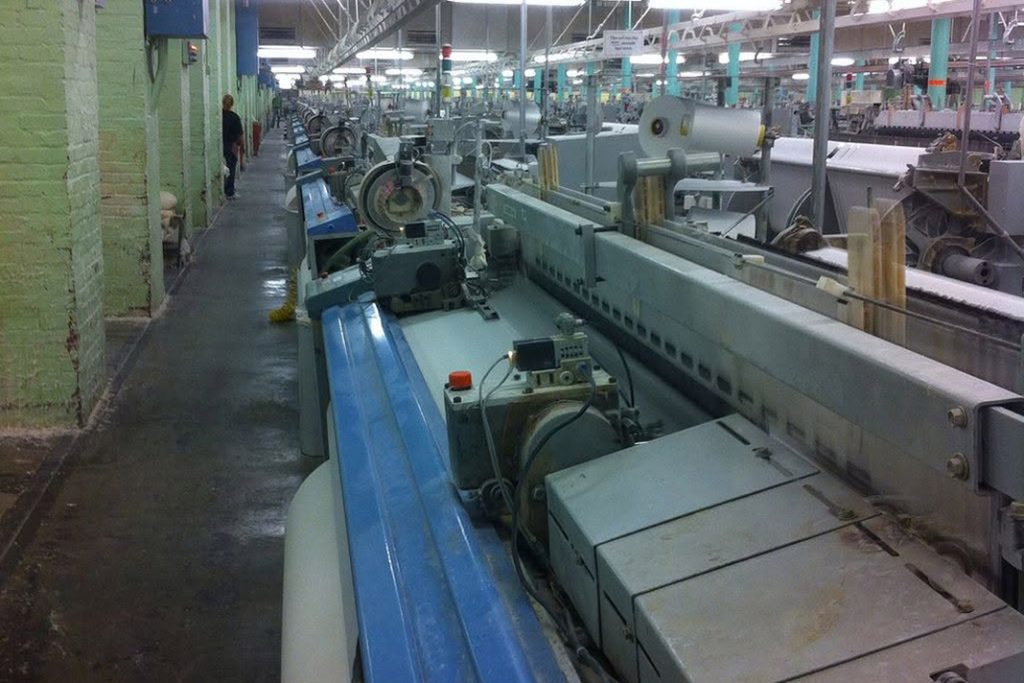
Early manufacturing was defined by manual, labor-intensive processes. Machines were largely hydraulic, operations were isolated and quality was dependent on an individual worker’s skill and experience. This model worked well for localized markets, smaller production volumes and limited product complexity. However, as markets expanded and customer expectations around quality, consistency and cost increased, these processes became harder to scale. Over time, there was a noticeable transition toward automated, multi-use “one-and-done” systems capable of consistently and accurately completing multiple tasks.
A critical inflection point in this transition was electrification. The introduction of electric controls paved the way for the growing use of robotics and automated machinery in everyday tasks. It enabled manufacturers to shift routine, mundane processes from workers to automated, repeatable systems designed for reliability and consistency.
Automation, enabled by electrification, increased quality, reliability and efficiency, allowing manufacturers to produce higher-quality products faster and more affordably.
Just as important, it transformed the role of factory floor workers, shifting from repetitive manual labor and moving toward the utilization and optimizing increasing sophisticated equipment.
As products themselves became more advanced, manufacturing workflows were forced to evolve in parallel. Electrification raised expectations across the industry, prompting manufacturers to incorporate smarter controls capable of meeting higher standards while using less energy. This shift was a stepping stone toward today’s modern, smart factory.
In recent years, digitalization has transformed manufacturing yet again. Modern smart factories connect machines, people and processes in ways that were not possible before, providing real-time visibility and control across systems.
While digital tools today allow manufacturers to see across entire workflows, turning raw data into insight and insight into informed action, digital transformation is still a work in progress. The industry has made much progress in this area, but significant opportunity lies ahead.
A century of progress highlights a clear takeaway: innovation delivers the greatest impact when it strengthens the fundamentals of manufacturing performance.
Standardization, simplification and fundamental operational expertise continue to uphold manufacturing excellence, and these fundamentals will remain central no matter how much technology changes.
From a manufacturing standpoint, technology can only earn its place if it can improve performance consistently. The most technologically advanced or “shiny” new tools only deliver value if they measurably improve quality, cost, reliability or customer satisfaction. Technology should support the business, not distract from it.
Digital tools today enable manufacturers to generate and analyze vast amounts of data, but insight alone is not enough. Progress depends on how effectively organizations can turn data into informed action that improves both day-to-day operations and customer outcomes.
Technology is not a strategy in itself; disciplined execution of the fundamentals is.
Manufacturing excellence does not stop at the walls of any single facility. In today’s environment, supply chain reliability, logistical coordination and global alignment are inseparable and critical to providing customer value. Success is determined by the strength of the entire ecosystem, rather than individual advancements.
AI integration, ongoing digitalization and advanced data analytics are three of the most important factors affecting production today. When leveraged effectively, these capabilities extend decision-making beyond individual sites, helping manufacturers optimize operations across supply chains, partners and markets.
Ever-changing trade policies, country-specific coordination and growing customer expectations create ongoing complexity. For global manufacturers, supply chain strategy has become a defining competitive factor.
To succeed in this environment, manufacturers must build differentiated supply chains that meet local requirements and support the company’s strategic initiatives for growth. The world changes quickly, with multiple disruptions in the last five years alone, highlighting the importance of maintaining flexibility and resilience.
The goal is not complexity for its own sake, but adaptability so that manufacturers can respond quickly to change without introducing risks to scale or reliability. Supply chain strategy is a defining element of manufacturing leadership.
Despite an increase in automation, the people remain at the center of the industry. Regardless of how capable and advanced technology grows, manufacturing will continue to rely on skilled workers to operate, manage and improve increasingly complex systems.
Though roles and skill sets continue to evolve, technology doesn’t eliminate the need for experience, judgment and deep operational understanding. Manufacturing excellence requires people who understand the fundamentals as well as those who can integrate and manage new tools as factories evolve.
While manufacturers may not always be the first adopters of emerging technologies, they must be fast followers. Thoughtful adoption enables organizations to remain competitive while limiting risk, using data-driven insights to determine where new technologies can be applied effectively and where they add real value.
The next era of manufacturing will be marked by faster adoption of digital tools, greater resilience in times of disruption and thoughtfully approached technological advancement. This is a future where simplicity and flexibility are equally important as digitalization. Technology must enable agility, not hinder it.
The three lessons learned from the past century, strengthening fundamentals, building resilient ecosystems and investing in people, remain essential guides for the future.
Despite a century of change, the basics of manufacturing have endured. Quality, reliability, cost and customer centricity remain the key components of success. New technologies can be powerful enablers, but only if they are integrated thoughtfully and clearly aligned with business outcomes.
The past century of manufacturing provides a valuable reminder: innovation delivers the greatest impact when approached with purpose. Manufacturers who balance new technology with fundamental knowledge will be successful, not just today but as the future of the industry continues to unfold.
About the Author:
Angela F. Wordell became Executive Vice President and Chief Operations and Supply Chain Officer in January 2025. From January 2022 to December 2024, she served as Executive Vice President, Operations. From April 2020 until January 2022, she was Executive Vice President, Operations, and President, Worldwide Oil & Natural Gas Division. From December 2018 until April 2020, she was Executive Vice President, Operations. From April 2017 to December 2018, she was Purchasing Director. From January 2017 to April 2017, she served as Strategic Sourcing Director. From January 2010 until January 2017, she was Operations Director, IPD Division and China Factory. Prior to that, she held various manufacturing management and engineering positions. She joined the company in 1993.
Forging the Next 250 Years: Powering the Next Era of American Manufacturing
As manufacturers offer more customization than ever before, managing product complexity has become a critical challenge. Tune in with Dan Joe Barry, Vice President of Product Marketing at Configit, who explores how companies are tackling the growing number of product configurations across engineering, sales, manufacturing, and service. He explains how Configuration Lifecycle Management (CLM) helps organizations maintain a single source of truth for configuration data. The result: fewer errors, faster quoting, and the ability to deliver customized products at scale.
Get In Touch
Google news and SEO compliant, Industry Today’s state-of-the-art digital media platform offers bespoke media campaigns that target key decision makers and buyers to achieve your marketing and promotional goals.

Contribute
Showcase your brand and promote your business to our highly targeted audience. We offer detailed Google Analytics with measurable ROI to assure success. Submit your content for review by our Editorial team who will contact you to discuss the project further.
About Us
Reach Your Targeted Audience and Grow Your Business. Learn more About Industry Today.
Contact Us

© 2026 Industry today. All Rights reserved.