The 5 most effective 10’ Jersey barrier applications for jobsite safety.
Most project managers don’t realize how much rides on getting 10′ Jersey barrier applications right until something goes wrong on the jobsite. Selecting the correct barrier length and configuration for specific workzone geometries is harder than it looks, and ensuring barriers meet jurisdictional crash-test certification requirements adds another layer of pressure. Managing transportation logistics for heavy precast concrete barriers compounds the challenge further. After reviewing dozens of providers and real-world deployment scenarios, this guide breaks down the five most effective applications and the companies that actually deliver.
Public information drove every decision here. Product details, case studies, and review patterns were pulled from official company websites, directories, and industry platforms. Only providers with a demonstrated track record in construction safety workzone applications made the cut.
→ See the full research breakdown
Choosing the right barrier setup is one of those decisions that looks simple on paper but gets complicated fast in the field. Selecting the correct barrier length and configuration for specific workzone geometries requires careful planning, and the wrong call can leave gaps in protection or create compliance issues with FHWA, AASHTO, MUTCD, and OSHA workzone standards.
Jurisdictional crash test certification requirements vary by state and project type. A barrier that passes spec in one workzone may not meet requirements in another.
Specialized, well-chosen barriers close that gap. They’re engineered for specific containment levels, vehicle classes, and speed capacities.
The right choice shows up in deployment time per linear foot of barrier, tighter deflection distance upon impact, and measurable workzone incident reduction. That kind of performance is hard to match with a generic approach.
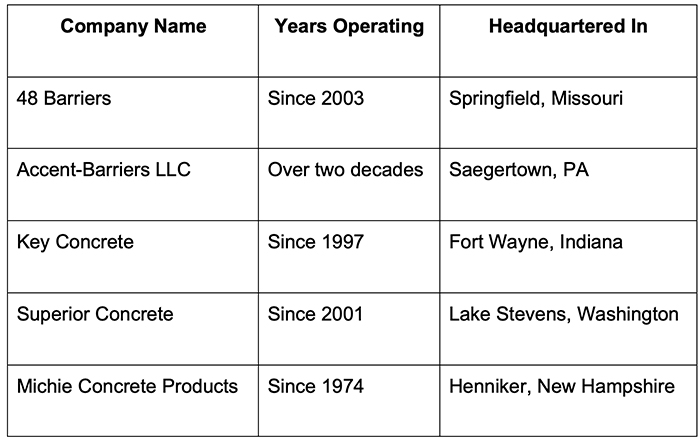
Note: All data in this table is sourced from review platforms and the official websites of the listed companies.
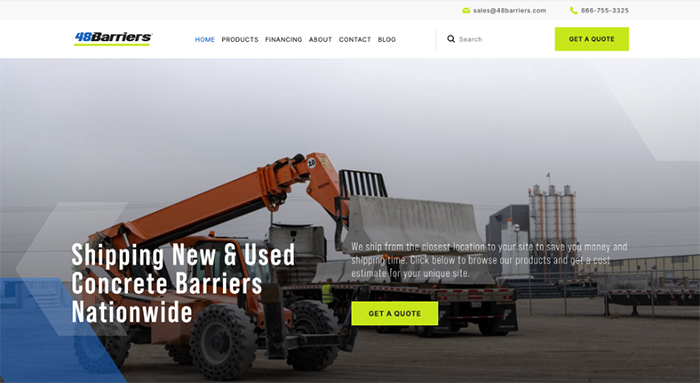
48 Barriers runs a nationwide brokerage serving all 48 contiguous states, sourcing both new and used concrete barriers without the wait that comes with direct manufacturing orders. Their inventory covers their proprietary CastleGuard™ barriers, DecoBarrier™ units, T-walls, K-rails, and military barriers. Contractors who need a reliable 10-foot Jersey barrier sourced and deployed fast will find that their brokerage model cuts lead times compared to going through a single manufacturer. With 25,000+ units moved in 2023 alone, the scale here is real.
The main problem they solve is availability. Getting the right barrier to the right jobsite without burning weeks on manufacturing timelines. Their brokerage network across 48 states means contractors aren’t stuck waiting on a single supplier when a workzone needs barriers now.
Contractors consistently point to speed and geographic reach as the standout qualities. The ability to source both new and used units (not cheap either way, but used options add real budget flexibility) gets mentioned regularly as a practical advantage on tight project timelines.
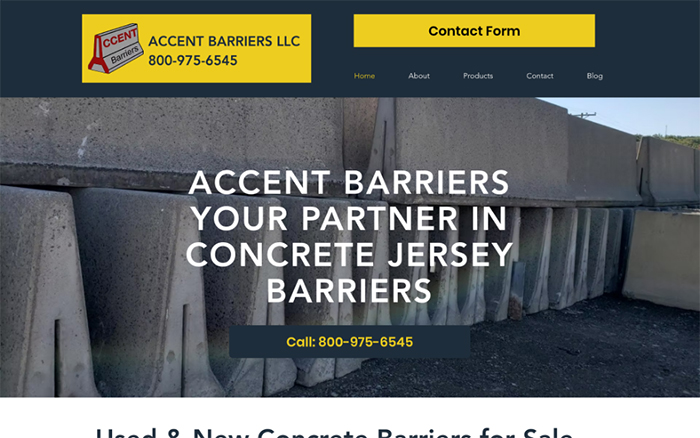
Accent-Barriers LLC covers the sale, rental, installation, and transportation of concrete barriers along the East Coast. Their flagship Texas-10 model is worth noting because it’s a lighter, more economical 10-foot concrete barrier alternative that keeps durability intact while reducing costs. They also offer custom jersey barrier creation for projects that need configurations beyond standard sizing. That combination of a purpose-built lighter model plus full custom capability is rare in one provider.
The Texas-10 directly addresses the cost-per-linear-foot pressure that East Coast contractors face on short-term or budget-constrained workzones. When you add custom barrier fabrication into that same package, it means Accent-Barriers can cover both standard deployment and unusual workzone geometries without sending you to a second vendor.
Reviews point to strong customer service as a consistent theme across both small business and federal agency clients. Clients appreciate that transportation and installation are handled in-house, which removes a major coordination headache on active jobsites.
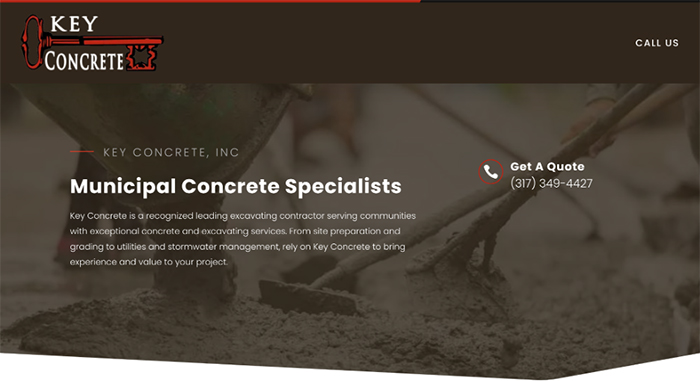
Key Concrete, based in Fort Wayne, Indiana, works across excavation, site preparation, grading, utilities management, and stormwater solutions. Their focus sits on the earthwork side rather than barrier supply directly, but the groundwork they handle is foundational to any workzone where barriers need stable, properly graded placement. They’ve held municipal contracts including work with the City of Fort Wayne, which shows they’re capable of meeting public infrastructure standards. So that part checks out.
Their value in the context of barrier applications comes from the site readiness side, making sure the surface and geometry are correct before barriers ever arrive on a truck. That kind of preparation work is where a lot of barrier alignment and gap prevention failures actually begin.
Municipal clients and local community organizations have highlighted their communication and workmanship on record. The 50/50 sidewalk repair contract with Fort Wayne came up as a specific example of their ability to deliver on government-standard expectations, which carries real weight for larger workzone projects.
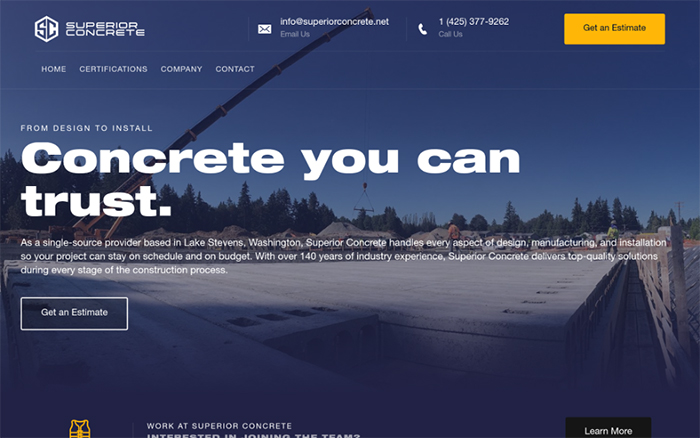
Superior Concrete operates out of Lake Stevens, Washington as a single-source provider covering design, manufacturing, and installation across structural concrete work. Their scope runs from retaining walls and stormwater detention vaults to commercial foundations and multi-story structures. They’ve held the position as the largest detention vault contractor in Snohomish and Northern King County for over a decade, which is the kind of market consistency that points to sustained execution capability (not just one-off project wins).
Where Superior Concrete fits in the barrier conversation is on large-scale projects where structural concrete scope and barrier placement happen in parallel and need a single coordinating entity. Their single-source model removes the scheduling conflicts that come when multiple subcontractors are managing adjacent scopes on the same site.
Over 22 years and hundreds of completed projects, Superior Concrete’s reputation for schedule adherence and reliable output has held steady. Concrete Technology of Tacoma’s recognition of their hollow-core plank purchase volume reflects how consistently they operate at scale, which matters when workzone timelines are tight.
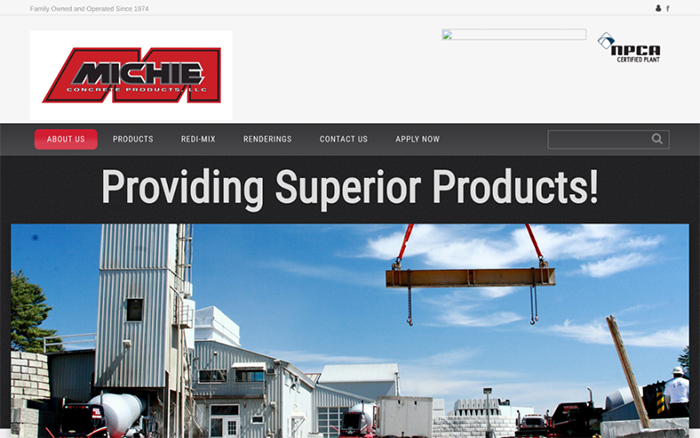
Michie Concrete Products has been manufacturing precast concrete out of Henniker, New Hampshire since 1974. Their product line includes precast traffic barriers engineered with computer-controlled concrete mixes, specially formulated admixes, and engineered reinforcing materials. Their PRECAST facility earns annual NPCA certification, which is the benchmark for precast concrete production. For New England contractors who need barriers that hold up under both repeated vehicle impacts and harsh seasonal conditions, Michie’s production standards carry real weight.
NPCA-certified production means their traffic barriers are manufactured under a verified quality system, not just inspected at the end of a production run. That distinction matters for jurisdictional crash test certification requirements, where provenance and manufacturing standards come under scrutiny during approval processes.
Michie’s work on major infrastructure, including Interstate 93 bridge reconstruction, speaks to their ability to deliver on high-stakes public safety projects. Their reputation in the New England precast market rests on precision manufacturing and long-term product performance rather than price competition.
The research started by building a broad list of companies active in concrete barrier supply, manufacturing, and workzone safety applications. Sources included industry directories, regional contractor databases, product review platforms, and official company websites. The goal at this stage was range, pulling in both nationally operating brokerages and regional specialists to avoid a list skewed toward name recognition alone. Each candidate’s public-facing materials were reviewed for relevance to 10-foot Jersey barrier deployment.
Once a working list was assembled, options without verifiable operating histories or clear ties to construction safety applications were removed. Review patterns across multiple platforms were analyzed to identify consistency in client feedback rather than relying on isolated high ratings. Companies with thin or unverifiable review records were set aside regardless of how polished their websites appeared. What remained was a group of providers with documented activity, real client bases, and reviewable output.
Each shortlisted company’s claims were cross-referenced against independent sources. Where a company described work experience, those details were checked against available case study records, municipal contract references, and third-party mentions. Product specs listed on official websites were compared against what appeared in reviews and industry references to surface any gaps between marketing language and actual delivery. Companies where claims couldn’t be independently supported were noted and weighted accordingly.
Beyond reviews, the research looked at signals that indicate standing within the broader concrete and workzone safety industry. This included mentions in industry publications, recognition from manufacturing or quality certification bodies, and documented involvement in major infrastructure projects. A company that shows up consistently across multiple credible sources carries more weight than one with a strong website but a thin external footprint. That kind of multi-source validation is hard to replicate without a real track record.
The final filter focused on evidence of work within 10-foot Jersey barrier applications. This meant looking for dedicated product pages covering this barrier size, verified reviews from construction and traffic control clients, and case studies tied to actual workzone deployments. Providers with general concrete capabilities but no documented history in barrier supply or installation for workzone use were deprioritized. What made the final list were companies with a clear, verifiable connection to this product category and the client types who rely on it most.
Choosing a barrier provider or product isn’t just about who has inventory available. It comes down to fit, whether a company’s capabilities match the demands of your workzone geometry, timeline, budget, and jurisdictional requirements. Here’s what to weigh before making a decision.
Getting 10-foot Jersey barrier applications right comes down to matching the right product and provider to the specific demands of your workzone. Deployment speed, containment level, jurisdictional compliance, and site geometry all factor into that decision. Providers like 48 Barriers bring national reach and rapid sourcing, while regional specialists like Michie and Accent-Barriers bring manufacturing depth and custom capability. As workzone safety standards continue to tighten, the bar for barrier specification will only rise.

Forging the Next 250 Years: Powering the Next Era of American Manufacturing
As manufacturers offer more customization than ever before, managing product complexity has become a critical challenge. Tune in with Dan Joe Barry, Vice President of Product Marketing at Configit, who explores how companies are tackling the growing number of product configurations across engineering, sales, manufacturing, and service. He explains how Configuration Lifecycle Management (CLM) helps organizations maintain a single source of truth for configuration data. The result: fewer errors, faster quoting, and the ability to deliver customized products at scale.
Get In Touch
Google news and SEO compliant, Industry Today’s state-of-the-art digital media platform offers bespoke media campaigns that target key decision makers and buyers to achieve your marketing and promotional goals.

Contribute
Showcase your brand and promote your business to our highly targeted audience. We offer detailed Google Analytics with measurable ROI to assure success. Submit your content for review by our Editorial team who will contact you to discuss the project further.
About Us
Reach Your Targeted Audience and Grow Your Business. Learn more About Industry Today.
Contact Us

© 2026 Industry today. All Rights reserved.