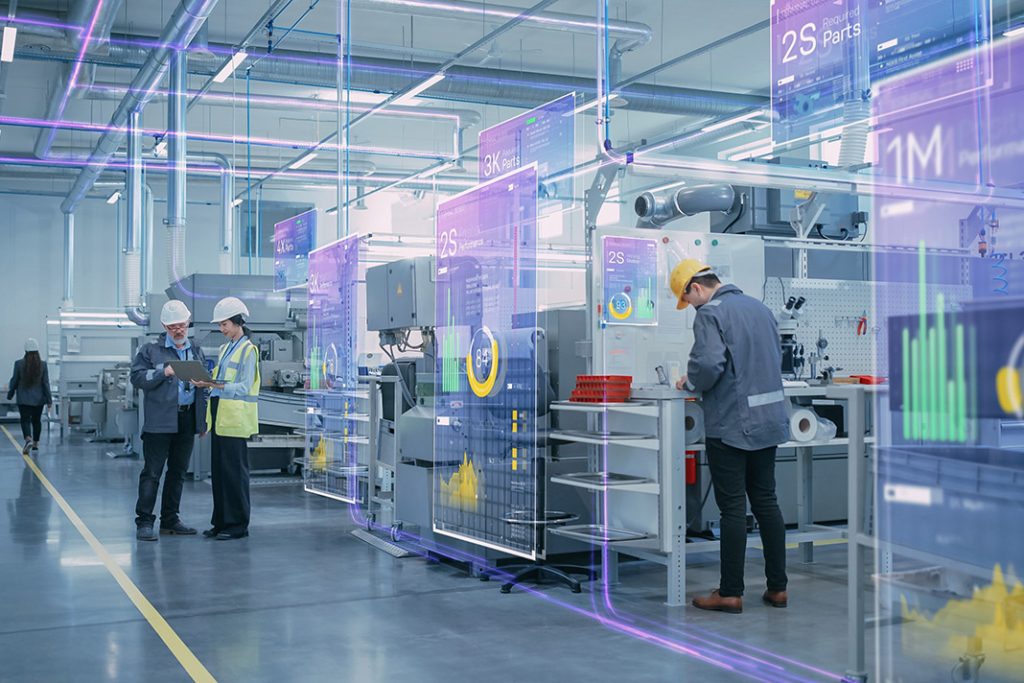
Digital workflows can help improve infrastructure delivery, strengthen collaboration and extend asset performance throughout the lifecycle.
By Parth Tikiwala
The implementation of digital assets into public infrastructure helps eliminate costly data gaps and improves control throughout project workflows. Through its integration into design and construction, processes are streamlined and stakeholders can work together more effectively. During the long-term maintenance of public infrastructure, digitization enables the constant collection and processing of data, creating greater insight into the needs of the structures and extending their long-term resilience.

“The complexity of today’s built world has developed a need for innovation and increased digitalization to be implemented in what would be thought of as the least likely area: the development and maintenance of public infrastructure.
— Parth Tikiwala
Infrastructure investment isn’t decreasing anytime soon. In fact, if current funding levels stay the same, the American Society of Civil Engineers (ASCE) forecasts $5.4 trillion in infrastructure investment from 2024 through 2033.
But, as the built world becomes increasingly more complex, it is the projects and stakeholders that embrace digitalization and other available technologies that will thrive.
Integrating digital assets and workflows into infrastructure design, construction and maintenance can improve the delivery of public infrastructure projects and improve its longevity by turning it into a connected source of continuous data, not just steel and concrete.
According to a study done by Tech Clarity, in collaboration with Nemetschek Group’s company Graphisoft in 2023, 63% of AEC/O stakeholders agree that project complexity has increased since 2018. The construction industry is considered one of the least digitized industries, only after the Agriculture, Hunting and Forestry industry, reflecting the greater need for investment into digitization and digital assets by AEC/O stakeholders.
With projects facing this increased complexity due to labor shortages, increased materials costs and supply chain disruptions, finding ways to streamline projects, improve project handoff and expand pathways to collaboration become increasingly more important.
Disconnected project handoff and data create major issues for teams working to develop public infrastructure. Across the development and upkeep of infrastructure, there are multiple points in which data can be lost and errors can be made.
Thankfully, the industry began to see a shift toward greater digitalization around, with the widespread integration of BIM (Building Information Modeling) a couple of decades ago, then Cloud Collaboration platforms, digital twins and most recently AI into project workflows across the design, construction and maintenance of these buildings.
The integration of each of these platforms provides intrinsic value. However, in this age of increased complexity, having connected platforms fulfills the need to facilitate stronger workflows, in turn improving delivery capacity.
To establish these workflows, it’s important to employ platforms that not only enable collaborative work on a single model, but are interoperable with one another across technology types, companies and file types.
Notably, without platform-agnostic data exchanges i.e. open data, something that is enabled through interoperability agreements and open collaboration, the quality of data may be diminished.
Using interoperable technologies will also enable greater collaboration, resolve errors ahead of construction and lessen timeline delays. All of which will ultimately lower project costs and create stronger infrastructure long-term.
BIM models are the types of platforms working most effectively alongside other types of technologies. BIM models are the basis for the expansion and adaptation of complex-connected AEC/O workflows, acting as the solution to the increased project complexity for teams approaching infrastructure projects.
The BIM model can also provide a foundation for a digital twin: a continuously updated digital representation of the building informed by operational data, including sensor inputs. This enables operations and maintenance teams to monitor building performance over time, identify emerging issues, and make more informed decisions using a shared, current view of the asset rather than fragmented or incomplete data.
Rather than using a calendar-based maintenance schedule, digital twins can recognize when maintenance work is needed, rather than when it is simply suggested.
This is especially important since, 79% of asset managers make operational decisions based on intuition or incomplete data. Having disconnected and siloed data creates major gaps between what is available and what is being used to make informed data-driven decisions in the continued operations of infrastructure.
These data gaps may not only hamper the ongoing maintenance of the infrastructure, but also limit institutional knowledge, with data being deleted, not updated or lost, creating issues down the line.
The true value of digitization is stability, in the design and construction of a project and the longevity of the building that results from it. As the AEC/O industry continues to evolve, the use of digital technologies will help close the gap between the funding and the delivery and maintenance of public infrastructure projects.
With ongoing labor shortages and delivery capacity constraints, integrated workflows give AEC/O stakeholders a way to work more efficiently despite these challenges. Standalone tools can create data gaps between project phases, while connected digital workflows help information flow seamlessly across the entire AEC/O lifecycle.
These protect long-term infrastructure resilience by preventing silos and creating accessible, flexible and constant access to operational lifecycles.
They should start by identifying the spaces in their workflows to implement connected digital tools. Once implementing them, they should measure initial productivity benefits, establish interoperability and scale these workflows across broader projects.
About the Author:
Parth Tikiwala is the Head of Global Public Sector, Nemetschek Group and Head of Government Affairs, Bluebeam where he focuses on advancing digital transformation in the architecture, engineering and construction (AEC) industry. With a background in economics, public policy and construction technology, he collaborates with government agencies, academic institutions and industry leaders to drive innovation and workforce development.

Forging the Next 250 Years: Powering the Next Era of American Manufacturing
As manufacturers offer more customization than ever before, managing product complexity has become a critical challenge. Tune in with Dan Joe Barry, Vice President of Product Marketing at Configit, who explores how companies are tackling the growing number of product configurations across engineering, sales, manufacturing, and service. He explains how Configuration Lifecycle Management (CLM) helps organizations maintain a single source of truth for configuration data. The result: fewer errors, faster quoting, and the ability to deliver customized products at scale.
Get In Touch
Google news and SEO compliant, Industry Today’s state-of-the-art digital media platform offers bespoke media campaigns that target key decision makers and buyers to achieve your marketing and promotional goals.

Contribute
Showcase your brand and promote your business to our highly targeted audience. We offer detailed Google Analytics with measurable ROI to assure success. Submit your content for review by our Editorial team who will contact you to discuss the project further.
About Us
Reach Your Targeted Audience and Grow Your Business. Learn more About Industry Today.
Contact Us

© 2026 Industry today. All Rights reserved.