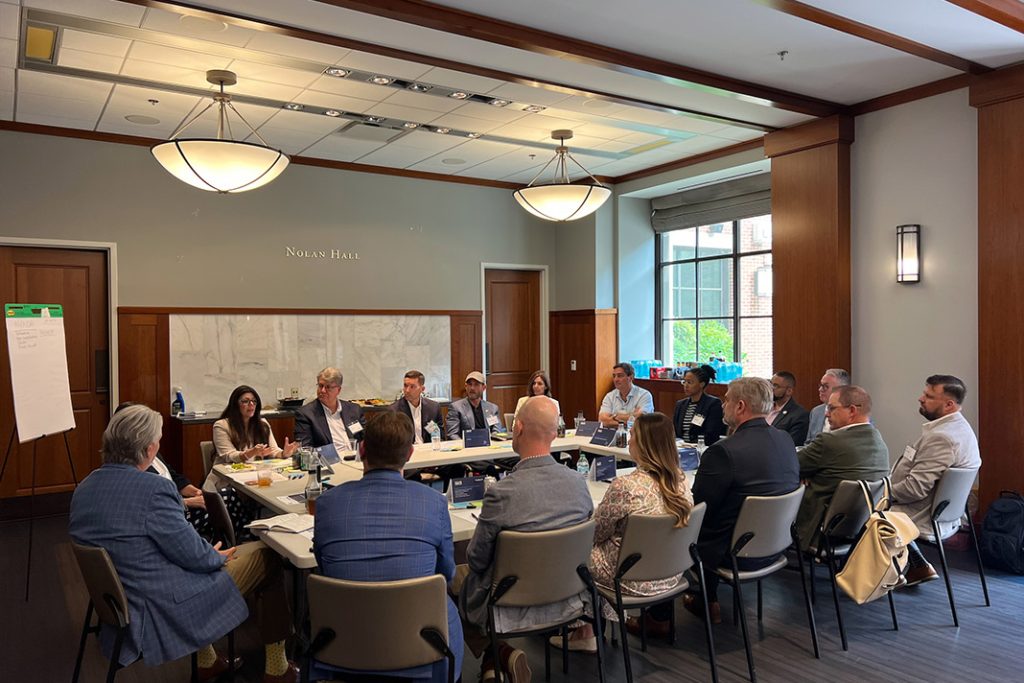
A look at why cloud-based access control matter for organizations that rely on hybrid teams.
Hybrid working has changed the relationship between users and the systems they need to do their jobs. Employees connect from home networks, shared offices, client sites and mobile devices, often switching between several in a single day.
Managing who can access what, from where, and under what conditions is no longer a peripheral IT concern. For organisations that rely on hybrid teams, cloud-based access controls have become a central pillar of both security and operational continuity.
Not long ago, most access decisions were relatively straightforward: users sat inside a fixed network, accessed on-premises applications, and were broadly trusted once inside the perimeter. That model has been replaced by something considerably more complex. Cloud applications and a wide range of personal and company-managed devices mean that access now happens from almost anywhere, on almost any network.
The question of whether to grant access can no longer be answered simply by checking whether a user is inside the office – it requires a much richer assessment of context, identity and risk.
As access becomes more distributed, the consequences of getting it wrong become more significant. Compromised credentials remain one of the most common vectors for data breaches, and poorly scoped access permissions mean that a single stolen account can provide far broader access than it should.
The principle of least privilege (or guaranteeing that users have access only to what they genuinely need) is a foundational control for reducing exposure. Applied consistently, this limits the blast radius of any compromise and makes lateral movement significantly harder for an attacker who has gained a foothold.
Consistent access control across a hybrid environment is easier to describe than to deliver. Cloud resources, on-premises systems and third-party applications each have their own access mechanisms, and aligning them into a coherent policy requires deliberate architecture rather than a collection of point solutions.
Security Service Edge delivered as a managed service (Managed SSE) addresses this by providing cloud-native security controls that follow the user rather than the network boundary. Threat protection, data controls and access policy are applied at the point of connection, regardless of whether the resource being accessed sits in a public cloud, a private datacentre, or a SaaS platform.
Organisations should design access controls around identity and device posture rather than network location.
Access controls that create excessive friction tend to be circumvented. When authentication processes are cumbersome or access requests slow, users look for shortcuts, and those shortcuts introduce risk. Effective cloud-based access management is designed to be as unobtrusive as possible for legitimate users while remaining rigorous about verification.
Centralised policy management also reduces the inconsistency that arises when access rules are maintained separately across different systems, making it easier to apply and audit controls at scale without proportionally increasing the workload on IT teams.
Hybrid working is increasingly the baseline expectation for knowledge workers across most sectors. Access strategies built around fixed perimeters and static user populations will continue to struggle as organisations grow, restructure and adopt new technologies.
Cloud-based access controls are inherently better suited to this kind of change: policies can be updated centrally, new resources can be onboarded without architectural rework, and access can be extended or revoked quickly as team structures evolve.
Organisations that invest in flexible, identity-driven access management now are laying the foundations for a security posture that can adapt with the business, rather than one that requires repeated remediation whenever something changes.

Forging the Next 250 Years: Powering the Next Era of American Manufacturing
As manufacturers offer more customization than ever before, managing product complexity has become a critical challenge. Tune in with Dan Joe Barry, Vice President of Product Marketing at Configit, who explores how companies are tackling the growing number of product configurations across engineering, sales, manufacturing, and service. He explains how Configuration Lifecycle Management (CLM) helps organizations maintain a single source of truth for configuration data. The result: fewer errors, faster quoting, and the ability to deliver customized products at scale.
Get In Touch
Google news and SEO compliant, Industry Today’s state-of-the-art digital media platform offers bespoke media campaigns that target key decision makers and buyers to achieve your marketing and promotional goals.

Contribute
Showcase your brand and promote your business to our highly targeted audience. We offer detailed Google Analytics with measurable ROI to assure success. Submit your content for review by our Editorial team who will contact you to discuss the project further.
About Us
Reach Your Targeted Audience and Grow Your Business. Learn more About Industry Today.
Contact Us

© 2026 Industry today. All Rights reserved.