Plan industrial generator delivery with verified shipping specifications, clear lifting responsibilities and a receiving site ready for the truck’s arrival.
By Jay Mays, Managing Partner, Elevation Transport Services
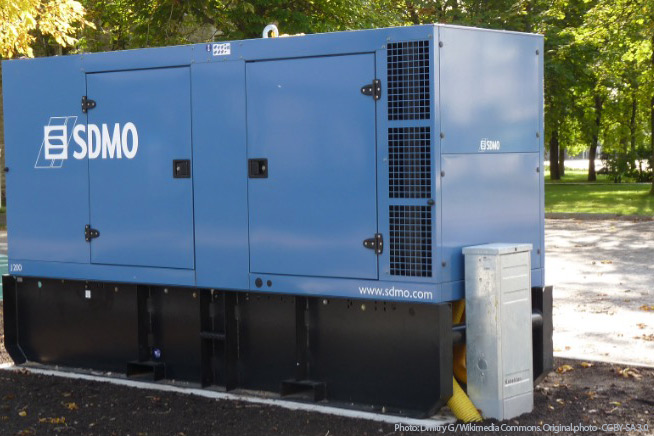
Industrial generator delivery starts with verified shipping specifications, named owners for loading and unloading, and a receiving site that can accept the shipment. Procurement and facilities teams should confirm those details with the supplier, transport provider and installation team before dispatch. I recommend organizing that work into three stages so an unanswered question does not become a problem at the gate.
“A generator delivery appointment should be backed by a named receiving contact, a confirmed unloading plan and a site that can accept the load.”
— Jay Mays
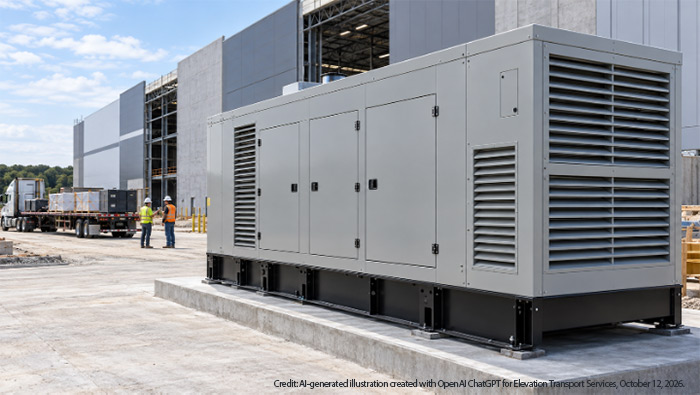
Start with the equipment as it will leave the supplier. A model number or power rating does not describe everything a transport provider needs to plan the move. Ask for a shipment-specific equipment list and drawings, with any preliminary figures clearly identified.
Industry Today’s coverage of customized power systems illustrates why project details matter: generator packages can be tailored to the buyer’s application. For transportation planning, I would ask the supplier to confirm the final shipping arrangement in writing, including packaging and projections beyond the main enclosure.
Also request dated photographs and confirmation of the planned fuel and fluid condition for transport. Share these details with the transport provider so it can evaluate equipment, route and permit needs. If dimensions or configuration change after quoting, require a fresh review before dispatch.
A freight booking should describe where the transport provider’s work begins and ends. Delivery to an accessible unloading area, unloading from the trailer and final placement may involve different parties. Put those responsibilities into the plan rather than leaving “delivery included” open to interpretation.
I would put a name and phone number beside each responsibility. Give one coordinator authority to gather updates and escalate decisions, while keeping the supplier, transport provider and installation lead on the same distribution list. A shared shipment record should show its latest revision and which parties have acknowledged changes.
For multiple generators or component loads, build the sequence around what the receiving team can handle. Identify each load by equipment or package number and its intended unloading location. Agree in advance on waiting-time charges, rescheduling arrangements and who can authorize additional services.
Before release, confirm that the supplier’s equipment list matches the booking and shipping documents. Record visible condition with photographs and note discrepancies before the load leaves. If a required component is missing or a specification remains unverified, the coordinator should resolve it with the responsible parties before authorizing dispatch.
Check site readiness again close to delivery because construction activity can change access through a facility. Industry Today’s guidance on data-center construction safety highlights the importance of coordinating heavy lifts and vehicle traffic. Give the driver the correct entrance, check-in instructions, arrival contact and approved approach, and have the site and transport teams review gate clearances, turning space, overhead restrictions and access to the unloading area.
A published ATS case study shows how this coordination works on a data-center project. Nine generator enclosure sets required 27 loads delivered in a particular sequence for crane unloading and installation. ATS describes site visits, a nearby staging area and shared tracking updates to help coordinate the deliveries. The practical lesson is that shipment order and receiving capacity belong in the same plan.
At receipt, compare package identifiers and counts with the shipping documents, record visible condition, and document shortages or damage promptly. Send exceptions to the supplier, transport provider and project coordinator with photographs and the affected shipment reference. Make clear who owns the next action and when an update is due.
Begin while procurement is confirming the shipping configuration and project schedule. Finalize the transport arrangement after the relevant specifications and receiving requirements are verified.
Name one shipment coordinator who can reach the supplier, transport provider and site lead. Each organization still needs a clear owner for its own work.
Notify the transport provider and supplier immediately. Agree on revised timing or an approved holding arrangement, including any cost implications, before redirecting the truck.
Before releasing a generator, confirm what is shipping, who owns each handoff and whether the site can receive it. Keeping those answers in one current delivery record gives procurement, facilities and transportation teams a practical checklist they can act on together.

About the Author:
Jay Mays is Managing Partner of Elevation Transport Services, which coordinates nationwide heavy equipment, generator and specialized machinery transportation. His work focuses on shipment planning, carrier coordination and communication between suppliers and receiving teams.
Read more from the author:
Five Details That Can Delay Heavy Equipment Delivery | Jay Mays · LinkedIn · September 24, 2026

Forging the Next 250 Years: Powering the Next Era of American Manufacturing
As manufacturers offer more customization than ever before, managing product complexity has become a critical challenge. Tune in with Dan Joe Barry, Vice President of Product Marketing at Configit, who explores how companies are tackling the growing number of product configurations across engineering, sales, manufacturing, and service. He explains how Configuration Lifecycle Management (CLM) helps organizations maintain a single source of truth for configuration data. The result: fewer errors, faster quoting, and the ability to deliver customized products at scale.
Get In Touch
Google news and SEO compliant, Industry Today’s state-of-the-art digital media platform offers bespoke media campaigns that target key decision makers and buyers to achieve your marketing and promotional goals.

Contribute
Showcase your brand and promote your business to our highly targeted audience. We offer detailed Google Analytics with measurable ROI to assure success. Submit your content for review by our Editorial team who will contact you to discuss the project further.
About Us
Reach Your Targeted Audience and Grow Your Business. Learn more About Industry Today.
Contact Us

© 2026 Industry today. All Rights reserved.