Younger candidates are reshaping manufacturing hiring. Learn how employers can streamline recruiting and build their future workforce.
By Trent Cotton, head of talent insights, ICIMS
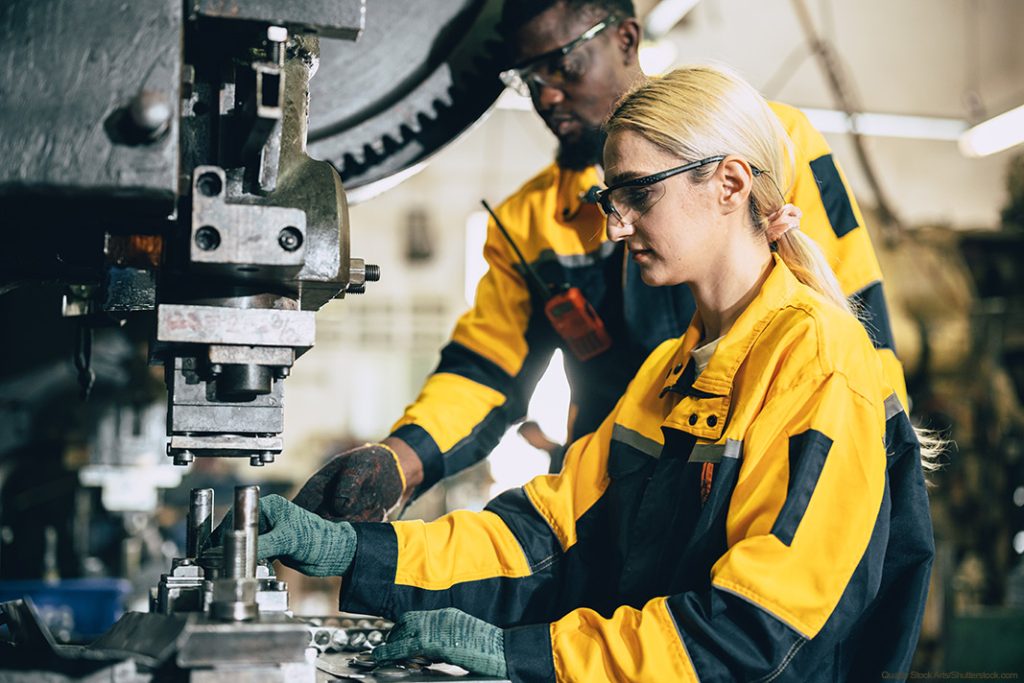
Manufacturing employers have a rare chance to build their next generation of talent. Candidates under 45 now make up 85% of the industry’s applicants, up from 79% a year ago, according to the ICIMS Insights August Workforce Report. Many are early in their careers and looking for a place to start, just as entry-level opportunities in other fields narrow.
To turn interest into hires, manufacturing employers need a mobile-friendly hiring process that gets qualified candidates to an offer within days. The employers who make that shift will see shorter time to fill, higher offer acceptance and stronger quality of hire.
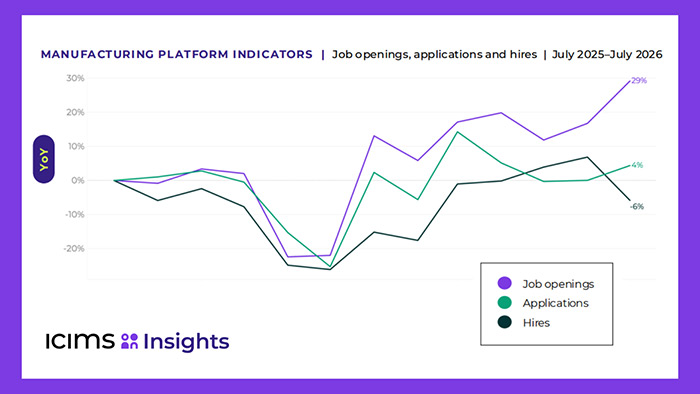
The pressure to act is building on both sides. Manufacturing job openings climbed 29% above the July 2025 baseline yet hires dipped below it that same month. At the same time 77% of manufacturing candidates say they are most likely to accept a job within 48 hours of applying or interviewing. The talent is there and the roles are open. Right now, the hiring process decides who wins those candidates, and the employers who remove the friction will keep their strongest applicants and fill critical roles faster.
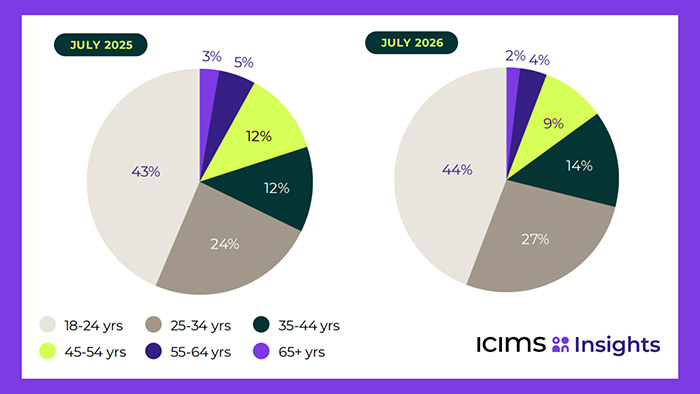
Manufacturing has its youngest applicant pool in years. Candidates aged 25 to 34 grew from 24% to 27% of applicants, and those aged 35 to 44 grew from 12% to 14%. The 45-to-54 group fell from 12% to 9%.
That matters because workers 45 and older make up close to 47% of the manufacturing workforce, according to recent BLS data. Many will retire over the next two decades and take years of hands-on expertise with them. Today’s younger applicants are the industry’s best source of successors.
Sixty percent of Gen Z say they plan to pursue a skilled trade this year, according to a February 2026 ResumeTemplates survey. Undergraduate certificate enrollment grew 10.2% this spring, making certificates the fastest-growing undergraduate credential, per the National Student Clearinghouse.
Stability drives much of that interest. ICIMS found that 58% of entry-level job seekers believe employers are hiring fewer entry-level workers because of AI, and 59% say employers now expect new workers to arrive with mid-level experience. Manufacturing is one of the few industries still built to train people on the job, with apprenticeships, certifications and internal promotion paths that show a new hire a clear route to expertise.
That creates a screening challenge. Early-career candidates have little work history, and AI-polished resumes make applicants look alike on paper. Employers that screen for years of experience risk filtering out the people most ready to grow into the role. Skills, reliability and a willingness to learn are better predictors of who will succeed and stay.
Today’s manufacturing candidates apply from phones, expect a quick response and often weigh more than one opportunity at a time. The ICIMS 2025 State of Frontline Hiring Report provides some insight into what moves this applicant pool.
These priorities carry extra weight for early-career candidates. Someone applying for their first skilled role wants to see the pay, the path to advancement and a quick answer, because they are often weighing several first-job options at once.
Candidates and hiring managers point to the same fixes: show pay and growth upfront, move quickly and make every step work on a phone. Speed also protects quality. The candidate with the most options is the first to leave a slow process. When that happens, the role often goes to whoever is still waiting rather than the best fit.
Those breakpoints are where technology can do the most good. Seventy-four percent of companies say candidates use AI in their job search, yet only 18% use AI broadly across recruiting, according to ICIMS research.
Automation can handle interview scheduling, status updates and reminders so no one waits days for an answer. AI can help recruiters find qualified candidates already in their systems and match them to the right open roles based on skills and potential, giving early-career applicants a fair look even with a short resume. With the busywork gone, recruiters can focus on the conversations that reveal real fit.
The results show up in the numbers. One of North America’s largest infrastructure companies, which hires at high volume for field-based roles, modernized its recruiting and reached a 33-day time to fill. That is 33% faster than the 49-day benchmark across ICIMS manufacturing customers. The company also reached an 88% offer-to-hire rate and a 17% increase in recruiter productivity.
Once per quarter, map every stage of your hiring process, from application through recruiter interview, hiring manager screen and offer. At each stage, ask:
Track time to fill, drop-off by stage and offer acceptance to measure progress. Add early retention and hiring manager satisfaction to see whether you are hiring the right people as well as hiring them faster.
Manufacturing has a rare combination of conditions right now. The applicant pool is the youngest it has been in years; openings keep climbing and a large share of the workforce is headed toward retirement. Few industries get supply, demand and urgency at the same time.
This window will not stay open forever. Other employers are reading the same data, and candidates who expect an answer within 48 hours will not wait on a process built for another decade. The employers who respond quickly, pay fairly and make applying easy will hire the people a slower process would have lost.
Gen Z is looking for a place to start, fair pay and a clear path forward, and manufacturing can offer all three. The employers who open that door quickly will be ready to pass decades of hands-on expertise to the next generation of high-quality talent.

About the Author:
Trent Cotton is the Head of Talent Insights at ICIMS, a leading enterprise talent acquisition platform, where he empowers global organizations with data-driven strategies to hire smarter and faster. With over 20 years of experience as an HR and Talent executive, Trent is known for translating complex workforce trends into clear, actionable insights that drive business results.
He is the author of High-Performance Recruiting, Sprint Recruiting, and The FutHRist (coming this Fall) providing practical frameworks for transforming recruiting into a high-impact function. Passionate about bridging data with human decision-making, Trent continues to challenge traditional recruiting models and champion innovative approaches that meet the demands of today’s talent economy. He is named on HR Executive’s 2026 Top 100 HR Tech Influencers list, which honors the voices shaping workforce technology and the future of HR.

Forging the Next 250 Years: Powering the Next Era of American Manufacturing
Brooklyn Army Terminal (BAT) began as a World War II-era military supply base. Today it is New York City’s largest publicly owned industrial campus, with 59 waterfront acres, more than 4 million square feet and over 100 businesses. In this episode of Industry Insights, Bridget Chansakul, Vice President of Leasing & Portfolio Management at NYCEDC, explains what space is available and what’s planned for the 250,000+ square feet of new industrial space in Building A. She also covers how the ferry, parking and on-site childcare help tenants hire and keep workers, along with workforce partnerships, City incentives for manufacturers and where BAT is headed next.
Get In Touch
Google news and SEO compliant, Industry Today’s state-of-the-art digital media platform offers bespoke media campaigns that target key decision makers and buyers to achieve your marketing and promotional goals.

Contribute
Showcase your brand and promote your business to our highly targeted audience. We offer detailed Google Analytics with measurable ROI to assure success. Submit your content for review by our Editorial team who will contact you to discuss the project further.
About Us
Reach Your Targeted Audience and Grow Your Business. Learn more About Industry Today.
Contact Us

© 2026 Industry today. All Rights reserved.