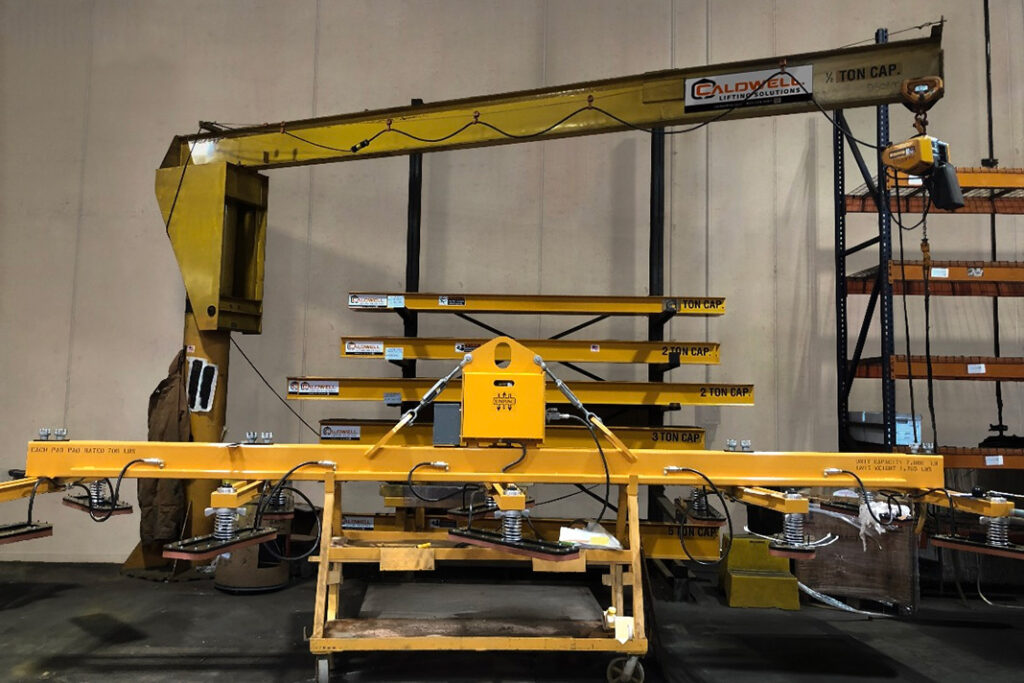
Why jib cranes are the overlooked workhorse of industrial workshops.
When facility managers evaluate lifting equipment, overhead cranes and forklifts dominate the conversation. Jib cranes rarely make the shortlist — and that is a mistake that costs industrial operations real money in throughput, floor space, and operator fatigue.
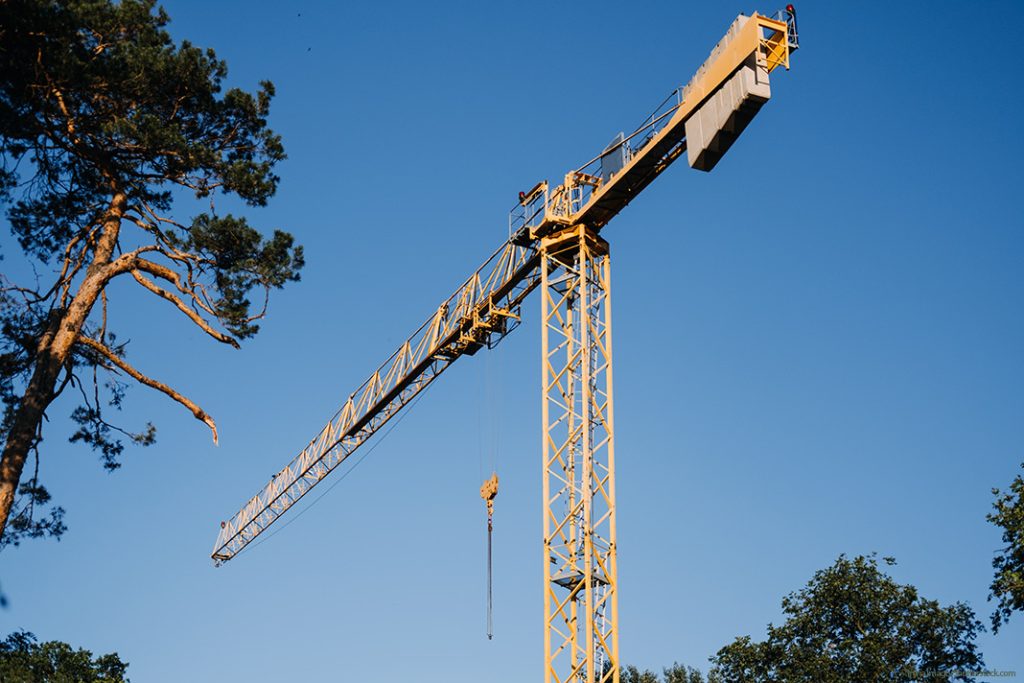
A jib crane is a fixed or portable lifting device built around a cantilevered boom that rotates to cover a defined work arc. Capacities typically range from 250 kg to 10 tons, with boom lengths reaching up to 10 meters. What the specs alone do not convey is how precisely suited this equipment is for the repetitive, station-based lifting tasks that quietly slow down production lines every day.
Overhead bridge cranes are designed to move loads across an entire bay. They are the right tool for cross-facility transport — but they are often overkill, and frequently unavailable, when an operator at a single assembly or machining station needs to lift, rotate, and position a component dozens of times per shift.
Competing for crane time with other workstations, waiting for a shared hoist to travel across the bay, and then repositioning manually for precision placement adds up to significant non-productive time. Jib cranes solve this by putting dedicated lifting capacity exactly where the work happens.
Floor-mounted slewing jib cranes provide up to 360-degree rotation around a fixed column. Operators can lift parts from an incoming pallet, swing them into position on a machine table, and return empty — without repositioning the crane or waiting for shared overhead capacity. The motion is fast, repeatable, and requires no overhead structure above the workstation.
Wall-mounted and wall-traveling jib cranes work along the building envelope rather than through the overhead structure. This makes them practical in older facilities where headroom or roof load ratings would rule out a bridge crane installation. A wall-traveling configuration can service multiple stations along a production line from a single track, with no floor obstruction.
Engine removal, gearbox replacement, and tooling changes are low-frequency but high-effort tasks. A portable jib crane on wheels can be positioned wherever the work is, then moved out of the way entirely. For facilities that cannot justify a permanent installation at every maintenance point, mobile jib cranes offer a fast-payback alternative.
Articulating jib cranes add a second pivot point on the boom, allowing the arm to fold around obstacles and reach into confined areas that a straight boom cannot access. This is particularly useful in electronics assembly, laboratory environments, and high-density manufacturing floors where conventional cranes cannot maneuver.
Freestanding jib cranes anchored to a reinforced concrete foundation can operate in outdoor environments where overhead structure is not available. Steel fabricators and precast concrete producers use them at fixed processing stations in open yards — where full gantry coverage would require a far more expensive installation.
Part of the reason jib cranes are overlooked is that their contribution is distributed. The time saved per lift is small — seconds to a minute — but multiplied across hundreds of cycles per shift and dozens of workstations, the cumulative impact on throughput and operator ergonomics is substantial.
They also tend to fall between procurement categories. Too small to attract the scrutiny of a bridge crane purchase, and too purpose-specific to be evaluated alongside general material handling equipment, they get passed over in favor of manual chain blocks, floor jacks, or shared overhead crane time — all of which cost more in labor over time.
Fixed jib cranes — floor-mounted, wall-mounted, or ceiling-mounted — offer higher duty cycles and greater precision for dedicated workstations. Portable units on wheels trade some lifting capacity for flexibility, which suits facilities where workstation layouts change or where lifting needs move around the floor.
Size to the actual task, not a future worst case. Oversizing a jib crane increases structural requirements, foundation costs, and the physical effort operators must exert when swinging the boom. A 1-ton unit properly matched to a machining station will outperform a 3-ton unit that is awkward to operate in the same space.
Jib cranes do not replace overhead cranes. They work alongside them — taking repetitive, station-level lifting off the shared bridge crane and returning that capacity to cross-facility transport where it belongs.
For facilities planning a floor layout update or capacity expansion, sourcing a jib crane for sale is often one of the fastest-payback investments available. The equipment cost is low, installation is straightforward, and the productivity gain is immediate.
Manufacturers such as Voitto Crane offer configurable jib crane solutions — including floor-mounted, wall-mounted, wall-traveling, portable, and articulating types — for industrial buyers across manufacturing, steel processing, automotive, and port applications.

Forging the Next 250 Years: Powering the Next Era of American Manufacturing
As manufacturers offer more customization than ever before, managing product complexity has become a critical challenge. Tune in with Dan Joe Barry, Vice President of Product Marketing at Configit, who explores how companies are tackling the growing number of product configurations across engineering, sales, manufacturing, and service. He explains how Configuration Lifecycle Management (CLM) helps organizations maintain a single source of truth for configuration data. The result: fewer errors, faster quoting, and the ability to deliver customized products at scale.
Get In Touch
Google news and SEO compliant, Industry Today’s state-of-the-art digital media platform offers bespoke media campaigns that target key decision makers and buyers to achieve your marketing and promotional goals.

Contribute
Showcase your brand and promote your business to our highly targeted audience. We offer detailed Google Analytics with measurable ROI to assure success. Submit your content for review by our Editorial team who will contact you to discuss the project further.
About Us
Reach Your Targeted Audience and Grow Your Business. Learn more About Industry Today.
Contact Us

© 2026 Industry today. All Rights reserved.