Why agentic physical security is essential.
By Mauricio Barra, Head of Product Go to Market, Ambient.ai
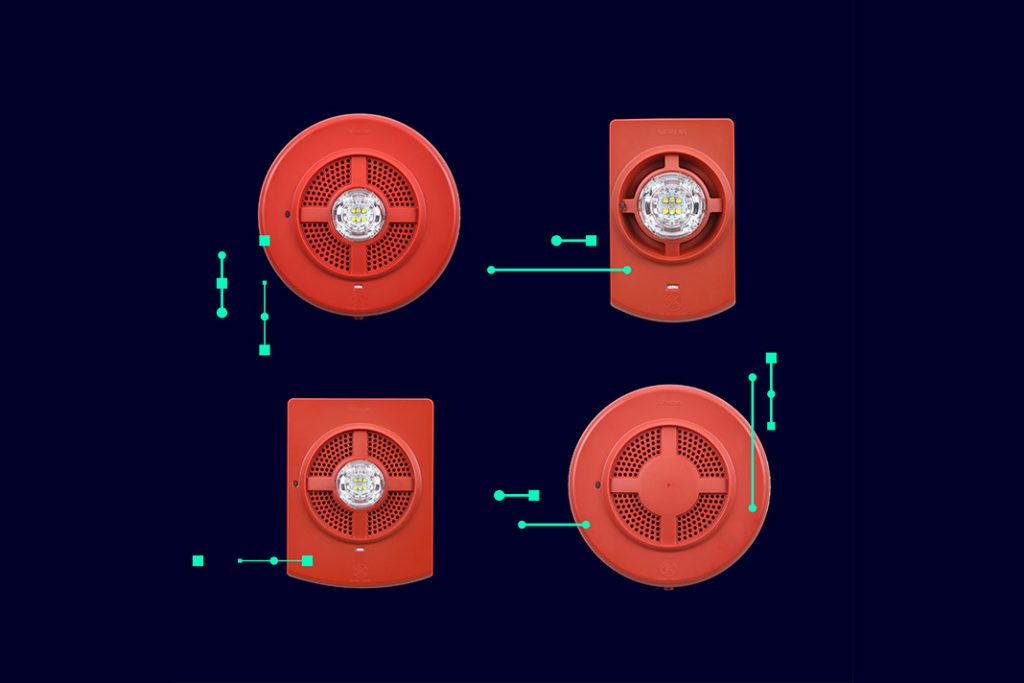
Agentic physical security closes gaps left by traditional physical security systems and processes. Human teams cannot maintain continuous attention across hundreds of feeds or always flag threats in the seconds that determine if an event is prevented or simply documented. It also bridges the gap between physical access and digital infrastructure, correlating signals that security and IT teams have historically monitored in isolation. AI use in physical security does not replace human capacity; it augments human expertise and enhances it with the speed and scale modern threats require.
“The combination of AI and human power is what makes physical security complete. The division of labor enables guards to focus on tasks that require presence, judgment, and communication, while AI handles the cognitive workload.”
—Mauricio Barra
Cyber threats don’t always enter through the network. Modern attacks on critical infrastructure increasingly begin physically, whether that be at an access point, a server room, or a control console, where a person with credentials, or without them, converts physical presence into digital access. The IT/OT air gap is functionally gone, and the seam between physical entry and network reachability is where defenses are thinnest.
Physical access visibility—who is in a facility, where, when, and under what authorization—is a missing variable in most cyber-physical defense stacks. Without it, security and IT teams are monitoring two halves of the same event in isolation. A tailgater into a control room and a subsequent network intrusion are not separate incidents; they are sequential stages of one attack.
Agentic physical security addresses this by continuously reading physical presence, access patterns, and behavioral signals across cameras and access control systems, and correlating them with the broader security picture. This is the same function AI can perform on the cyber side: sifting signals from noise at machine speed, applied to the physical layer that precedes digital access. The result is a defense posture that can observe and act on the early stage of an intrusion before it pivots into the network.
Most OT intrusions are cheaper to catch at the door than on the network. Physical access is observable, and in many cases it is the earliest and most actionable signal available. Agentic physical security makes that signal readable at the speed and scale the threat environment demands.
Human attention on video monitoring degrades rapidly. Research from the National Institute of Justice found that operators lose approximately 95% of their attention on video feeds after just 20 minutes. At that rate, the number of cameras installed is largely irrelevant because events are not missed due to coverage being absent, but because sustained human attention at scale isn’t operationally realistic.
The downstream effect is that physical security functions as an investigative tool rather than a preventive one. Footage gets reviewed after an incident, access logs get pulled after a breach, and the response begins after the window to prevent harm has already closed. That is not a staffing problem; it is a structural limitation of human monitoring capacity.
Agentic physical security closes this gap by maintaining continuous, context-aware attention across every feed simultaneously. It can distinguish routine activity from anomalous behavior in real time, separating a scheduled maintenance crew from an unidentified group accessing a critical infrastructure point at 2 a.m., and surface the event to a human operator while response is still possible. The flag happens in seconds, not during a post-incident review.
This changes what security infrastructure is actually capable of. Cameras installed for documentation become cameras capable of real-time threat detection. The shift isn’t in the hardware; it is in what’s reasoning over it.
Modern physical security systems generate a high volume of alerts. Motion triggers and access events accumulate continuously across a facility or portfolio, producing more notifications than any human team can meaningfully triage. The result is that real threats compete for attention alongside false positives, and in high-volume environments the real threats often lose.
Alert fatigue is not a discipline problem; it is a design problem. When operators are required to evaluate every alert manually, response quality degrades as volume increases. Critical signals get missed not because they were invisible but because they were indistinguishable from the surrounding noise.
Agentic physical security addresses this by evaluating alerts in context rather than simply generating them. It correlates events across systems and applies situational context before anything reaches a human operator. What surfaces is a prioritized set of events that have already been assessed for relevance and risk.
This is what makes scale operationally viable. A security team covering a large facility or multiple sites cannot function if every camera trigger demands the same level of human review. Agentic physical security makes continuous monitoring useful by ensuring that the volume of data collected does not become the barrier to acting on it.

About the Author:
Mauricio Barra is the GTM Leader at Ambient.ai.

Forging the Next 250 Years: Powering the Next Era of American Manufacturing
As manufacturers offer more customization than ever before, managing product complexity has become a critical challenge. Tune in with Dan Joe Barry, Vice President of Product Marketing at Configit, who explores how companies are tackling the growing number of product configurations across engineering, sales, manufacturing, and service. He explains how Configuration Lifecycle Management (CLM) helps organizations maintain a single source of truth for configuration data. The result: fewer errors, faster quoting, and the ability to deliver customized products at scale.
Get In Touch
Google news and SEO compliant, Industry Today’s state-of-the-art digital media platform offers bespoke media campaigns that target key decision makers and buyers to achieve your marketing and promotional goals.

Contribute
Showcase your brand and promote your business to our highly targeted audience. We offer detailed Google Analytics with measurable ROI to assure success. Submit your content for review by our Editorial team who will contact you to discuss the project further.
About Us
Reach Your Targeted Audience and Grow Your Business. Learn more About Industry Today.
Contact Us

© 2026 Industry today. All Rights reserved.