What’s actually holding mid-market manufacturers back from modernizing?
By Greg Pitstick, Managing Director, Huron
Boards, private equity owners, and company leadership alike are pushing manufacturing leaders to move faster on AI and digital transformation, but most playbooks assume dedicated transformation teams and multi-year budgets that many mid-market manufacturers don’t have. The real constraints are leaner teams, underutilized legacy systems, and far less tolerance for operational disruption, and each one compounds the others, especially now that AI performance depends on those same foundations. The better path is to unlock value from existing systems before undertaking large replacement programs, sequencing investments around business capacity rather than technology ambition.
Unlike large companies, mid-market firms ask the same leaders to run plants, manage customers, supervise teams, and lead transformation, so there is rarely slack capacity to step back and define the art of the possible. Many mid-market manufacturers have a small number of people who understand how everything works, and those people can become the lynchpins holding daily operations together.
Since the pandemic, turnover and gaps in knowledge transfer have continued to increase, and the default sometimes becomes keeping the status quo rather than taking time to fully understand and improve the system. Gaining alignment is the first step to getting results.

Mid-market companies often already own capable tools, including ERP, warehouse management (WMS), and material requirements planning (MRP) systems, with capabilities that were never fully implemented or trained on in the first place. The highest-ROI move usually is not buying something new. It’s modifying business processes to take advantage of what the system can already do, in areas like supply chain planning, procurement automation, and order management, rather than working around them.
Those workarounds often take hold because of turnover. As people leave, new employees often fall back on familiar tools like Excel instead of the system itself, and functions like finance end up re-validating in spreadsheets work that the system was already capable of doing.
Companies should start by identifying the current level of process maturity and where changes make the biggest bottom-line impact, then run focused sprints (roughly 12 weeks) to improve use of what’s already owned, weaving in new AI capabilities along the way. Moving to new ERP, WMS, or manufacturing execution systems (MES) should be the last step, not the first.
M&A activity, inconsistent master data, duplicate part numbers, and mismatched supplier and customer records undermine analytics and AI. Manufacturers are collecting more data than ever, but only 43 percent of it is being used effectively, according to Rockwell Automation’s 2026 State of Smart Manufacturing Report. That means execution, not data availability, is the real constraint.
Instead of chasing enterprise-wide data perfection, manufacturers should focus governance on the 20 percent of master data that drives planning, scheduling, inventory, and financial decisions.
Large enterprises can typically absorb multi-year re-platforming risk. Mid-market manufacturers usually aren’t as capable of withstanding a production or fulfillment hit, so modernization must layer on top of operations rather than interrupt them. Large-scale replacement programs can introduce unacceptable operational risk for mid-market manufacturers. The better path is to layer modern analytics, AI copilots, workflow automation, and integration around existing systems while retiring technical debt over time. Phased change beats a full-scale rollout.
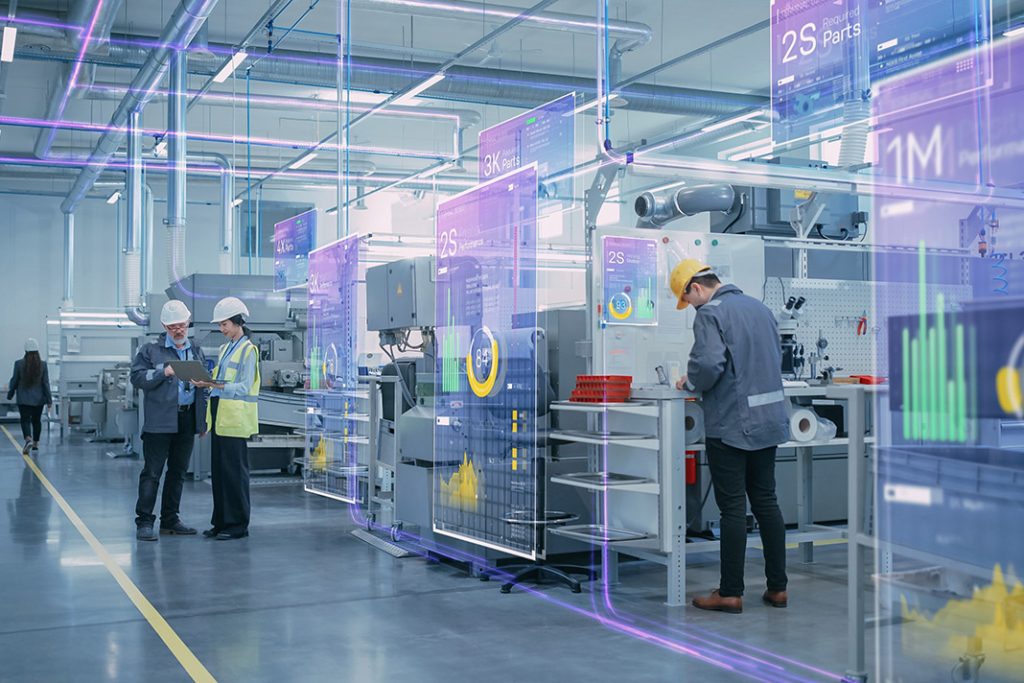
For many companies, leaving the legacy ERP in place and adding a data and AI layer above it is the fastest way to harness new AI capabilities. The AI layer pulls data from the existing systems to run advanced analytics and AI without replacing what’s already there.
Mid-market companies often have inconsistent processes due to M&A, turnover, and partial implementation of systems. They also lack the capacity in key roles needed to support change, including demand planners, data engineers, change management specialists, finance systems analysts, program leaders, and enterprise IT architects. That’s why outside experts are often brought in to fill the gaps and enable improvement programs.
“The biggest barrier to modernization in the mid-market is not technology. It is organizational bandwidth. Winning companies design transformation around capacity and ability to change.”
Putting this into practice starts with a few concrete steps:
They assume dedicated transformation teams and a greater tolerance for operational disruption than most mid-market manufacturers have.
Companies should assess and exhaust existing functionality and integrations before considering full replacement.
Mid-market manufacturers should start their AI efforts with trusted operational workflows, such as demand planning, maintenance, procurement, and customer service, rather than attempting an enterprise-wide deployment.
Plan for a proper backfill before pulling anyone into a transformation effort. Backfill is key: if the best people can’t be spared to support the effort, it’s worth asking why.
The next generation of manufacturing leaders won’t win by owning the newest technology. They’ll win by extracting more value from the investments they own, modernizing incrementally, and aligning transformation with the realities of lean organizations. The real measure of success is what they get out of their technology, not which technology they have.

About the Author:
Greg Pitstick is a Managing Director at Huron, where he helps manufacturing, industrials, and supply chain organizations navigate digital transformation and organizational change. He brings more than 35 years of experience guiding manufacturing, distribution, technology, and healthcare organizations through technology modernization and global supply chain innovation.

Forging the Next 250 Years: Powering the Next Era of American Manufacturing
As manufacturers offer more customization than ever before, managing product complexity has become a critical challenge. Tune in with Dan Joe Barry, Vice President of Product Marketing at Configit, who explores how companies are tackling the growing number of product configurations across engineering, sales, manufacturing, and service. He explains how Configuration Lifecycle Management (CLM) helps organizations maintain a single source of truth for configuration data. The result: fewer errors, faster quoting, and the ability to deliver customized products at scale.
Get In Touch
Google news and SEO compliant, Industry Today’s state-of-the-art digital media platform offers bespoke media campaigns that target key decision makers and buyers to achieve your marketing and promotional goals.

Contribute
Showcase your brand and promote your business to our highly targeted audience. We offer detailed Google Analytics with measurable ROI to assure success. Submit your content for review by our Editorial team who will contact you to discuss the project further.
About Us
Reach Your Targeted Audience and Grow Your Business. Learn more About Industry Today.
Contact Us

© 2026 Industry today. All Rights reserved.