Why manufacturers who treat workforce planning like capital planning are pulling ahead.
By Chris Richardson, President and General Counsel, BDV Solutions, a Vanteo Company
Manufacturers facing chronic labor challenges are learning that reactive hiring isn’t a strategy; it’s a cycle. The companies pulling ahead aren’t necessarily spending more on recruiting. They’re applying the same long-range thinking to their workforce that they already apply to capital investment: plan early, build the pipeline, and don’t wait until the situation becomes urgent.
“The manufacturers who are best staffed two or three years from now are the ones who started planning today. The ones who wait until the problem becomes urgent are the ones who’ll still be short-staffed while their competitors aren’t.”
— Tom Kilby, BDV Solutions, a Vanteo company
Walk through most manufacturing facilities and you’ll find detailed plans for almost everything – maintenance schedules, production forecasts, equipment timelines. Ask about the workforce plan and the answer is usually shorter than you’d expect.
According to a joint study by Deloitte and The Manufacturing Institute, 65% of manufacturers say attracting and retaining talent is their top business challenge. The study projects that the industry will need 3.8 million additional workers by 2033, with nearly 1.9 million of those jobs at risk of going unfilled. That gap slows production, overloads experienced employees, and begins to affect what you can promise customers.
Cameron Hamrick is the fifth-generation president of Hamrick Mills, a textile manufacturer his family has operated in Gaffney, South Carolina, since 1900. The company employs about 265 people. For the past several years, hiring has been one of the hardest parts of the job. “We were working hard to improve efficiencies and keep our product flow moving,” Hamrick says. “We needed more resources to find a qualified labor pool.”
Jamie Cooksey, Hamrick’s HR director, describes a labor market that had simply become too competitive for traditional recruiting alone to solve. “The labor pool had become so tight that finding qualified employees was one of our biggest challenges,” she says. “Finding people who can run the job efficiently and be dedicated – that’s my main priority, and we needed another way to do that.”
Hamrick didn’t overhaul its approach. Local recruiting continued. So did the investment in existing employees. The company broadened its workforce strategy by working with BDV Solutions to add the EB-3 Other Worker employment-based visa program – a federal program that allows U.S. employers to sponsor foreign workers for permanent positions they haven’t been able to fill domestically.
Tom Kilby spent more than 20 years overseeing manufacturing operations before moving into workforce planning. He’s seen what happens when a facility is stretched thin and why more manufacturers are rethinking their approach to hiring.
“Manufacturers spend years planning capital investments, equipment purchases, and production capacity,” Kilby says. “The most successful companies are starting to apply that same level of planning to their workforce. They’re thinking about where they’ll find skilled employees two or three years from now, not just who’s available this week.”
The timeline is usually where manufacturers hesitate. EB-3 typically runs three to five years from start to worker arrival. Kilby has heard every version of that objection. “Starting this program is like planting a tree,” he says. “The manufacturers who are best staffed two or three years from now are the ones who started planning today. The ones who wait until the problem becomes urgent are the ones who’ll still be short-staffed while their competitors aren’t.”
“We’ve seen our attendance improve overall,” Cooksey says. We’ve also seen positive impacts on our efficiency, quality and team building.”
Patricia Texeira Ferreira has been at Hamrick for two years. She learned about the EB-3 program through colleagues who had gone through the process themselves and obtained their green cards. “I chose this path because I had personal references – people I knew who had already gone through it,” she says. “I knew it was a trusted source.”
“My employer was very welcoming from the first day,” Patricia says. ‘The environment is really good. People connect here, and they care. If you have a problem, there are always open lines of communication.”
For Patricia, what made the difference wasn’t the visa process itself, but finding the right fit. “When you like what you’re doing and feel like you’re contributing, it helps make the journey of starting a new life in a different country feel lighter,” she says. “It’s a hard journey. Having that support made a real difference.”
Cooksey doesn’t mince words. “Labor has always been a top concern. Expanding our options has helped us build a stronger overall workforce. My advice? Don’t wait. You don’t know what the next day brings – it can delay, but it can also accelerate. As soon as you can act on it, don’t sit and wait.”
Kilby says he hears that same reflection from employers once they’re in the program. “Every employer that’s reached the point of being eligible to participate again has chosen to do so,” he says. “When workforce planning becomes part of how a company operates rather than a reaction to a shortage, it changes how they think about hiring entirely.”
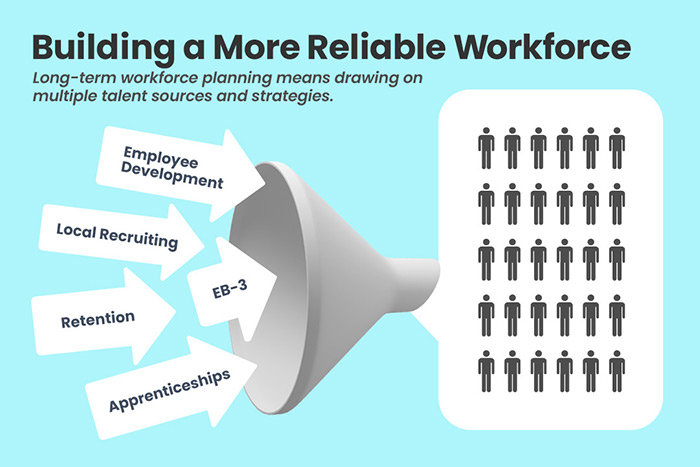
The manufacturers I’ve worked with aren’t looking for one answer to today’s labor challenges because they know there isn’t one. They’re recruiting locally, investing in apprenticeship programs, strengthening retention efforts and, in many cases, adding programs like EB-3 to the mix – not to replace what’s already working, but to make sure the business has more than one way to find the people it needs.
The domestic labor pool for entry-level manufacturing positions has tightened significantly. Higher wages and better technology have helped at the margins but haven’t changed the underlying supply problem. Manufacturers competing for the same local candidates are finding that effort alone doesn’t produce different results.
EB-3 is a federal employment-based visa category that allows U.S. employers to sponsor qualified foreign workers for permanent, full-time positions they haven’t been able to fill domestically. Workers arrive as permanent employees – not temporary or seasonal – and can grow within the organization over time.
Typically, it takes three to five years from initiation to the worker’s arrival, which is the most common reason employers hesitate. Employers who view that timeline as a reason to start immediately are the ones with stable pipelines, while competitors are still posting the same positions repeatedly.
Start by assessing which positions have the highest turnover and the longest time-to-fill. Those are the roles where a longer-term pipeline strategy pays off most. Local recruiting, retention investment, and programs like EB-3 work better together than any single channel alone.
The labor market will keep changing. It always has. The manufacturers navigating it best started planning before the challenges arrived, not after. Local recruiting, apprenticeship programs, retention, legal hiring pathways – most are using several of these at once, not as replacements for what’s already working, but as additional options for when it doesn’t.

About the Author:
Chris Richardson is president of BDV Solutions, a Vanteo company, which partners with organizations to address workforce challenges through international hiring and helps manufacturers implement EB-3 Other Worker programs as part of broader workforce strategies.

Forging the Next 250 Years: Powering the Next Era of American Manufacturing
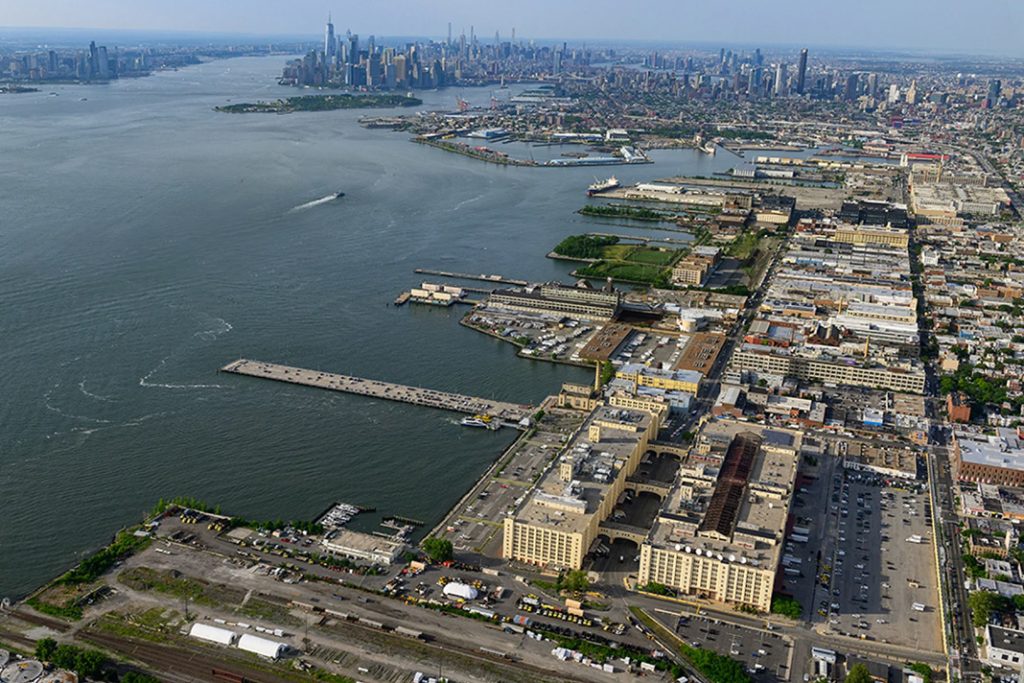
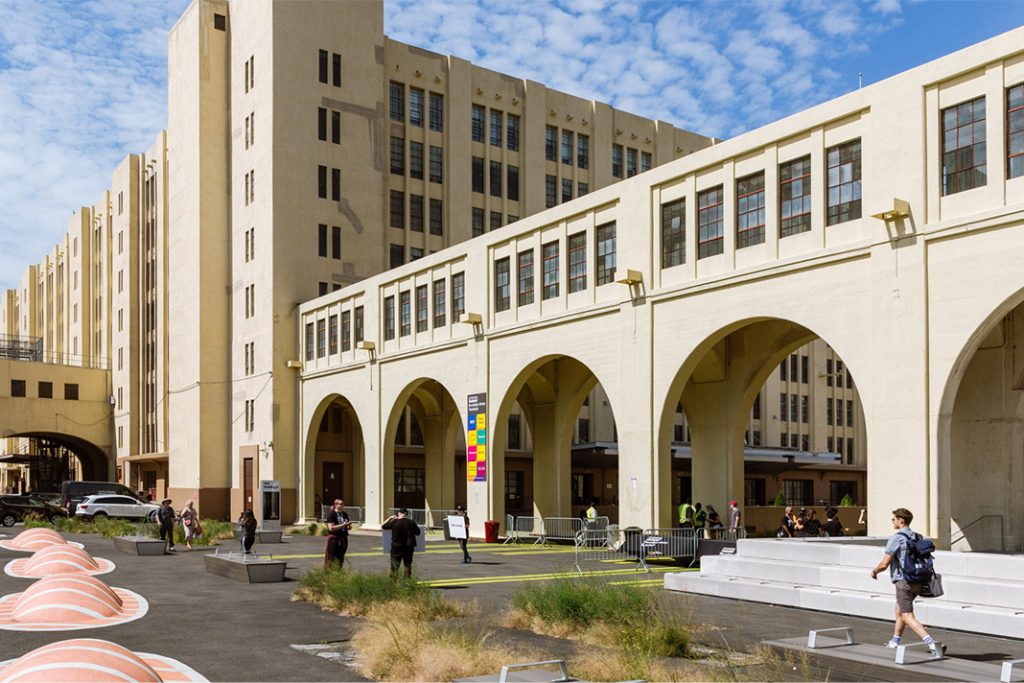
Brooklyn Army Terminal (BAT) began as a World War II-era military supply base. Today it is New York City’s largest publicly owned industrial campus, with 59 waterfront acres, more than 4 million square feet and over 100 businesses. In this episode of Industry Insights, Bridget Chansakul, Vice President of Leasing & Portfolio Management at NYCEDC, explains what space is available and what’s planned for the 250,000+ square feet of new industrial space in Building A. She also covers how the ferry, parking and on-site childcare help tenants hire and keep workers, along with workforce partnerships, City incentives for manufacturers and where BAT is headed next.
Get In Touch
Google news and SEO compliant, Industry Today’s state-of-the-art digital media platform offers bespoke media campaigns that target key decision makers and buyers to achieve your marketing and promotional goals.

Contribute
Showcase your brand and promote your business to our highly targeted audience. We offer detailed Google Analytics with measurable ROI to assure success. Submit your content for review by our Editorial team who will contact you to discuss the project further.
About Us
Reach Your Targeted Audience and Grow Your Business. Learn more About Industry Today.
Contact Us

© 2026 Industry today. All Rights reserved.