Safety risk now spans people, operations and the environment at once. Here’s why compliance alone falls short, and what comes next.
By David Picton, SVP, Safety and Sustainability, EcoOnline
It’s mid-afternoon at a chemical processing facility when a storage tank begins to overheat. Within the first hour, the safety team is working the incident, but the questions coming at them are not only safety questions:
Compliance has long been the organizing principle for workplace safety. But it is no longer enough to manage the way risk shows up in modern industrial environments.
A chemical incident is not only a chemical safety issue. It can become an employee accountability problem, an operational shutdown, an environmental event and a business continuity challenge within minutes. This is what we mean by connected risk: hazards to people, operations and the environment increasingly occur together and compound one another, so managing them well depends on seeing across the systems and teams that most organizations still keep separate.
Compliance programs answer one question – are we meeting the requirement? A connected risk approach asks broader ones – what is changing across our workforce and operations and where could those changes create exposure?
The 2026 EcoOnline Workplace Safety Report shows how real that overlap is. Among workers surveyed in the United States and Canada, 47% said they or a relative had been affected by a workplace accident or illness. More than half (53%) said they handle chemicals at work and 35% identified as lone workers. These are not neatly separated populations. On many sites, the worker handling chemicals may also be the one working alone, on the same shift and in the same area where a past incident occurred. Workers experience these risks together, but most organizations still don’t manage them that way. EcoOnline’s Mega Trends Report found that 52% of organizations still work with four or five separate safety and sustainability providers, even as every organization surveyed said it is taking steps to connect data across safety, sustainability and chemicals. The intent to connect is there, but the structure hasn’t caught up.
The biggest weakness in a disconnected safety program is not missing data. It is missing context.
When information has to be reconstructed during an incident, response slows down exactly when speed matters most. In a safety event, that delay has a human cost. Minutes spent confirming who is on site or tracking down current chemical information are minutes not spent reaching the people at risk.
Fragmentation also hides the patterns that come before incidents. A rise in near misses at one site may coincide with staffing changes recorded in an HR system. Repeated chemical handling issues may trace back to training gaps that no one is comparing against incident data. Each signal looks minor on its own. Together, they point to a problem that is building.

A connected approach starts by treating safety information as operational intelligence.
Many organizations are looking to AI to help them spot risk earlier. It can help, but only if the underlying information is connected. An AI tool analyzing incident reports in isolation will miss the same relationships a human reviewer would miss – the lone worker, the chemical inventory, the incoming weather alert. Connected data is what makes any analysis, human or automated, worth trusting.
It is also worth remembering who makes the call. EcoOnline’s research found that workers continue to prioritize more safety staff and more training and many remain cautious about AI’s role in safety. The goal is not to take people out of the decision. It is to make sure the safety professional, the frontline supervisor and the operations leader are working from the same picture when they make it.
Environmental performance is no longer separate from day-to-day operations in many industries. Chemical use, waste, emissions, extreme weather and resource constraints can all carry implications for employee safety and operational continuity.
A chemical release can expose workers and reach the surrounding air, water and community within the same hour. A heat-related fatality highlighted by NIOSH shows how quickly those risks compound. A farm worker installing irrigation lines as part of a five-person crew collapsed in a field on a day that reached 105°F and wasn’t found until he failed to return for an afternoon break. Investigators cited inadequate communication with a supervisor or electronic tracking of heat stress symptoms as one contributing factor. He was part of a crew, but he was working alone in the moment that mattered.
In each case, the safety response and the environmental response depend on the same information: what materials are on site, who is exposed, what controls are in place and how quickly conditions are changing. Organizations that manage these areas through separate programs, systems and owners end up responding to one event as if it were several.
Moving toward connected risk management does not require rebuilding every safety process at once. It starts with finding where information breaks down.
During an emergency, can the response team quickly determine who is on site? Can a supervisor access current chemical information without returning to a desktop? Can leadership see recurring incidents across multiple locations, or does someone have to combine reports manually? Can safety teams connect a trend in incidents to training, staffing or environmental conditions? Is this info available within a single pane or is it scattered?
One practical approach is to pick a single high-consequence scenario, such as a chemical release, a severe-weather event or a lone-worker emergency and walk through it end to end. Map every piece of information the response would require, where it lives and who owns it. The points where someone has to make a phone call, open a spreadsheet or wait for a report are the connections worth building first.
That incremental approach is how many organizations are making progress. EcoOnline customer Hadley Group, a cold-rolled steel manufacturer, had been managing hazardous substance assessments, lone-worker safety and sustainability reporting as separate processes. Rather than overhauling everything at once, it standardized each area in turn. As reliable data began flowing across all three, issues that might once have taken months to surface started getting flagged much sooner.
Compliance will always matter. It tells an organization whether it met the standard. It doesn’t tell leaders how the business will hold up when a chemical incident, a heat wave and a staffing shortage land in the same week.
That is where organizations will increasingly separate themselves. Resilience will be measured less by what is documented and more by how quickly an organization can see a risk changing, understand what else it touches and act before it spreads.
Compliance got safety programs to the baseline. The next benchmark is resilience.

About the Author:
David Picton is Senior Vice President, Safety and Sustainability at EcoOnline. Previously a chief sustainability officer, he works with the company’s commercial and product teams to build thought leadership and support global customers across many different industry sectors. Picton achieved the Queen’s Enterprise Award (UK) for Sustainable Development and presented at the UN’s HQ in Geneva on responsible business. Before joining EcoOnline, he held executive roles in the technology, media, infrastructure and public sectors, founded an independent consultancy, and served as a senior military officer.

Forging the Next 250 Years: Powering the Next Era of American Manufacturing
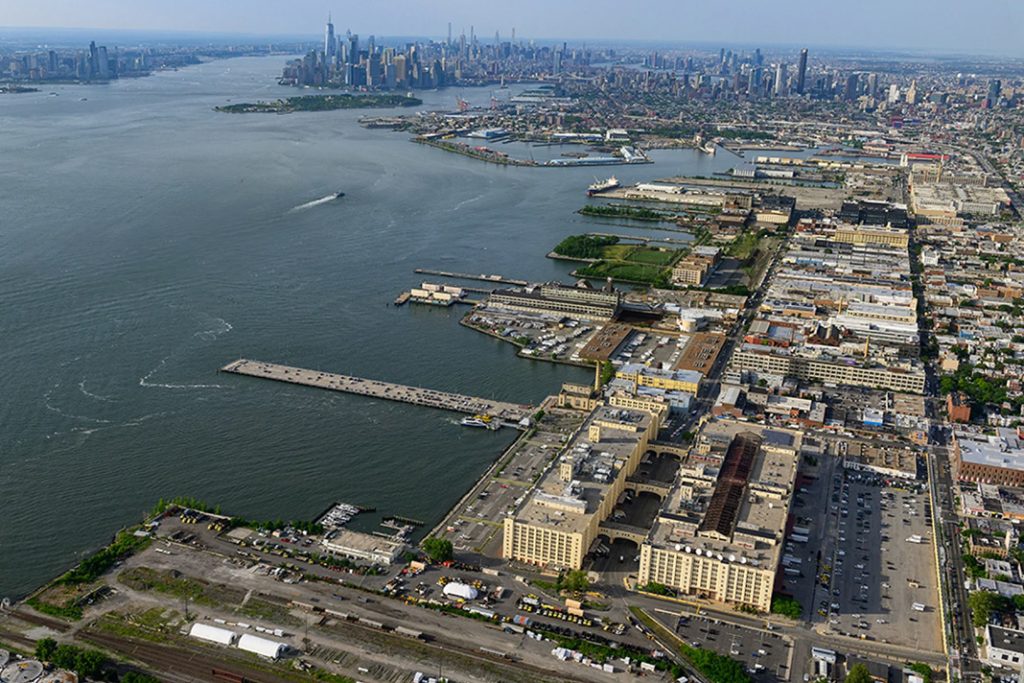
Brooklyn Army Terminal (BAT) began as a World War II-era military supply base. Today it is New York City’s largest publicly owned industrial campus, with 59 waterfront acres, more than 4 million square feet and over 100 businesses. In this episode of Industry Insights, Bridget Chansakul, Vice President of Leasing & Portfolio Management at NYCEDC, explains what space is available and what’s planned for the 250,000+ square feet of new industrial space in Building A. She also covers how the ferry, parking and on-site childcare help tenants hire and keep workers, along with workforce partnerships, City incentives for manufacturers and where BAT is headed next.
Get In Touch
Google news and SEO compliant, Industry Today’s state-of-the-art digital media platform offers bespoke media campaigns that target key decision makers and buyers to achieve your marketing and promotional goals.

Contribute
Showcase your brand and promote your business to our highly targeted audience. We offer detailed Google Analytics with measurable ROI to assure success. Submit your content for review by our Editorial team who will contact you to discuss the project further.
About Us
Reach Your Targeted Audience and Grow Your Business. Learn more About Industry Today.
Contact Us

© 2026 Industry today. All Rights reserved.