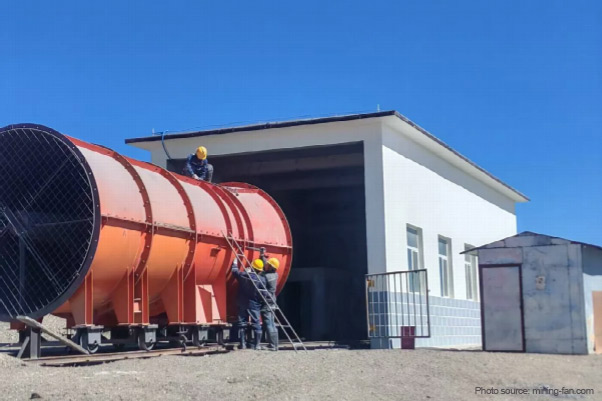
The value of a mine fan is seen at the workplace. Delivering air there takes a suitable machine, a clear route and an installation that can be kept in service.
Follow the air from a mine fan to a working area and the machine’s job becomes easier to understand. Along the way are connections, bends, ventilation doors and the passages themselves. The fan provides the pressure to move air through that route. What happens along it determines how much air reaches the people and equipment at the other end.
That matters throughout the working day. Drilling creates dust, diesel equipment produces exhaust and blasting leaves fumes to be cleared before an area is released for further work. Ventilation connects these everyday tasks to machinery that may be some distance away, beside an underground roadway or at a surface installation.
A mine’s main fan works with its principal intake and return airways. It may force air into the mine or draw it out through the return, according to the design. In both cases, the circuit needs a path for fresh air to reach the workings and another for contaminated air to leave.
Ventilation doors and stoppings help direct that flow. A stopping is a partition closing a selected passage, used to separate air routes and limit unwanted movement between them. If a partition is damaged, air can take a shortcut through the opening. A change in one part of the mine can therefore affect the quantity reaching another part.
Local fans serve areas beyond the main airflow route. A blind heading ends at a working face, so it has no through passage for ventilation. An auxiliary fan and duct system can supply air toward the face or draw it away, depending on how that system is designed. The local system still needs enough fresh air and a route for the contaminated air leaving the heading.
The work in each area sets the air requirements. Diesel use, blasting, dust and heat bring different demands, which the mine’s ventilation team assesses together. Water sprays, extraction equipment and controls on engine emissions deal with contaminants at their source; cooling may be needed for heat. The fan operates alongside these measures as part of the mine’s approach to workplace air.
Air quantity and pressure are often quoted together because they describe two sides of the same job. Quantity is the air moved in a given time. Pressure is what allows the fan to overcome resistance along the route. A fan delivering air through a long duct with several bends has a different task from one connected to a short, straight run.
The same fan can deliver different airflow in those two installations, even at the same speed. The added resistance changes where the fan operates on its performance curve. This is why an airflow figure from a catalog needs its accompanying pressure and test conditions before it can be related to work underground.
In service, mine ventilation fans have to suit the whole route they serve. A main fan working with large airways and an auxiliary unit feeding a duct may call for different sizes and pressure capabilities. Their performance becomes useful when it is matched to the air quantity needed at the workplaces connected to them.
A leaking forcing duct brings this relationship into focus. Air escapes through a damaged joint before it reaches the duct outlet. The motor may keep running normally while less air arrives at the face. The fault lies along the delivery route, and its effect is revealed by examining that route and the airflow reaching the workplace.
Efficiency belongs in this discussion too. Over long operating hours, the cost of moving air is affected by the fan’s efficiency, motor losses and the resistance of the system. Leakage changes the way the fan and duct operate together; its effect on power varies. The useful objective remains delivering the required air through a sound, properly designed route.
Once the fan reaches the site, the space around it becomes part of its performance. Air entering an inlet crowded by nearby equipment can be uneven or disturbed. An abrupt connection can create further losses. These effects help explain why a machine installed at a mine may perform differently from the same machine in a controlled test setup.
Connections, transitions and any silencers need to work with the fan as an assembly. Their dimensions and resistance affect the installation, while their physical size affects the space available in the roadway or fan station. Resolving the layout early leaves fewer awkward connections to be made around structures and services already in place.
The mine environment also shapes the equipment. Moisture, dust and corrosive conditions affect the choice of materials and protection. Where explosion protection is required, the fan and associated equipment must be suitable for that service. The electrical supply, motor and mechanical assembly need to be compatible with the application throughout their working life.
Service access deserves the same care as the air connections. A fan can fit between the walls yet leave no convenient way to remove a motor or reach an inspection point. If a repair first requires nearby pipes and cables to be moved, the task becomes longer and involves more people.
Day-to-day reliability rests on several ordinary jobs being done consistently. Bearings and mountings need the attention set out in the maintenance program. Ducts, joints and ventilation controls need inspection as well. Looking at both the machine and its air route helps the team separate an equipment fault from a damaged connection or an obstruction elsewhere.
Records make this work more useful. A recurring repair at the same duct connection, for example, is information about that location as well as a completed maintenance task. Clear notes on the equipment, the defect and the repair help the next crew understand what has already been addressed and what may need closer attention.
Servicing also has to fit the work supported by the fan. The mine’s procedures establish which ventilation arrangements and operating restrictions apply while equipment is unavailable. Coordinating the job with production gives crews a clear view of the areas affected and the work needed before those areas can return to their planned use.
Ventilation surveys close the connection between the equipment and the workplace. Measurements show where the air is going and how much reaches the relevant areas. Environmental checks assess air quality, heat and other relevant conditions against the requirements for the work. Following a repair or change, these checks also help confirm what has been achieved.
For mine operators, dependable ventilation means keeping that service available through the working day. The fan, its connections and the airways all have a part in it. Giving each the attention it needs helps crews plan their work around an air supply that has been established and checked where the work happens.

Forging the Next 250 Years: Powering the Next Era of American Manufacturing
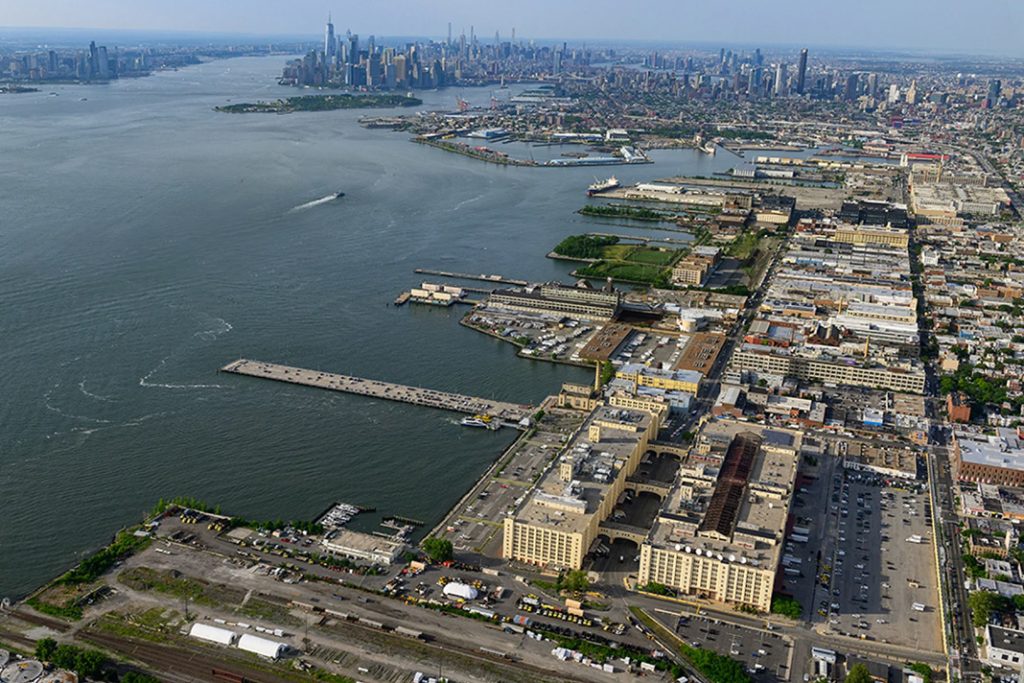
Brooklyn Army Terminal (BAT) began as a World War II-era military supply base. Today it is New York City’s largest publicly owned industrial campus, with 59 waterfront acres, more than 4 million square feet and over 100 businesses. In this episode of Industry Insights, Bridget Chansakul, Vice President of Leasing & Portfolio Management at NYCEDC, explains what space is available and what’s planned for the 250,000+ square feet of new industrial space in Building A. She also covers how the ferry, parking and on-site childcare help tenants hire and keep workers, along with workforce partnerships, City incentives for manufacturers and where BAT is headed next.
Get In Touch
Google news and SEO compliant, Industry Today’s state-of-the-art digital media platform offers bespoke media campaigns that target key decision makers and buyers to achieve your marketing and promotional goals.

Contribute
Showcase your brand and promote your business to our highly targeted audience. We offer detailed Google Analytics with measurable ROI to assure success. Submit your content for review by our Editorial team who will contact you to discuss the project further.
About Us
Reach Your Targeted Audience and Grow Your Business. Learn more About Industry Today.
Contact Us

© 2026 Industry today. All Rights reserved.